
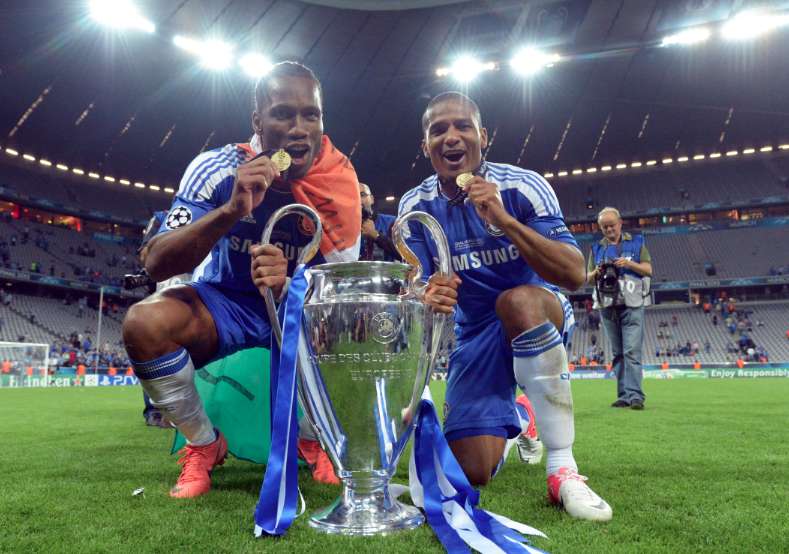
On May 19, 2012, at the Allianz Arena in Munich, Didier Drogba headed in a free kick that became the winning header. In the 88th minute, Chelsea equalized against Bayern Munich, on Bayern’s turf, in the Champions League final. Thirty minutes later, the Ivorian converted the decisive penalty. Chelsea became the first London club to become European champion, nearly a century after it was founded. That Munich night sums up everything Chelsea was under the Abramovich era: a club that never gives up, that turns money into a winning obsession.
Chelsea history is the story of a club founded in 1905 by an enterprising brewer, which for decades became one of London’s major clubs without ever fully dominating, then was transformed in 2003 by the arrival of a Russian tycoon who changed all the rules of English football. Six league titles, eight FA Cups, two Champions Leagues, two Europa Leagues and two Club World Cups: Chelsea is now among the ten biggest clubs in the world.
1905, Gus Mears creates a club around his stadium
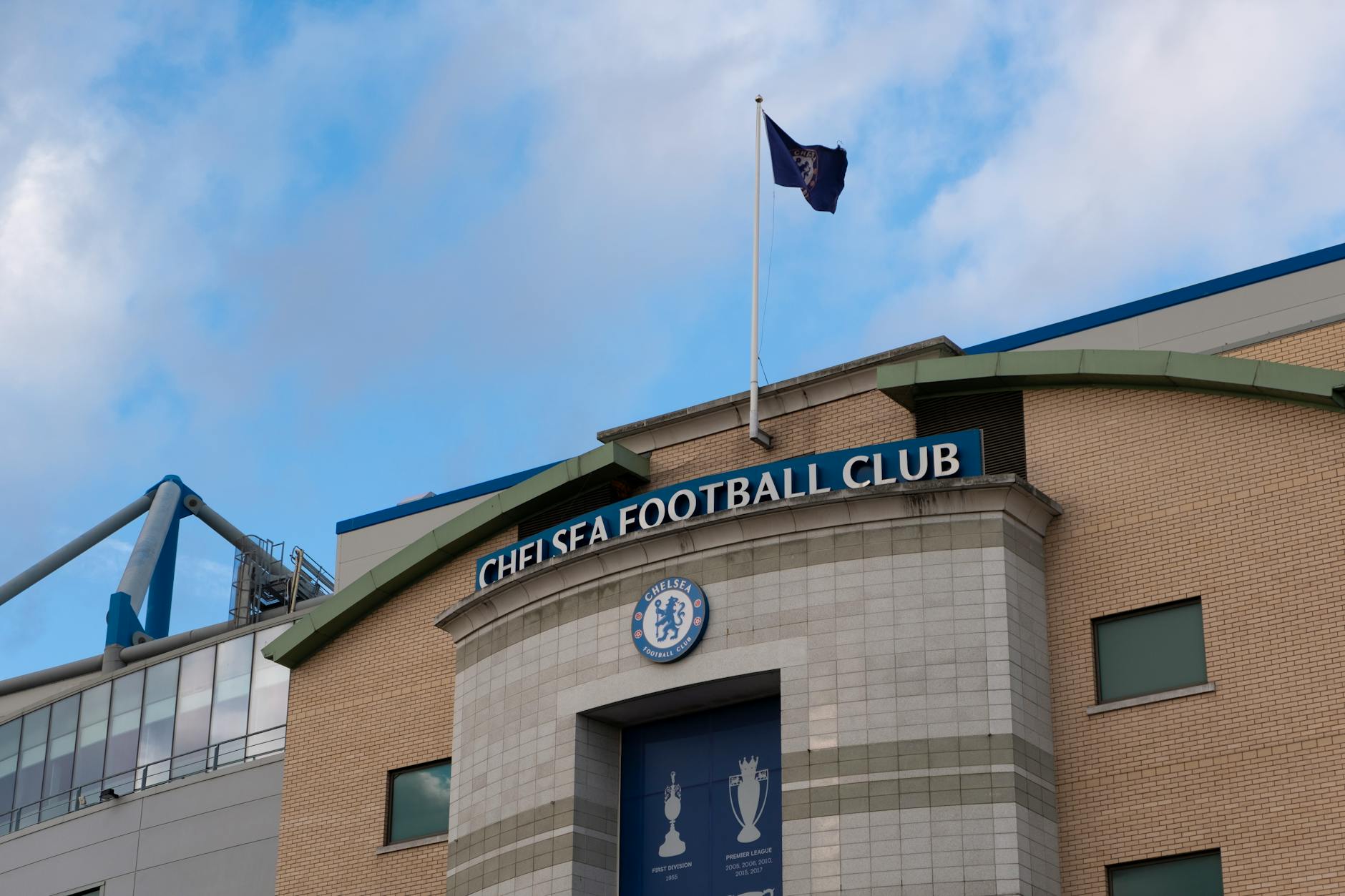
Chelsea history begins with a pitch. In 1904, businessman Henry Augustus ‘Gus’ Mears bought the Stamford Bridge athletic grounds in Fulham (west London). His first plan was to rent the stadium to an already existing club, namely Fulham FC. But Fulham refused the deal. Mears then decided to create his own club on March 10, 1905 and install it at Stamford Bridge.
The name “Chelsea” comes from the neighboring district, which seemed more prestigious than Fulham to Londoners at the time. The club immediately joined the Football League in the Second Division and climbed to the First Division in its second season (1907). Stamford Bridge, designed by architect Archibald Leitch (the same as Highbury, Anfield and Old Trafford), could then hold more than 60,000 spectators.
The first decades were not glorious on the sporting side. Chelsea bounced between the First and Second Divisions, won no major trophies before World War II, but built an image as a popular club deeply rooted in west London. Its colors moved toward royal blue, which has remained the club’s identity color to this day.
1955, the first title and the long journey
In 1952, Ted Drake, a former Arsenal striker and league champion from the 1930s, became Chelsea manager. He modernized the club, professionalized training and dropped the nickname ‘Pensioners’ inherited from its origins. Three years later, on April 23, 1955, Chelsea won its first English league title, to everyone’s surprise.
But the club could not confirm it. The 1960s and 1970s saw some momentum: Chelsea won the League Cup in 1965, the FA Cup in 1970 (against Leeds after a replay) and the Cup Winners’ Cup in 1971 (in Athens against Real Madrid). The team of that era, led by Peter Osgood and Ron ‘Chopper’ Harris, became the archetype of glamorous London football, popular in pubs and clubs during Swinging London.
But the 1980s were disastrous. Chelsea went down to the Second Division in 1979, nearly touched the Third Division, and carried huge debts. In 1982, owner Brian Mears (the founder’s heir) sold the club to Ken Bates for the symbolic amount of one pound sterling, on the condition he took over the debts.
The Bates era: the symbolic pound and the comeback
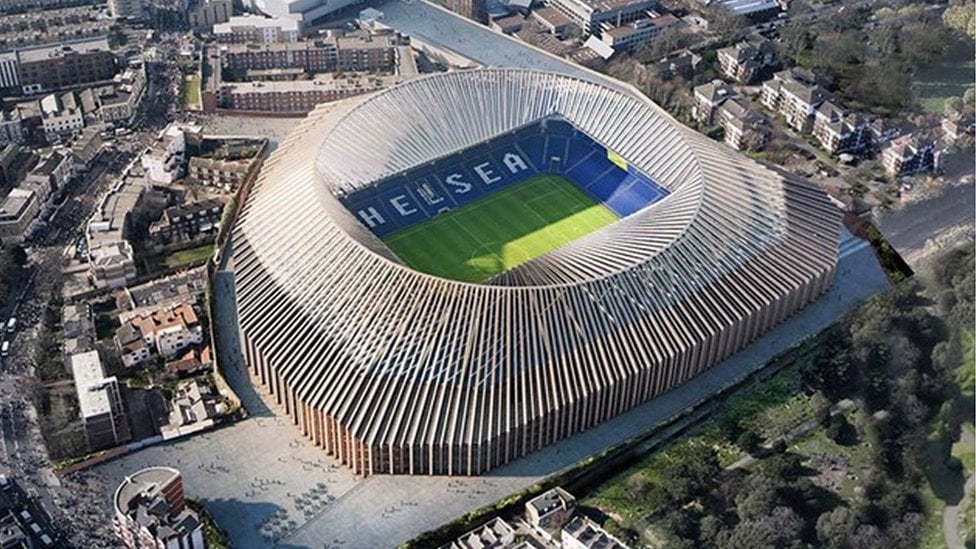
Ken Bates, a controversial businessman, therefore saved Chelsea for one pound. He took twenty years to stabilize the club financially, rebuild Stamford Bridge as an all-seater stadium meeting post-Hillsborough standards, and bring Chelsea back to the English top flight. The 1997 FA Cup, won against Middlesbrough, marked the return to the top.
Under Ruud Gullit and then Gianluca Vialli (two foreign managers and stars of Italian football), Chelsea also won the League Cup in 1998, the Cup Winners’ Cup in 1998 (the last edition of this now-defunct competition), the FA Cup in 2000 and the Charity Shield. The club began attracting international stars: Gianfranco Zola, Marcel Desailly, Frank Leboeuf. But the finances remained fragile. Bates looked for a buyer, and he found one in 2003, but one he never imagined.
July 2003, Abramovich changes everything
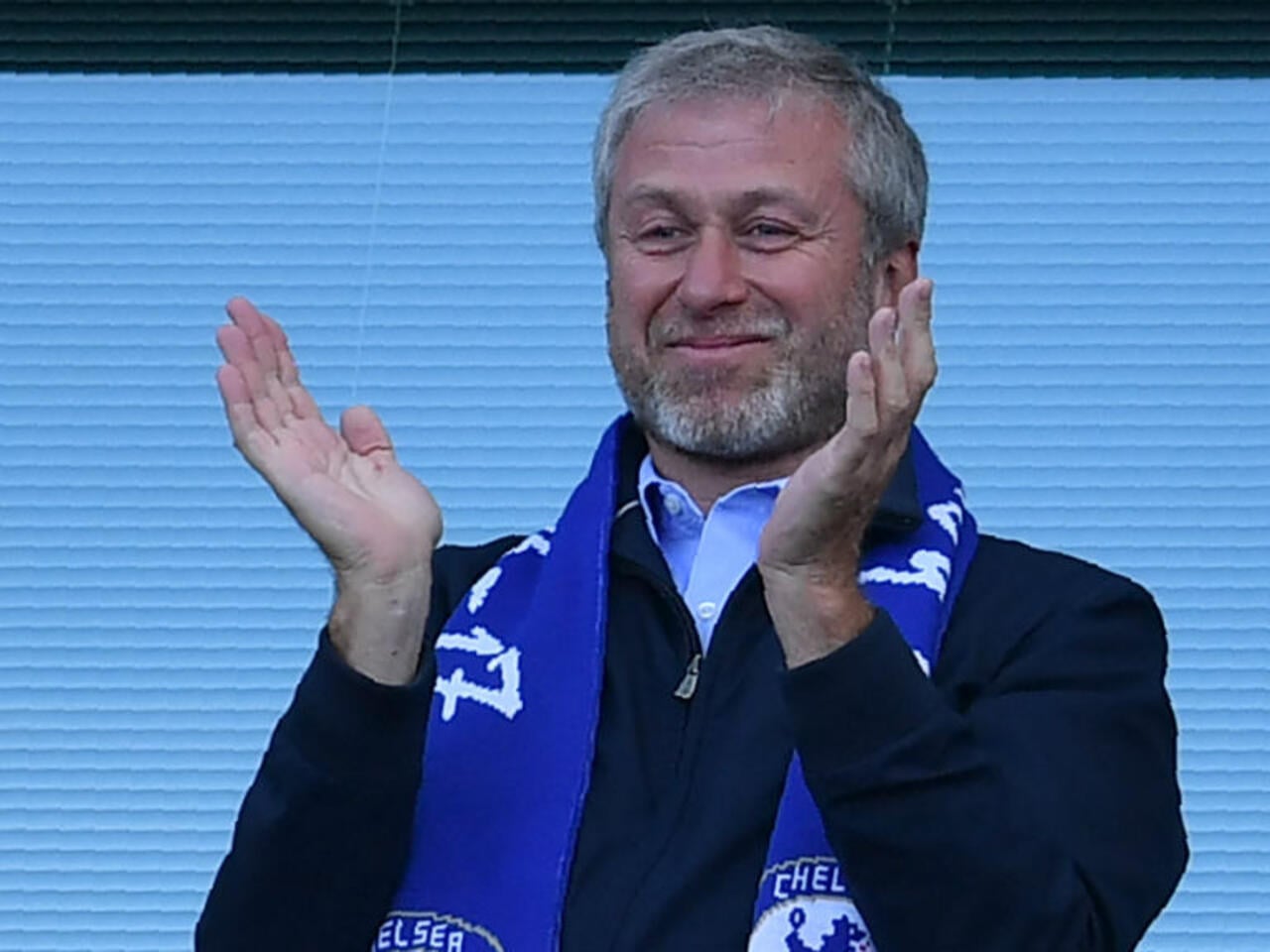
On July 1, 2003, Roman Abramovich, a 36-year-old Russian oligarch who made his fortune in oil, bought Chelsea for 140 million pounds. It was one of the biggest takeovers in English football history. At the time, no one knew who this Russian unknown was or what his intentions were. The answer came within a few months: Abramovich wanted to make Chelsea the best club in Europe.
The summer of 2003 saw the arrival of Hernán Crespo, Claude Makelele, Damien Duff, Joe Cole, Wayne Bridge, Glen Johnson, Adrian Mutu and Geremi for more than 100 million pounds. Chelsea finished second in the 2003-2004 season. Not enough. Abramovich fired coach Claudio Ranieri and brought in José Mourinho, who had just won the Champions League with FC Porto.
The arrival of the Special One and the first titles
On June 2, 2004, José Mourinho was unveiled to the English press. His line became famous: “I’m not arrogant, I’m a European champion. I think I am a Special One.” The nickname would follow him throughout his career. Mourinho built a team in his image: precise tactical organization, steel mentality, and the ability to win tight matches.
Chelsea won the 2004-2005 Premier League with 95 points and only 15 goals conceded in 38 matches, two absolute records at the time. The 2005-2006 title followed, ahead of Manchester United. On the field, John Terry was the charismatic captain, Frank Lampard the best-scoring midfielder (club record with 211 goals), Petr Cech the extraordinary goalkeeper, Didier Drogba the striker who delivered finals, and Claude Makelele the defensive midfielder that Zidane called the ‘engine’ of Real Madrid.
Mourinho left the club in September 2007 after a rift with Abramovich. It was followed by six years of instability with Avram Grant (Champions League finalist in 2008, lost to United in Moscow), Phil Scolari, Guus Hiddink, Carlo Ancelotti (league and FA Cup double in 2010), André Villas-Boas and Roberto Di Matteo. But Abramovich’s main goal remained out of reach: the European Cup.
Munich 2012: the first Champions League
The 2011-2012 team was not the brightest of the Abramovich era. It finished sixth in the league yet still reached the Champions League final after a stunning campaign. Semi-final against Guardiola’s Barça: 1-0 at Stamford Bridge, 2-2 at the Camp Nou, qualification snatched with ten men after John Terry’s dismissal. The final in Munich, on Bayern’s pitch, was against Bayern.
On May 19, 2012, the Allianz Arena was entirely in Bavarian colors. Thomas Müller scored in the 83rd minute. Everything looked over. But in the 88th, from a corner, Didier Drogba rose up, directed the ball with his head and equalized. Extra time. Bayern won a penalty, Arjen Robben shot, Petr Cech saved it. Penalty shootout. Drogba converted the winning penalty on the fifth attempt. Chelsea were European champions.
It was the result of nine years of Abramovich investment, and the only major European trophy that Drogba, Lampard, Terry, Cole and Cech would all lift together. The following year, under Rafael Benítez, Chelsea won the Europa League against Benfica in Amsterdam, becoming the first club to hold both major European trophies at the same time.
Porto 2021: Tuchel and the second crown
After a calmer period (title in 2014-2015 under Mourinho’s return, title in 2016-2017 under Antonio Conte), Chelsea reached a new European peak in 2021. Thomas Tuchel, the German coach dismissed by PSG in December 2020, arrived at Stamford Bridge to replace Frank Lampard. In a few months, he turned the team into a fearsome defensive machine.
On May 29, 2021, in Porto’s Estádio do Dragão, Chelsea beat Manchester City 1-0 in the Champions League final. Kai Havertz scored the only goal of the match in the 42nd minute. Pep Guardiola lost another European final. Chelsea lifted its second Champions League trophy, eighteen years after Abramovich arrived.
But this would be the last major success of the Abramovich era. In February 2022, Russia’s invasion of Ukraine triggered sanctions on Russian oligarchs. Abramovich was forced to sell Chelsea. On May 30, 2022, a consortium led by American Todd Boehly bought the club for 4.25 billion pounds, with a further promised investment of 1.75 billion pounds. It was the largest ownership transfer in football history.
The Boehly era and the uncertain transition
The Boehly era begins in uncertainty. Chelsea spent more than 1.5 billion pounds on transfers in the first year, recruited many young players (Mykhailo Mudryk, Enzo Fernández, Moisés Caicedo) on long-term contracts, and changed managers five times in two seasons (Tuchel dismissed in September 2022, Graham Potter, Frank Lampard interim, Mauricio Pochettino, Enzo Maresca since 2024).
Sportingly, the results disappointed. Chelsea finished 12th in 2022-2023 and 6th in 2023-2024. But 2024-2025 marked a notable recovery, with direct European qualification and the conquest of the Conference League against Real Betis. The club also won a second Club World Cup in 2025 under Maresca.
With six English league titles, eight FA Cups, two Champions Leagues and two Europa Leagues, Chelsea remains one of the top ten most successful clubs in Europe. The Boehly era challenge is to turn this mountain of investment into lasting sporting coherence without losing the winner mentality forged under Mourinho and Abramovich.
What to remember
- Chelsea was founded on March 10, 1905 by Gus Mears, owner of Stamford Bridge, after Fulham FC refused to move there.
- The first English league title came in 1955 under manager Ted Drake.
- Ken Bates saved the club in 1982 by buying it back from Brian Mears for the symbolic sum of one pound sterling.
- Roman Abramovich bought Chelsea on July 1, 2003 for 140 million pounds and transformed the club into a European giant.
- José Mourinho won his first two Premier League titles in 2004-2005 (95 points) and 2005-2006.
- Chelsea won the Champions League in 2012 (4-3 in the penalty shootout against Bayern in Munich) and in 2021 (1-0 against Manchester City in Porto).
- The club was sold to Todd Boehly on May 30, 2022 for 4.25 billion pounds, a world-record football deal.
Go further
To explore the Premier League world, we recommend our pieces on Arsenal history, on Tottenham history and on Manchester United history, Chelsea’s main rival among the Blues during the Abramovich era. Our ranking of the most beautiful Premier League jerseys also revisits the iconic blue jerseys worn by Chelsea since 1990.
Frequently asked questions
When was Chelsea FC founded?
Chelsea was founded on March 10, 1905 by businessman Gus Mears at Stamford Bridge. He had bought the stadium in 1904 and planned to rent it to Fulham, who refused. He then created his own club, naming it ‘Chelsea’ after the neighboring district.
How many Champions Leagues has Chelsea won?
Chelsea has two Champions Leagues: the first on May 19, 2012 in Munich against Bayern (1-1 after extra time, 4-3 on penalties) under Roberto Di Matteo, the second on May 29, 2021 in Porto against Manchester City (1-0, goal by Kai Havertz) under Thomas Tuchel.
Who bought Chelsea after Roman Abramovich?
On May 30, 2022, a consortium led by American businessman Todd Boehly bought Chelsea for 4.25 billion pounds, following sanctions imposed on Roman Abramovich after the Russian invasion of Ukraine. It is the largest sale in the history of world football.
How many English league titles has Chelsea won?
Chelsea has 6 English league titles: in 1955 under Ted Drake, and five during the Abramovich era (2005, 2006 under Mourinho; 2010 under Ancelotti; 2015 under Mourinho’s return; 2017 under Antonio Conte).
Why does Chelsea play at Stamford Bridge?
Stamford Bridge is the club’s original stadium, built by Gus Mears before Chelsea was formed in 1905. Designed by architect Archibald Leitch (who also designed Anfield and Highbury), it has a current capacity of 40,044 seats and remains one of London’s historic stadiums.
Ready to wear the Blues colors?
Our Chelsea collection includes the home, away and third jerseys from the current season, as well as a selection of retro jerseys that have stood through Mourinho’s era and the European conquest in 2012.