
On May 21, 2025, in Bilbao, Brennan Johnson scored the only goal in a Europa League final against Manchester United. Tottenham won its first major trophy in seventeen years. For Spurs supporters, this is the end of an exhausting wait, laced with bite of humor for decades. The term Spursy, the English word describing the tendency to lose when everything is going well, may at last finally lose some of its punch.
Tottenham’s history is that of a major London club founded in 1882, the first to win a league-FA Cup double in the 20th century (1961), the first British club to win a European Cup (1963), but one that has since moved between brilliant seasons and repeated disappointments. Two league titles, eight FA Cups, three UEFA Cups, one Cup Winners\’ Cup: a strong trophy haul, but one that still feels underwhelming compared with the club\’s potential.
1882, founded by Hotspur Cricket Club schoolboys
On September 5, 1882, in the Tottenham area in north London, a group of Hotspur Cricket Club schoolboys decided to form a football team for the winter months. The club was first called Hotspur Football Club, in tribute to Sir Henry Percy (Harry Hotspur), a medieval figure of the English nobility whose family owned land in the area. The nickname Spurs, tied to Harry Hotspur, would remain linked to the club forever.
In 1884, the club added Tottenham to its name to distinguish itself from London Hotspur. Tottenham Hotspur Football Club became officially professional in 1895 and joined the Football League in 1908. Even before that, in 1901, Spurs pulled off a unique feat: winning the FA Cup while playing in the Southern League, that is, outside the English First Division. No non-Football League club has repeated this since.
White Hart Lane, the club\’s historic stadium, was opened in 1899 on land leased from a brewer. It would be Spurs\’ home for 118 years. The club colors, white with a navy-blue shorts kit and a gold cockerel on the badge, were set at the turn of the 20th century and have changed very little since.
Bill Nicholson\’s golden age: double in 1961 and European Cup 1963
Tottenham\’s great golden age came in the 1960s under Bill Nicholson, a former player for the club who became manager in October 1958. He stayed in charge for fifteen years and built the most successful team in the club\’s history. His philosophy: Foot at its best is a controlled, beautiful sport.
The 1960-1961 season became part of football history. Tottenham won the First Division with 66 points (record) and the FA Cup against Leicester (2-0 at Wembley). This was the first league-FA Cup double of 20th-century English football. Nicholson\’s team relied on Danny Blanchflower (1961 Ballon d\’Or winner and captain), Dave Mackay (Scottish defensive midfielder), Cliff Jones (Welsh winger) and Jimmy Greaves (striker who arrived in 1961).
On May 15, 1963, in Rotterdam, Tottenham beat Atlético Madrid 5-1 in the Cup Winners\’ Cup final. Spurs became the first British club to win a European cup, seventeen years before Liverpool in the European Cup. This was followed by another FA Cup in 1962, a third in 1967. Nicholson retired in 1974 after winning eight trophies in fifteen years.
The 1980s: Hoddle, Ardiles and the UEFA Cup
After a quieter period in the 1970s, Tottenham returned to the top in the 1980s. The breakthrough came with the summer 1978 signings of two Argentines, Osvaldo Ardiles and Ricardo Villa, just after their World Cup triumph. It was one of the first major international transfers in English football. In midfield, Glenn Hoddle, a club graduate, became one of the top creators of his generation.
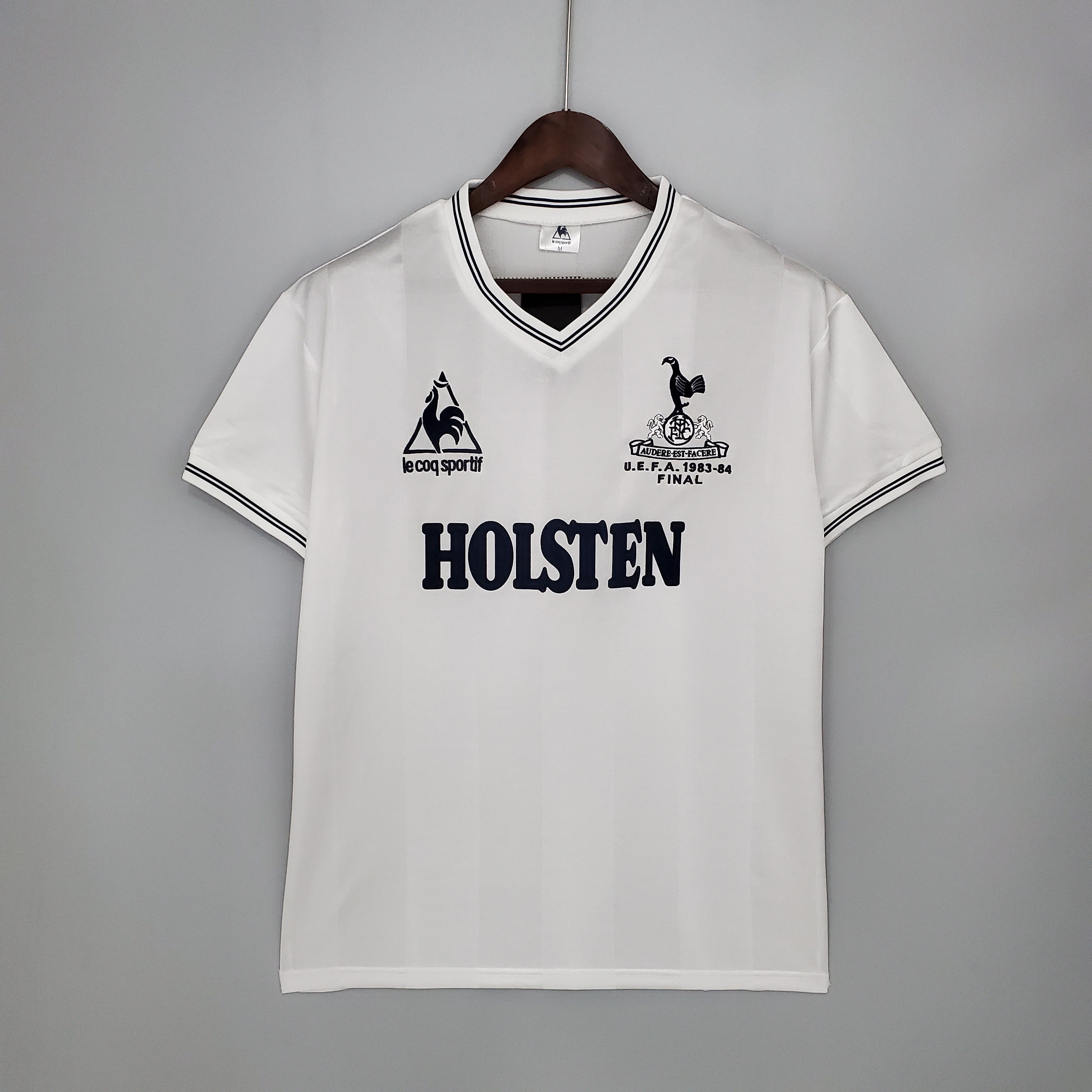
Tottenham won the FA Cup in 1981 (3-2 against Manchester City after a replay, Ricky Villa\’s spectacular goal) and in 1982. The UEFA Cup arrived in 1984 against Anderlecht on penalties, and then again in 1972 (the first one). So the club won three UEFA Cups in thirteen years, a major European achievement for an English club in that era.
The Hoddle-Ardiles duo symbolized the Tottenham style in the 1980s: technical, elegant, sometimes flashy, but unable to challenge Liverpool or Manchester United consistently. It was also then that the club began to carry the label of a beautiful loser, reinforced by the nickname Spursy, which captures this habit of cracking in decisive moments.
The Pochettino era and the Madrid final
After decades without a major title, Tottenham had a revival under Mauricio Pochettino, the Argentine coach appointed in May 2014 after leaving Southampton. Pochettino installed demanding football based on intense pressing and maximum use of players developed in the academy. Harry Kane, a young striker from the academy, became the team\’s leading scorer and the face of the project.
Tottenham finished second in the Premier League in 2016-2017, third in 2017-2018, and most notably reached the 2019 Champions League final. The European run was unforgettable: elimination of Manchester City in the quarter-final (3-4 on aggregate, advancing on away goals), then a heroic semifinal against Ajax, overturned 3-2 in Amsterdam in the second leg thanks to a Lucas Moura hat-trick.
On June 1, 2019, in Madrid, Tottenham faced Liverpool in the final. Mohamed Salah scored early at the 2nd minute from the spot after a Moussa Sissoko handball. Divock Origi doubled up in the 87th minute. Liverpool won 2-0 and lifted the sixth European Cup. For Tottenham, whose first major European final since 1984 that was, it was another disappointment. Pochettino was sacked in November 2019 despite the epic run.
Harry Kane, the homegrown child of the club turned top scorer
Harry Kane deserves a dedicated section. Born in Walthamstow in 1993, he joined the Spurs academy at 11. He made his first-team debut in 2011 but only really established himself from 2014, at 21. He later became Tottenham\’s all-time leading scorer (213 goals in total, overtaking Jimmy Greaves), three-time Premier League golden boot winner (2016, 2017, 2021), and all-time top scorer for England (66 goals, passing Wayne Rooney in 2023).
But Kane won no trophies at Tottenham. In summer 2023, he left for Bayern Munich, a transfer that sums up all Spurs tragedy: the homegrown star, the club\’s all-time leading scorer, had to leave to win silverware. At Bayern, he won the Bundesliga in 2024-2025, his first major career trophy at age 31. At Tottenham, his departure left a team suddenly orphaned, one that would have to rebuild without him.
Bilbao 2025, the end of the wait
Ange Postecoglou, the Australian coach who came from Celtic in summer 2023, took over Tottenham after Kane. His offensive philosophy, “we never stop,” appealed, but league results were inconsistent. The 2024-2025 season in the Premier League was even catastrophic (17th place final). Still, in parallel, Spurs put together an excellent European run in the Europa League.
On May 21, 2025, at San Mamés (Bilbao), Tottenham faced Manchester United in the Europa League final. Brennan Johnson, a young Welsh forward, scored the only goal of the match in the 42nd minute. Spurs won 1-0 and claimed its first major trophy since the 2008 League Cup. It was also its third UEFA Cup / Europa League title, after the ones in 1972 and 1984.
Postecoglou was still dismissed shortly afterward, given the 17th-place finish in the league. Thomas Frank, the Danish coach from Brentford, took over in summer 2025. Tottenham returned to the Champions League and hopes to build on its European silverware to start a more regular cycle at the top of English football. The challenge: proving that the nickname Spursy can finally be put to bed.
What to remember
- Tottenham was founded on September 5, 1882 by schoolboys from the Hotspur Cricket Club, in tribute to Henry Percy (Harry Hotspur).
- In 1901, Spurs won the FA Cup while playing in the Southern League, a feat no non-Football League club has repeated since.
- Bill Nicholson won eight trophies between 1958 and 1974, including the league-FA Cup double in 1961 and the Cup Winners\’ Cup in 1963.
- Tottenham was the first British club to win a European cup, on May 15, 1963, beating Atlético Madrid 5-1.
- Three UEFA Cups: 1972, 1984 and the Europa League in 2025 against Manchester United in Bilbao (1-0, goal by Brennan Johnson).
- Mauricio Pochettino led the club to the 2019 Champions League final, lost 2-0 to Liverpool in Madrid.
- Harry Kane is the club\’s all-time top scorer with 213 goals, but he left Spurs for Bayern Munich in 2023 without winning a trophy.
Further reading
To explore the world of north London and the Premier League, we recommend our pieces on Arsenal\’s history, the eternal North London Derby rival, on Chelsea\’s history and on West Ham\’s Hammers history. Our ranking of the most beautiful Premier League jerseys also revisits the iconic white kits worn by Spurs since 1990.
Frequently asked questions
When was Tottenham created?
Tottenham Hotspur was founded on September 5, 1882 by schoolboys from the Hotspur Cricket Club in north London. The club pays tribute to Sir Henry Percy (Harry Hotspur), a medieval figure whose family owned land in the area. The word Tottenham was added in 1884.
How many English league titles has Tottenham won?
Tottenham has two English league titles: 1950-1951 under Arthur Rowe and 1960-1961 under Bill Nicholson. The 1960-1961 season also saw the club win the first league-FA Cup double of 20th-century English football.
Has Tottenham already won a European Cup?
Tottenham has won four European trophies: the Cup Winners\’ Cup in 1963 against Atlético Madrid (5-1 in Rotterdam), the first European cup won by a British club, and three UEFA Cups / Europa League titles in 1972 (Wolves), 1984 (Anderlecht) and 2025 (Manchester United in Bilbao).
Why is Tottenham called the Spurs?
The name Spurs is the short form of Hotspur, itself inherited from the nickname of Sir Henry Percy (Harry Hotspur), a medieval English figure. The spurred rooster on the club badge is a direct reference to Harry Hotspur\’s spurs.
Why did Tottenham leave White Hart Lane?
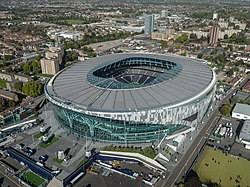
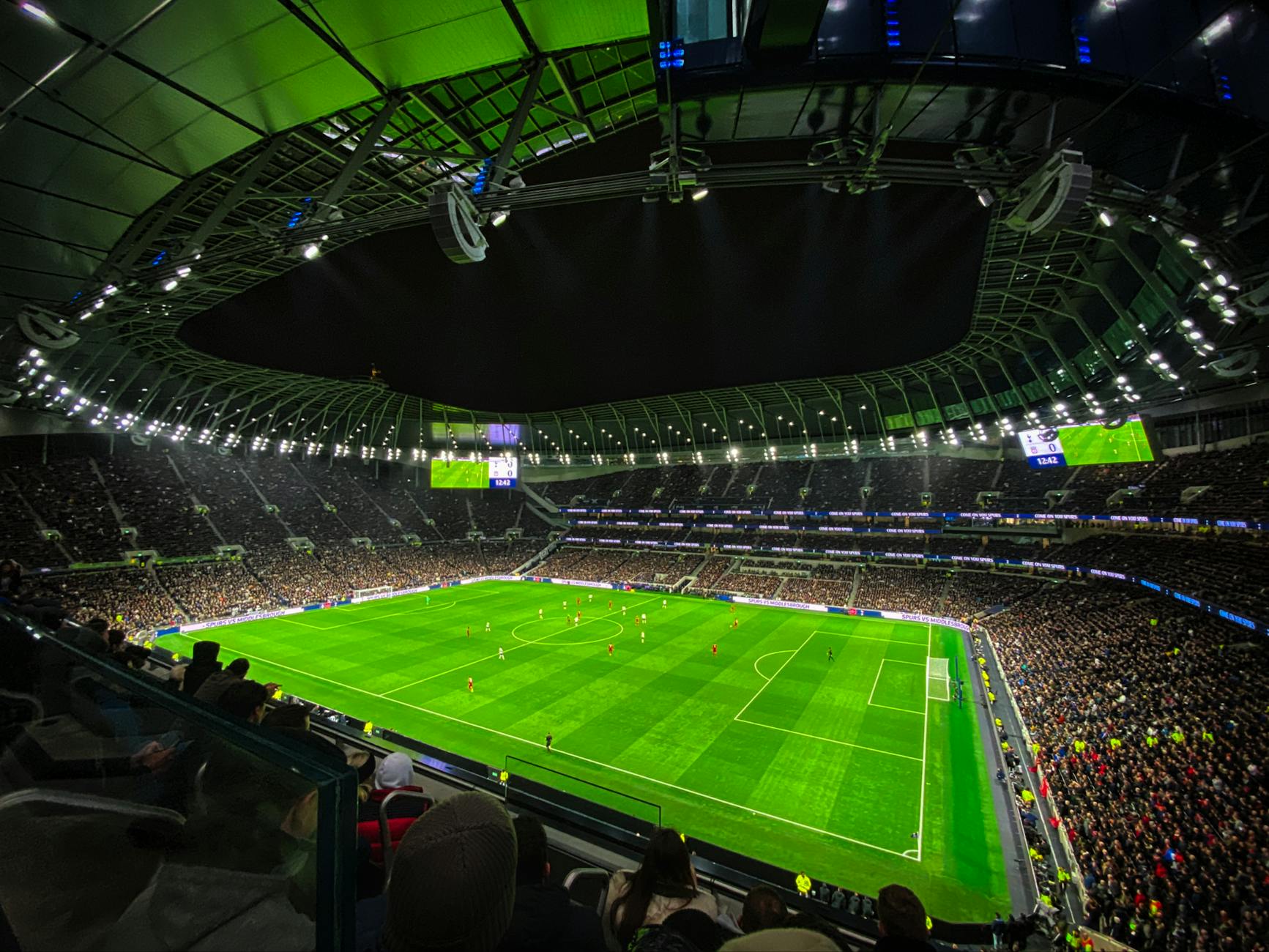
White Hart Lane, the historic stadium since 1899, had become too small (36,000 seats) for the club\’s modern ambitions. Tottenham opened the Tottenham Hotspur Stadium in April 2019, a state-of-the-art 62,850-seat venue built on the site of the old stadium.
The Tottenham collection is waiting for you
Our store offers the current-season Tottenham home, away and third jerseys, as well as a selection of retro jerseys that have marked Spurs history, from the iconic white jerseys to the recent European finals.