
On April 25, 2004, at White Hart Lane, Arsenal held a 2-2 draw with Tottenham and became official England champions. But what will go down in history is not so much the title; it’s what followed: Arsenal finished the Premier League season without a single defeat. 38 matches, 26 wins, 12 draws, 0 defeat. No club had achieved this since Preston North End in 1888-1889, when the league had only 22 matches. Twenty years later, no one has done it again.
The Arsenal Invincibles were a perfect season, a mindset, and a tactical showcase by Arsène Wenger. It is also a team that combines physical power, speed, technique and collective solidarity like no other in Premier League history. Here is the complete story of this season that surpassed all standards of modern English football.
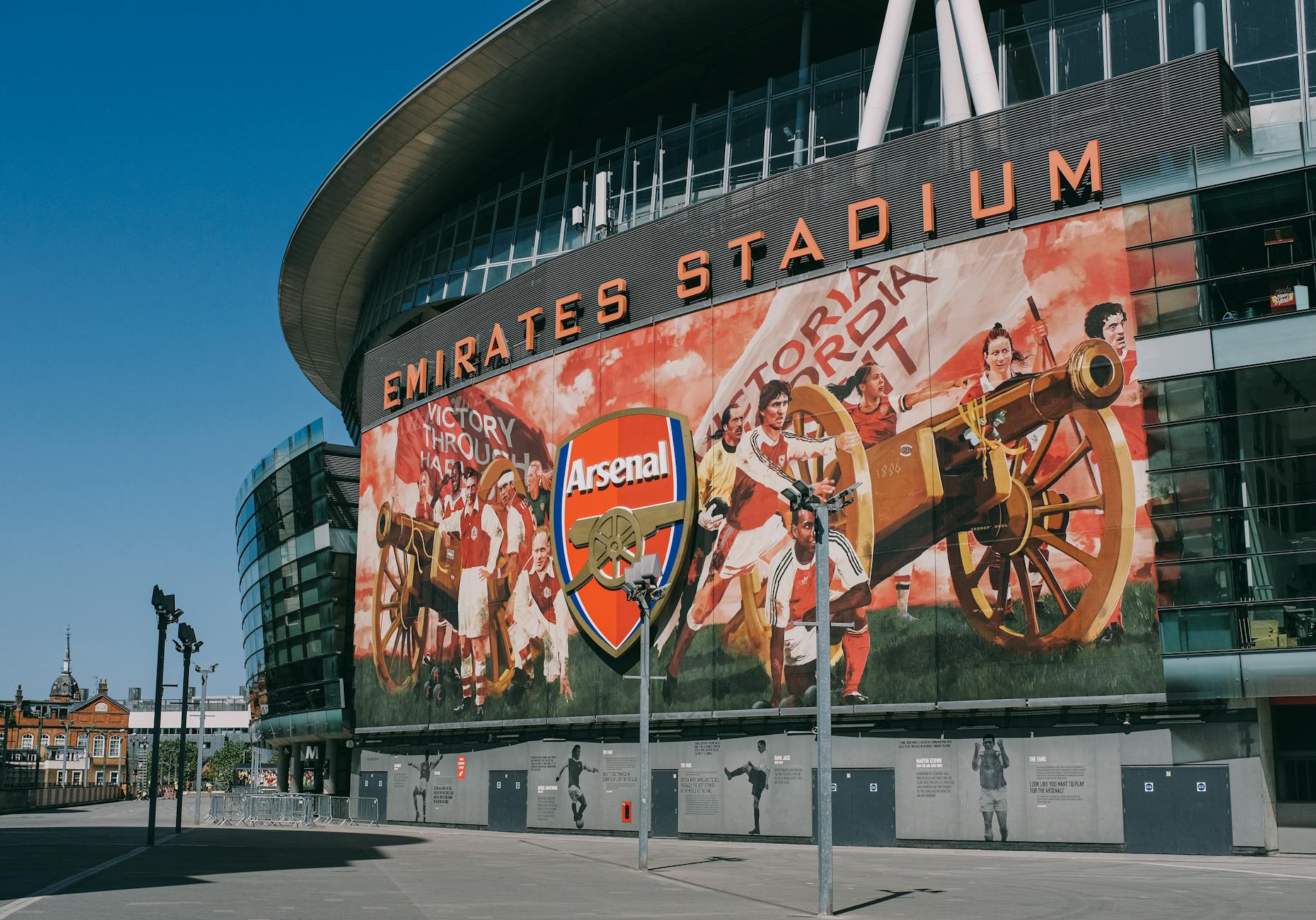
Context: Arsenal after two titles but disappointed in 2003
In the summer of 2003, Arsenal came out of a frustrating season. As champions of England in 2001-2002 under Wenger (a second league-FA Cup double in five years), the club narrowly missed the 2002-2003 title, edged out by Manchester United. The frustration was even greater because Arsenal had held first place for much of the season before breaking at the end of the campaign. Wenger privately vowed to build a team the next year that would not lose again.
His public statement got laughs at the time. During the 2003 preseason, Wenger said in an interview: “I think we can go a whole season unbeaten” (I think we can go an entire season unbeaten). The English media mocked the Frenchman’s arrogance. No one believed a club could go through 38 Premier League matches without a single misstep. No one, except Wenger and his group.
The 2003 transfer market was targeted. Arsenal signed Jens Lehmann (German goalkeeper from Dortmund) to replace David Seaman, and Gaël Clichy (young French full-back from Cannes) to prepare for the succession of Ashley Cole. The smartest move was financial: very little spending and a lot of continuity in the squad.
The Invincibles squad, player by player
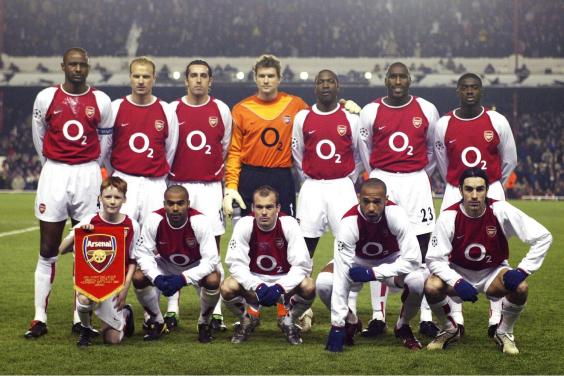
The Invincibles squad had about twenty players, but the starting eleven was extremely stable. In goal: Jens Lehmann, icy and unflappable German, who played all 38 league matches. In central defense: Sol Campbell (English, former Tottenham captain, signed in 2001 amid major controversy) and Kolo Touré (Ivorian, converted by Wenger from forward to center-back, a huge revelation of the season).
On the flanks: Lauren Etame Mayer (Cameroonian, right) and Ashley Cole (English, left), two modern full-backs able to defend and attack. In midfield, the structure is a double pivot with Patrick Vieira (French, captain, physical metronome) and Gilberto Silva (Brazilian, 2002 World Cup champion, the balancing force in midfield). On the side of the midfield: Robert Pires (French, former Marseille and Metz player, left-footed technician) and Freddie Ljungberg (Swedish, powerful right winger).
Up front: Thierry Henry (French, main striker, league top scorer with 30 goals) and Dennis Bergkamp (Dutch, second striker who drops deep to distribute play). In January 2004, José Antonio Reyes (Spanish, signed from Sevilla) strengthened the squad and added depth. Our piece on Thierry Henry’s career details the French striker’s central role that season.
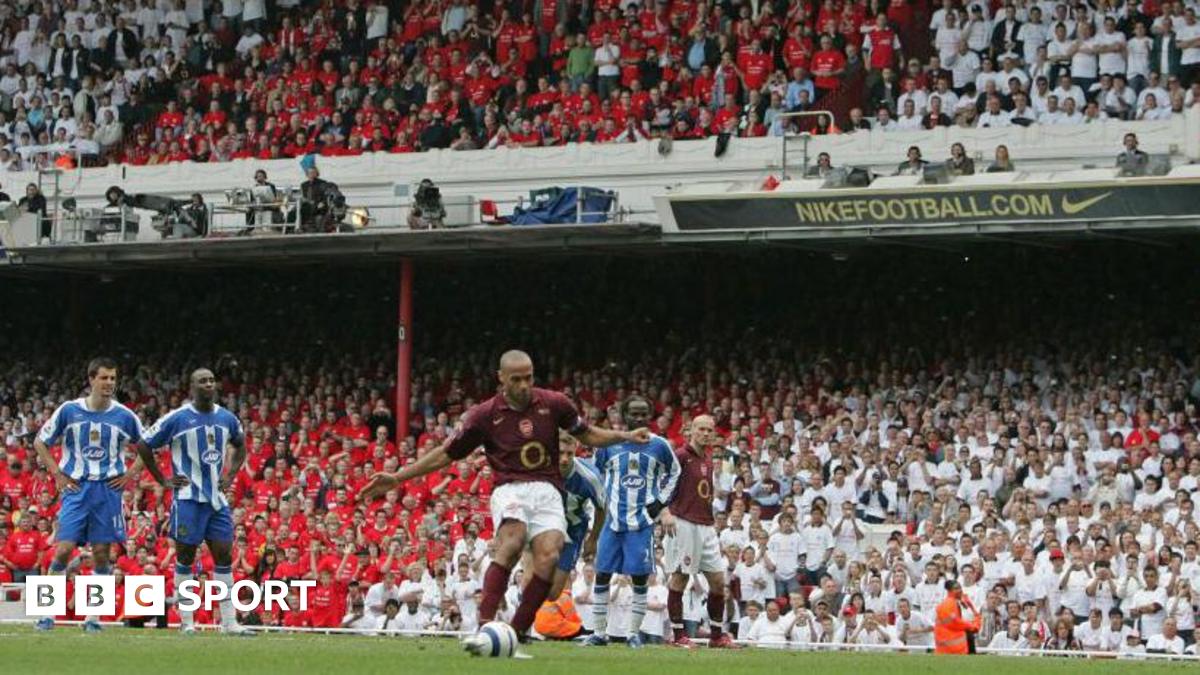
Wenger’s tactics: fluid 4-4-2, freedom and pressing
Wenger did not revolutionize tactics. His base shape remained a classic 4-4-2, rooted in English tradition. But he adapted it with unprecedented fluidity. Henry and Bergkamp constantly swapped positions. Pires and Ljungberg moved inside to create overloads in midfield. Vieira regularly pushed up as a third striker during attacking phases.
The press was high, coordinated and aggressive. Henry, who is mostly praised for his attacking talent, was actually one of the best presser in world football at that time. Vieira and Gilberto won the ball back in the opposition area in a matter of seconds. The offensive transition after possession recovery was lightning-fast: three passes, goal. Arsenal scored 73 goals in the league that season, nearly 2 per match.
Defensively, the team conceded only 26 goals in 38 matches. Lehmann made key saves, while Campbell and Touré dominated in the air and Cole and Lauren closed down the flanks. More importantly, Arsenal recovered the ball so high that opponents rarely got a chance to shoot on target. Wenger’s tactics were defense through possession.
From August 2003 to April 2004: key moments
The season began on August 16, 2003 with a 2-1 win at Goodison Park (Everton), with goals by Henry and Pires. Then came regular victories, punctuated by a few controlled draws. On September 21, 2003, Arsenal took a 0-0 draw at Old Trafford against Manchester United, in a match marked by Ruud van Nistelrooy missing a penalty (hitting the crossbar) and the famous “Battle of Old Trafford” (post-match melee).
In December, Arsenal crushed Wolves 5-0 and Newcastle 3-0. In January 2004, the club signed Reyes and continued to string wins together. The turning point came on February 9, 2004 at Highbury against Manchester City: Arsenal led 1-0 but City equalized, then went ahead 2-1. Wenger brought on Edu, who scored the equalizer in the 79th. Pires won the 2-1 victory in the 90th minute. It was probably the tightest match of the season.
On March 28, 2004, at Highbury, Arsenal drew 1-1 with Manchester United in a tense derby. Henry scored his 30th Premier League goal. On April 9, a win at Liverpool 2-1 after a comeback from 0-2 to 2-2 and then 2-1 in stoppage time, with a brace from Pires. But it is April 25, 2004 that will be remembered forever.
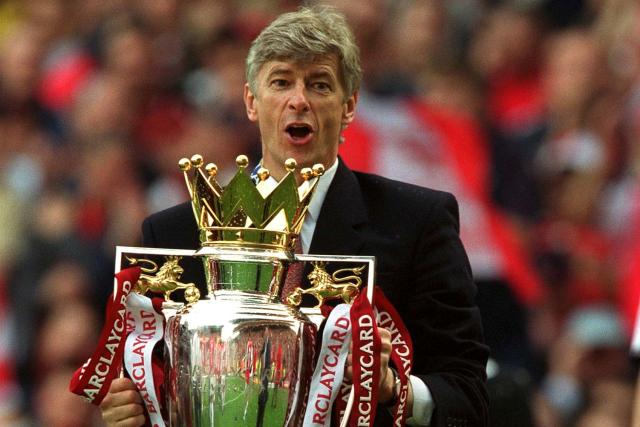
The title won at White Hart Lane
On April 25, 2004, in a raucous White Hart Lane, Arsenal played Tottenham, its rival in North London. Either a draw or a win was enough for the Gunners to become champions on their rival’s own pitch. The storyline was dramatic. Vieira opened the scoring in the 3rd minute. Pires doubled it at the 35th. Arsenal went into halftime 2-0 up, and the title seemed sealed.
But Tottenham came back. Jamie Redknapp narrowed the gap at the 62nd. The Spurs pushed hard. In the 90+1, Robbie Keane converted a penalty (foul on Lauren). 2-2. The final whistle released Arsenal: a draw was enough, the title was won. The Gunners players celebrated in the middle of their neighbors’ pitch, a symbolic image that echoed the 1971 coronation (title also won at White Hart Lane).
Four matches remained to complete the unbeaten season. Arsenal won two and drew two. On May 15, 2004, at Highbury, Arsenal beat Leicester 2-1 (Henry from the penalty spot, Vieira) in the 38th and final match of the season. The season is over: 26 wins, 12 draws, 0 defeats, 73 goals scored, 26 conceded, 90 points. No team has done better.
The extended run: 49 unbeaten matches
The invincibility did not stop in May 2004. It continued into the next season. Arsenal beat Manchester United at home in the Charity Shield in August 2004. Then the league wins kept coming: Everton, Middlesbrough, Blackburn, Norwich, Fulham. The run stretched on until October 24, 2004.
That day at Old Trafford, Arsenal faced Manchester United in a match that would go down in history for the wrong reasons. Manchester United won 2-0, on a penalty by Van Nistelrooy after a debated foul and a goal by Wayne Rooney. The Invincible run ended at 49 consecutive unbeaten league matches (38 in the 2003-2004 season plus 11 in 2004-2005).
After the match, the atmosphere was electric. Sir Alex Ferguson is said to have received a slice of pizza in the dressing room tunnel, thrown by an Arsenal player (probably Cesc Fàbregas, then a young substitute). The incident entered English football culture as “Pizzagate.” Rivalry between Arsenal and United was then at its peak.
The numbers and legacy of the Invincibles
The full tally for the 2003-2004 season is impressive: 26 wins, 12 draws, 0 defeats. 73 goals scored (Henry 30, Pires 14, Bergkamp 4, Ljungberg 4, Reyes 2 in half a season). 26 goals conceded. 90 points. Arsenal finished 11 points ahead of Chelsea (2nd) and 15 points ahead of Manchester United (3rd). Henry won his third Premier League Golden Boot and was named player of the year by the PFA and FWA.
In other competitions, the tally was more modest. Arsenal were eliminated in the Champions League quarter-finals by Chelsea (1-1 then 1-2). The club lost the FA Cup semi-final to Manchester United (0-1) and the League Cup semi-final to Middlesbrough. So the Invincibles remain a season of pure league brilliance.
The Invincibles’ legacy is huge. Twenty years later, no English club has repeated the feat. Manchester City came close in 2017-2018 (record points total with 100 but one loss to Liverpool during the season). Liverpool under Klopp in 2019-2020 finished with only one defeat. The Invincibles’ perfect season therefore remains unique in the modern era. Wenger himself said it is the greatest achievement of his career.
What to remember
- Arsenal won the Premier League in 2003-2004 with no defeats: 26 wins, 12 draws, 0 losses in 38 matches.
- It was the first unbeaten season since Preston North End in 1888-1889 (a season of 22 matches only).
- Arsène Wenger had predicted the feat in preseason, which made the English media laugh at the time.
- Thierry Henry was top scorer with 30 league goals and was named PFA and FWA player of the year.
- The title was sealed on April 25, 2004 at White Hart Lane on Tottenham’s pitch, after a 2-2 draw.
- The unbeaten run lasted until October 24, 2004, for 49 consecutive matches without defeat, another all-time record.
- The usual starting XI: Lehmann ; Campbell, Touré, Cole, Lauren ; Vieira, Gilberto, Pires, Ljungberg ; Bergkamp, Henry.
Explore further
To explore the Arsenal universe in more depth, we recommend our pieces on the full history of the Gunners, on Thierry Henry’s career, star of the invincible season, and on the history of Manchester United, the Invincibles’ main rival. Our ranking of the best Premier League jerseys also revisits the iconic red jersey from that season.
Frequently asked questions
How many matches did Arsenal play unbeaten in 2003-2004?
Arsenal played all 38 Premier League matches of 2003-2004 without suffering a single defeat: 26 wins and 12 draws. It is the only team to have achieved this in a 38-match season. Preston North End (1888-1889) did the same, but in only 22 matches.
How many goals did Thierry Henry score this season?
Thierry Henry scored 30 goals in the Premier League in 2003-2004, finishing top scorer in the league for the third consecutive time. Across all competitions, his total rose to 39 goals. He was named player of the year by both the PFA and the FWA.
When was Arsenal crowned champion?
Arsenal was officially crowned England champion on April 25, 2004, after a 2-2 draw with Tottenham at White Hart Lane. Vieira and Pires had put Arsenal ahead, while Redknapp and Keane (penalty) allowed Spurs to come back. The draw was enough to mathematically secure the title.
How long did the unbeaten streak last?
The Invincible run lasted for 49 consecutive Premier League matches, from May 7, 2003 to October 24, 2004. It ended at Old Trafford against Manchester United (0-2), with a Van Nistelrooy penalty and a Wayne Rooney goal.
Why is this team called the Invincibles?
The nickname comes directly from going the whole Premier League season without a defeat. Arsenal minted a gold badge for each player who took part in the season, engraved with the word “Invincibles,” a tradition unique in modern English football.
Recreate the moment with the Invincibles jersey
Our Arsenal collection features jerseys from the legendary Wenger era seasons, including the 2003-2004 retro Invincibles jersey, as well as the current home, away and third versions.