
On May 25, 2005, in Istanbul, Liverpool were down 3-0 to AC Milan at halftime in the Champions League final. Thirty-six minutes later, the score was 3-3. In the penalty shootout, the Reds won their fifth European Cup. That night sums up everything Liverpool represents: a club that never dies, rooted in a port city that has endured everything, from the booming docks of the 19th century to the Heysel and Hillsborough tragedies.
Founded in 1892 after a dispute around Anfield, Liverpool has amassed 20 English league titles, 8 FA Cups, 10 League Cups and 6 Champions Leagues. Liverpool’s history is that of a working-class club that helped shape modern football with Bill Shankly, endured the worst tragedies in European football and reclaimed the top of the continent thanks to Jürgen Klopp.
1892, the birth of a club after a dispute over Anfield
To understand Liverpool’s history, it helps to start with a split. At the end of the 19th century, Anfield is Everton\’s stadium, the city\’s first professional club. The owner of the venue, John Houlding, an influential brewer and politician, suddenly raised the rent charged by the club. Everton refused and moved to Goodison Park in 1892. Houlding was left with an empty stadium and a decision to make: rent it out to another club or create one.
He chose the second option. Liverpool Football Club was officially founded on June 3, 1892. It joined the Football League in the 1893-1894 season and quickly climbed the divisions. The first English title came in 1901, the second in 1906. At that time, the club was already playing in red, but not full red yet; that is another story told in our article on the history of the Liverpool jersey.
The interwar period saw a third title in 1922 and a fourth in 1923. But the club\’s real rise would not happen until after 1959, with the arrival of a Scot with a square jaw and a direct way of speaking.
Bill Shankly, the visionary who invented it all
In December 1959, Bill Shankly took the helm of a club that had been stagnating in the Second Division since 1954. He was 46, with a player career behind him, socialist convictions and one obsession: making Liverpool an institution. He stayed for fifteen years and rebuilt it from the ground up.
Shankly first introduced a revolutionary way of working. He created the famous ‘Boot Room’, a technical room under Anfield where the staff debrief each match together. He professionalized training, recruited solid players instead of stars, and set up a playing style built on pressing and short passes. In 1962, Liverpool were promoted back to the First Division. In 1964, the club became English champion for the sixth time.
It was also under Shankly that Liverpool adopted its fully red kit. Before him, the club had played in a red jersey but white shorts. In 1964, the manager asked Ronnie Yeats to wear red shorts and socks to intimidate opponents. The effect was so strong that Shankly made all-red the official kit. The modern Liverpool jersey was born that day.
Shankly won three league titles (1964, 1966, 1973), two FA Cups (1965, 1974) and one UEFA Cup (1973). But his legacy is above all cultural. He turned Liverpool into a global club, gave its supporters a voice, and popularized the anthem You\’ll Never Walk Alone, which has echoed in the Kop since 1963. His line, Football is not a matter of life or death, it is much more important than that, has gone around the world.
The Paisley era: three European Cups in seven years
When Shankly left in July 1974, many thought Liverpool would decline. The opposite happened. Bob Paisley, his assistant of twenty years, a natural from the Boot Room, took over and brought the club through its most glorious decade. Over nine seasons in charge, he won 20 trophies, including six English championships and three European Cups (1977 in Rome, 1978 in Wembley, 1981 in Paris).
The Paisley years were marked by almost insolent domination. The team relied on a mythical trio: Kenny Dalglish up front, Graeme Souness in midfield, Alan Hansen in defense. Ian Rush joined the club in 1980 and became Liverpool\’s all-time top scorer, with finals goal records that still stand today. No English manager won as many European Cups as Paisley until Carlo Ancelotti.
Joe Fagan, another son of the Boot Room, succeeded Paisley in 1983 and won in his first season the league – League Cup – European Cup treble (1984 in Rome against AS Roma itself). Liverpool was then at the absolute peak of European football. But the following year, everything changed.
Heysel and Hillsborough: the two founding tragedies
On May 29, 1985, in Brussels, the European Cup final pitted Liverpool against Juventus. Before kickoff, English supporters charged the Italian supporters. A wall collapsed. Thirty-nine people died, mostly Italians. The Heysel disaster is one of the worst in football history. Liverpool was banned from European competitions for six years, English clubs for five.
Four years later, on April 15, 1989, another tragedy hit the club, this time as a victim. During an FA Cup semi-final at Hillsborough (Sheffield), poor crowd control by police caused a crush in the stands. Ninety-seven Liverpool supporters died crushed against the fencing. For decades, the police wrongly blamed supporters. It was not until 2016 that an inquiry established the authorities\’ full responsibility.
Hillsborough transformed English football. Standing terraces were removed, stadiums became fully seated. At Liverpool, the tragedy brought together an entire community around its victims. Justice for the 97 remains, still today, a collective fight carried by supporters and families.
The Istanbul miracle, May 2005
After the 1990s, marked by the 1989 and 1992 FA Cups but no league title, Liverpool went into a long title drought in the league. In cup competitions, Gérard Houllier won a quintuple in 2001 (FA Cup, League Cup, UEFA Cup, Charity Shield, UEFA Super Cup). But the big night of the 21st century came under Rafael Benítez.
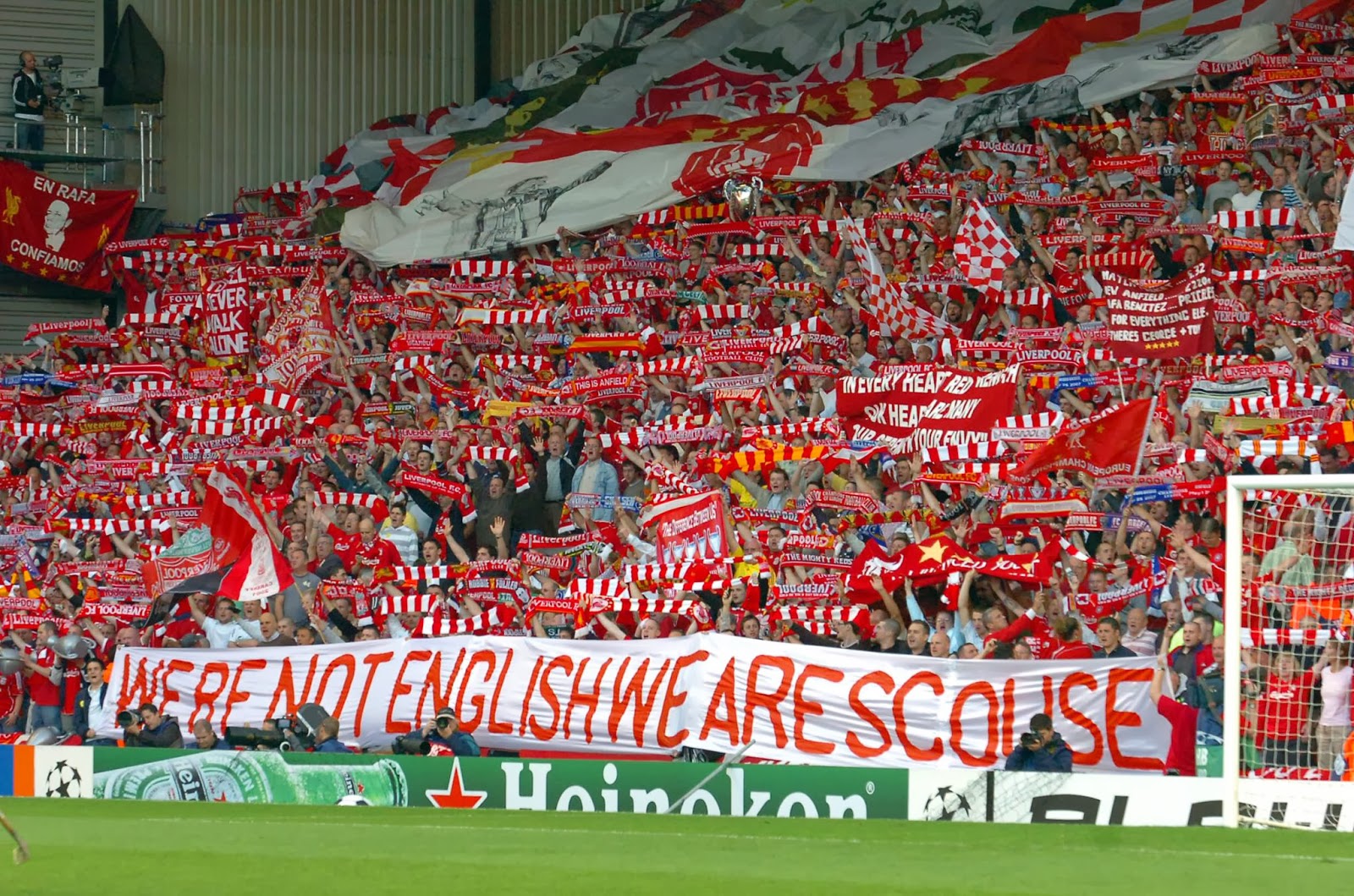
On May 25, 2005, at Istanbul\’s Atatürk Olympic Stadium, Liverpool faced AC Milan in the Champions League final. Paolo Maldini scored in the 1st minute. Hernán Crespo doubled the lead in the 39th, then again in the 44th. At halftime, it was 3-0 and the final seemed over. Six minutes after the restart, Steven Gerrard headed one back. Vladimír Šmicer equalized in the 56th minute. Xabi Alonso scored a penalty in the 60th after a foul on Gerrard. 3-3 in just six minutes.
Extra time was all-or-nothing. Andriy Shevchenko seemed to score the winning goal in the 117th minute, but Jerzy Dudek made a stunning double save. In the shootout, Serginho and Pirlo both missed for Milan, as did Shevchenko. Liverpool won 3-2 in the shootout and lifted its fifth European Cup. We go into more detail on this night in our article dedicated to the Istanbul final.
The Klopp era and the end of thirty years of waiting
October 2015. Jürgen Klopp arrived at Anfield after seven seasons in Dortmund. The German promised intense football (\’heavy metal football\’), relentless pressing, and above all, to turn doubters into believers. It took him five seasons to keep that promise. Klopp\’s first Champions League final of the era came in Kyiv in May 2018, lost 3-1 to Real Madrid after injuries to Salah and Karius\’ crash.
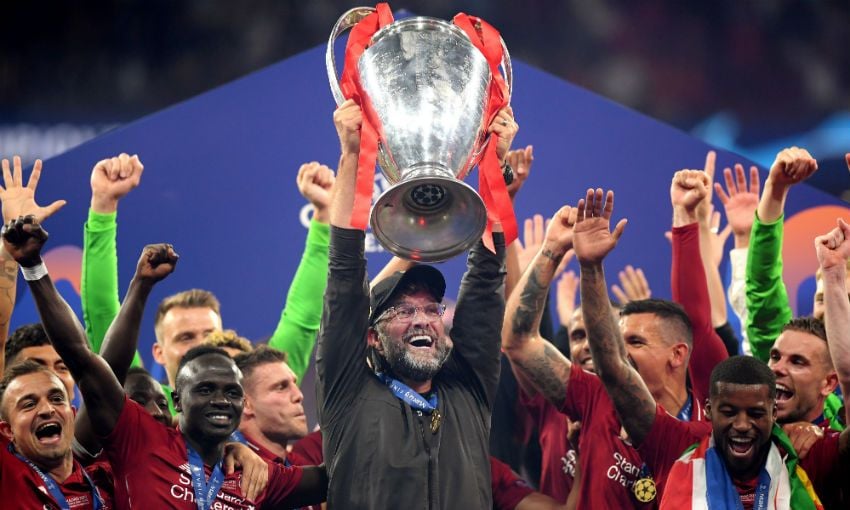
One year later, on June 1, 2019 in Madrid, Liverpool beat Tottenham 2-0 in the Champions League final. That was the club\’s sixth European Cup. Salah, Mané, and Firmino, Klopp\’s attacking trio, dominated Europe. And in June 2020, Liverpool finally won the Premier League. Thirty years after the 1990 title, the Reds became champions of England again.
Klopp reproduced the formula again in 2022 with an FA Cup and a League Cup. But the strain of the pressing system gradually wore down the squad. In January 2024, the German announced his departure at the end of the season. He left behind a rebuilt, younger club, and a legacy that makes his nine seasons among the most defining of the last fifty years at Anfield.
Liverpool identity: You\’ll Never Walk Alone and the Kop
No club in the world embodies the idea of community as much as Liverpool. The Kop, a popular stand behind one of Anfield\’s goals, became the archetype of a supporters\’ stand in the 1960s. Its name comes from a battle in the Boer War, Spion Kop, where many Lancashire English soldiers died. The stand has become its memorial.
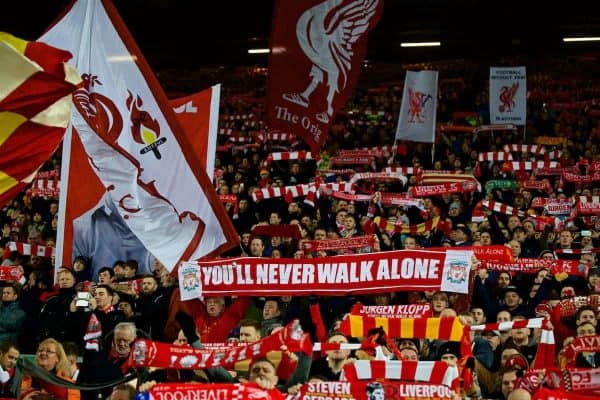
You\’ll Never Walk Alone became the club\’s anthem in the early 1960s. The song, written by Rodgers and Hammerstein for the musical Carousel in 1945, was popularized by the Liverpool group Gerry and the Pacemakers in 1963. The Kop adopted it, then the whole stadium followed. Today, worldwide, those five words immediately evoke Anfield and the loyalty of the Reds supporters. We created a complete article on the history of this anthem.
The Liver bird, the mythical bird in the city\’s coat of arms, appears on the crest. The red colors, the shield-shaped badge and the white bands around the collar are part of instantly recognizable imagery. The club has changed its visual shape very little over more than a century, which makes it one of the last major European clubs to resist graphic trends.
Liverpool today: the 20th title under Arne Slot
Liverpool after Klopp is being written with Arne Slot, a Dutch coach who came from Feyenoord in summer 2024. No one expected much from this first transition season. Yet Slot won the Premier League in his first year, Liverpool\’s 20th English title. Liverpool reached the top of the English honors list with Manchester United, tied.
The squad remains built to win: Mohamed Salah, the third-best all-time scorer in club history, captain Virgil van Dijk, Trent Alexander-Arnold (who joined Real Madrid in 2025), Dominik Szoboszlai and the young generation. Fenway Sports Group, owner of the club since 2010, continues to combine American financial rigor with respect for the local heritage.
One hundred thirty years after its creation, Liverpool is still one of the most successful and most beloved clubs in world football. Twenty English championships, six European Cups, eight FA Cups, ten League Cups: a trophy haul built over time, never through endless spending, always with a clear identity.
What to remember
- Liverpool was founded on June 3, 1892 by John Houlding after a dispute with Everton over the rent at Anfield.
- Bill Shankly (1959-1974) turned a Second Division club into a European benchmark and imposed full red in 1964.
- Bob Paisley won three European Cups (1977, 1978, 1981) and six league titles in nine seasons at the helm.
- The Heysel (1985, 39 deaths) and Hillsborough (1989, 97 deaths) tragedies deeply marked the club and English football.
- On May 25, 2005 in Istanbul, Liverpool won its fifth Champions League after being down 3-0 to AC Milan at halftime.
- Jürgen Klopp won the Champions League in 2019 and the Premier League in 2020, ending a 30-year wait for a league title.
- Under Arne Slot, Liverpool won its 20th English championship title in 2024-2025, tying with Manchester United.
Learn more
To explore Liverpool in more depth, we recommend our articles on the 2005 Istanbul final minute by minute, on the history of the Reds\’ red jersey, and on the origin of You\’ll Never Walk Alone. To place Liverpool in the larger Premier League story, our ranking of the best Premier League jerseys revisits the iconic kits of the English league.
Frequently asked questions
When was Liverpool FC created?
Liverpool was founded on June 3, 1892 by John Houlding, owner of Anfield, after Everton moved to Goodison Park because of a rent dispute. The club joined the Football League in the 1893-1894 season.
How many Champions Leagues has Liverpool won?
Liverpool has six European Cup / Champions League wins: 1977 and 1978 under Paisley, 1981 still under Paisley, 1984 under Joe Fagan, 2005 under Rafael Benítez (the Istanbul final), and 2019 under Jürgen Klopp in Madrid against Tottenham.
Why does Liverpool wear red?
Liverpool has played in red since 1896, but all-red (jersey, shorts and socks) dates back to 1964. Bill Shankly asked his defender Ronnie Yeats to test the full-red kit before a European match to intimidate the opponent. The result impressed him so much that he made that outfit the official kit.
What does You\’ll Never Walk Alone mean to Liverpool?
You\’ll Never Walk Alone has been the club\’s unofficial anthem since the early 1960s. Originating from the 1945 musical Carousel by Rodgers and Hammerstein, the song was popularized by the Liverpool group Gerry and the Pacemakers in 1963. The Kop, a popular stand at Anfield, began singing it before matches and the tradition spread to the whole stadium.
How many English league titles has Liverpool won?
Liverpool has 20 English league titles, tied with Manchester United at the top of the domestic record. The 20th came in 2024-2025 under Arne Slot, after the one won in 2020 under Klopp that ended a 30-year wait.
Did this story make you want to wear the jersey?
Our Liverpool collection in-store includes the current home jersey, away and third versions, as well as retro jerseys from the Reds\’ greatest seasons, from Shankly\’s all-red jersey to the Istanbul kits.