
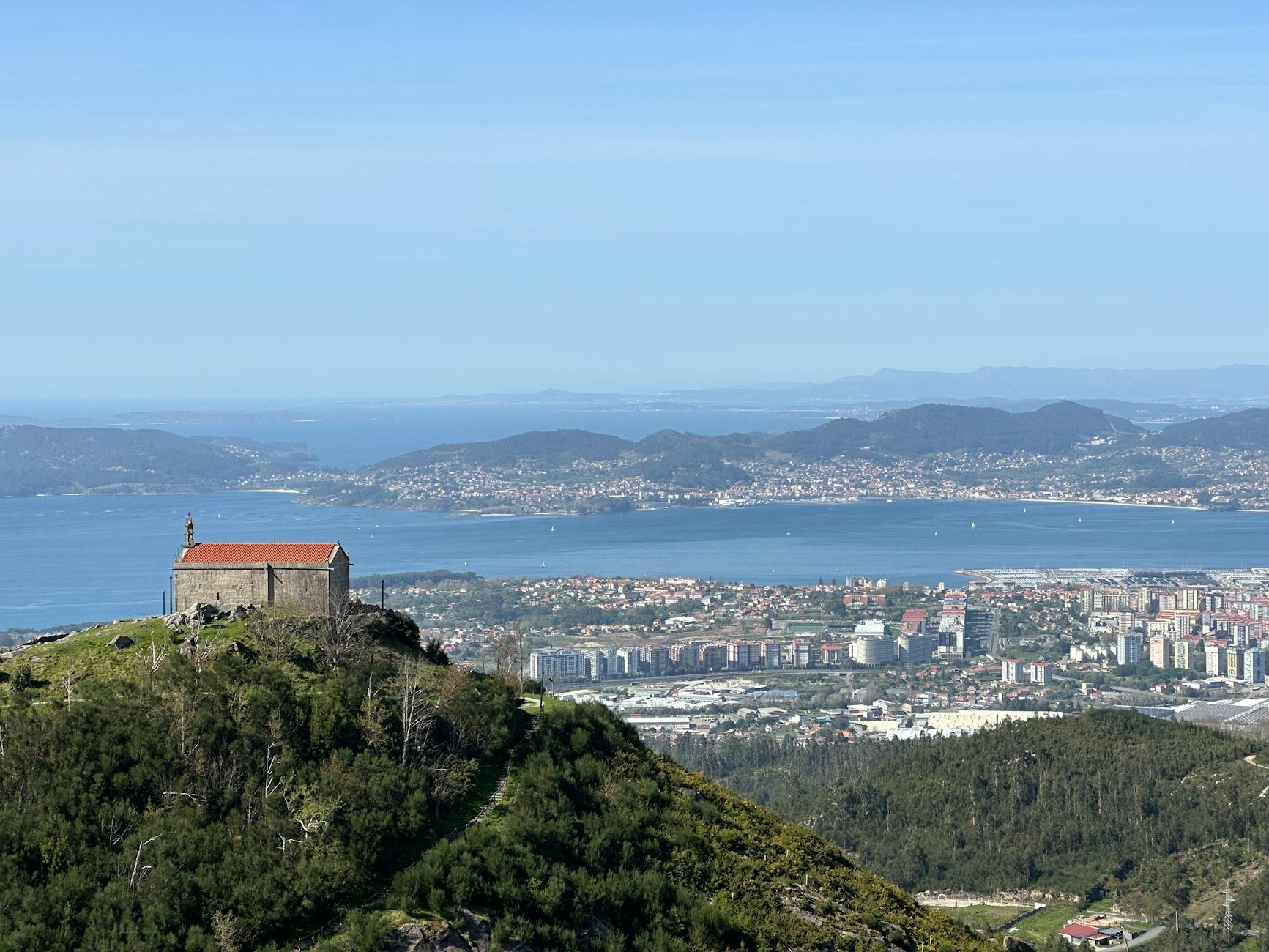
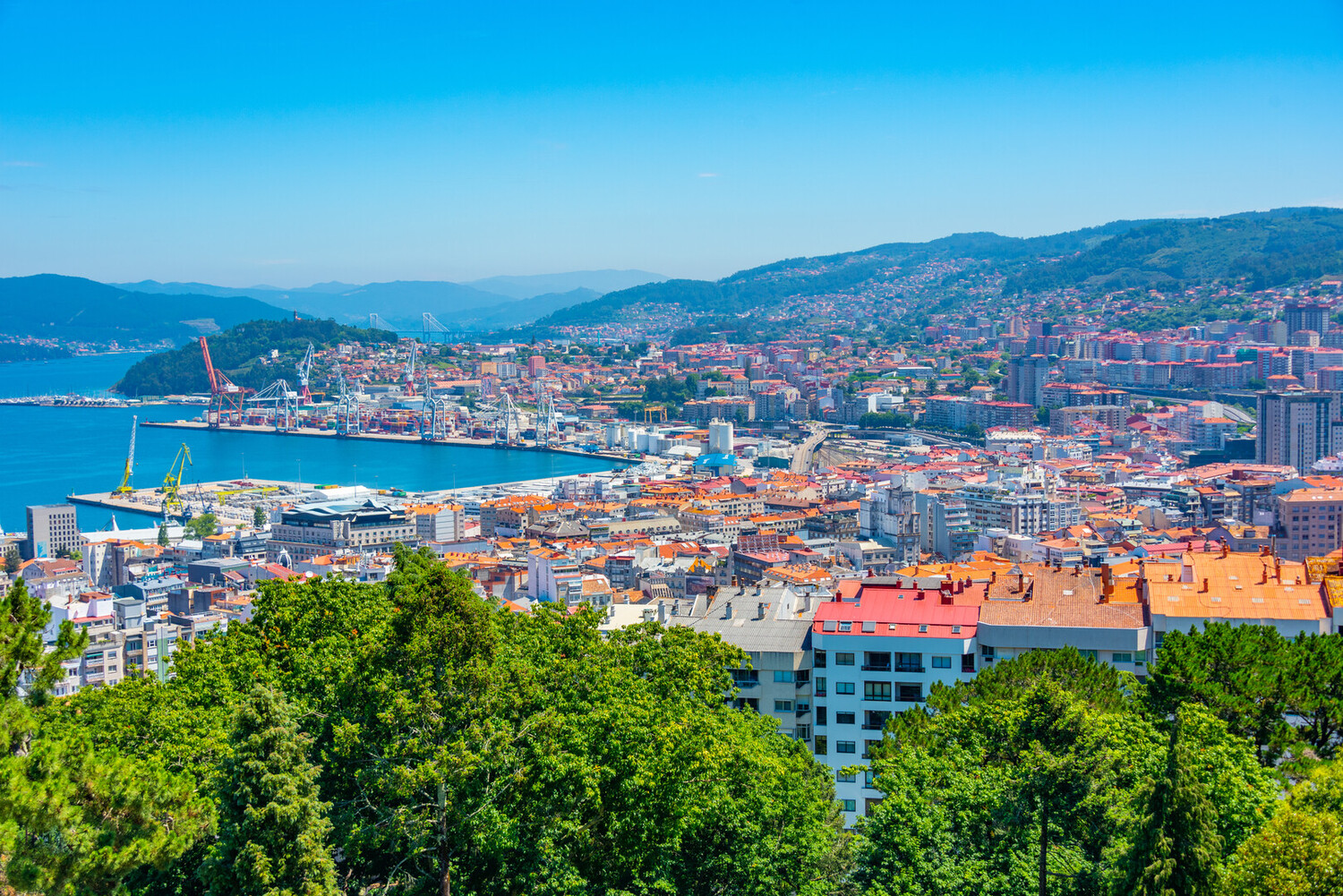
In the northwest of Spain, where the rocky coasts drop down to the Atlantic and Galician is spoken as often as Castilian, you’ll find Vigo. The most important port city in Galicia has been home since 1923 to a club with a deeply Celtic-flavored name and crest: Real Club Celta de Vigo. It is a sky-blue-and-white team that has never won La Liga, but has enjoyed glorious hours in Europe and continues to represent a unique regional pride.
The history of Celta is that of a provincial club that managed to hold its own among Spanish giants, step off the beaten path with a bold recruitment policy, and offer its supporters a few unforgettable European campaigns. This article traces the major milestones of that journey, from the original Celta to the 2000s EuroCelta era and the 2017 Europa League semifinal against Manchester United.
1923: the founding merger in Vigo
Real Club Celta de Vigo was founded on August 23, 1923, through a merger of two existing local clubs: Real Vigo Sporting and Real Fortuna FC. The idea for the merger came from the desire to create one strong force able to represent Galicia with dignity in the then-new Spanish championship. The merger made it possible to combine fan bases, resources, and structures.
The name Celta was chosen in reference to Galicia’s presumed Celtic heritage. This northwest Spanish region has a rich cultural history, in common with other Atlantic regions (Brittany, Wales, Scotland, Ireland), and claims Celtic roots preserved in the Galician language and some musical traditions.
The club entered La Liga in its first edition in 1928-1929, in the second division. It was promoted to the first division in 1939 and alternated for decades between Primera and Segunda, without ever truly establishing itself in the European elite. This instability long remained a hallmark of Celta, until the upswing at the beginning of the 2000s.
Galician Celtic identity
The identity of Celta Vigo is strongly influenced by Galician culture, halfway between Spain and the Celtic Atlantic. The club is nicknamed Os Celestes (the Blues, in Galician) in reference to its sky-blue and white colors, or more simply O Celtiña (the little Celta). Supporters frequently sing in Galician, and the regional language is used in the club’s official communication.
This regional dimension belongs to a broader context: Galicia is one of Spain’s four historic autonomous communities, with its own linguistic and cultural status. Like Deportivo La Corogne, Celta is a vehicle for expressing this identity, without the separatist political dimension you can find in Catalonia or the Basque Country.
The sky-blue and white colors, the club’s signature look, have remained consistent since its founding. The home jersey, generally plain sky blue or with some white details, has changed little in its core design. The crest, however, has evolved but keeps the same elements: the Cross of Saint James, a reference to Galician pilgrimage tradition, and references to the city of Vigo.
Balaídos, the stadium of Celta passion
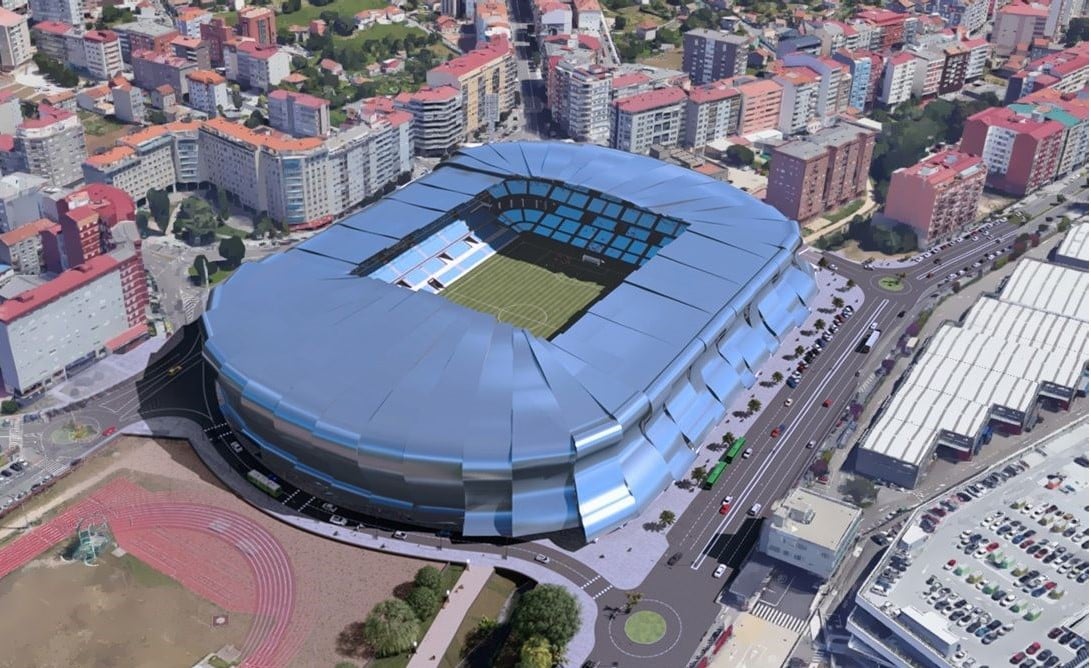
Celta’s stadium is Estadio de Balaídos, opened in 1928. It is one of the oldest stadiums still active in La Liga. Its current capacity is around 29,000 seats after several renovations. The stadium hosted matches during the 1982 World Cup held in Spain.
Balaídos has the characteristic of offering an intimate atmosphere, far from the anonymous mega-venues of European giants. The stands, arranged in a classic rectangular layout, remain close to the pitch. Supporters, especially those in the Río end (Curva do Río), keep a lively atmosphere going in both Galician and Spanish.
A full renovation project for the stadium has been underway for several years, aiming to increase capacity and modernize the facilities. The work has advanced in successive phases, gradually transforming the venue while allowing the club to continue playing its home matches there. Final completion is planned in the coming years.
The EuroCelta era 1998-2003
Late in the 1990s and early 2000s, Celta entered a golden era, then called EuroCelta due to its remarkable continental performances. Under coach Víctor Fernández, the club regularly reached European rounds and pulled off stunning results against much larger teams.
In the 1998-1999 UEFA Cup, Celta reached the quarter-finals after eliminating Liverpool 4-1 on aggregate in the round of 16. Beaten by Marseille in the quarter-finals, the team still proved it could compete with the best. The following season, in 1999-2000, there was a repeat in the UEFA Cup: a spectacular 4-1 elimination of Juventus, then another quarter-final.
The peak arrived in 2002-2003, with a historic qualification for the Champions League as a result of finishing fourth in La Liga. Celta reached the Round of 16 in the C1, where it fell to Arsenal on a 5-3 aggregate score. It was a European triumph for a club that, for a few seasons, played at level with the continental elite.
Mostovoi, Karpin and the Russians of Celta
EuroCelta was built on an original recruitment strategy, notably with the arrival of several Russian players who left a lasting mark on the club’s history. Aleksandr Mostovoi, an attacking midfielder who arrived in 1996, became the team’s playmaker and one of the most beloved foreigners in La Liga. His fellow countryman Valeri Karpin also brought tactical discipline.
Other players marked this prosperous period: Catanha (Brazilian striker), Mauro Silva (who also played at Deportivo), Vágner (Brazilian goalkeeper), and Turkish forward Mehmet Köybaşı. This international approach, bold for a club of this size, stood apart from the more traditional policies of other Spanish teams at the time.
The club’s sporting department, under president Horacio Gómez, made Vigo an attractive destination for international talents at a reasonable cost. This strategy delivered sporting results, before mid-2000s financial issues put an end to that golden period. To compare with another Spanish regional success story, our article on Real Sociedad tells a different story.
The 2017 Europa League semifinal against Manchester United
After several difficult seasons, including relegation to the second division in 2007 and a return in 2012, Celta returned to the European top again in the 2016-2017 season. Under Argentine coach Eduardo Berizzo, the team reached the Europa League semifinals, a major achievement in the club’s recent history.
The first leg at Balaídos against Manchester United was lost 1-0, with a headed goal from Marouane Fellaini. In the return match at Old Trafford, Celta earned a 1-1 draw thanks to Roncaglia’s goal, but it was not enough. Manchester United then won the final against Ajax. For Celta, this semifinal remains one of the great moments of its modern history.
This run included Iago Aspas, Pione Sisto, Daniel Wass, Pablo Hernández, and John Guidetti. It was a talented but sometimes fragile team capable of bursts of brilliance that reminded Europe that Galicia still produces attractive football. To learn about another Spanish European achievement, our article on Valencia CF covers the club’s two Champions League finals.
Iago Aspas, the local hero
The modern face of Celta is Iago Aspas. Born in Moaña, 15 kilometers from Vigo, and developed in the club’s cantera, he made his professional debut with Celta in 2008. After a short stop at Liverpool in 2013-2014 (with limited impact) and at Sevilla, he returned to Vigo in 2015 and has not left since. Captain, scorer, and leader, he has become a true institution.
Aspas is the club’s all-time top scorer with roughly 214 goals across all competitions, surpassing the totals of his predecessors. A repeated Pichichi candidate in La Liga, selected for Spain’s national team, he has won the Zarra Trophy (best Spanish scorer in La Liga) several times across the 2010s and 2020s.
His bond with the club is total: refusing to move to bigger European clubs, choosing Celta until the end of his career, and making financial contributions during difficult moments. This loyalty makes him almost unique in modern football, where moves to giants have become the norm as soon as a player breaks through.
The Galician derby against Deportivo La Coruña
It is impossible to talk about Celta without mentioning the Galician derby against Deportivo La Coruña. The two cities are about 150 kilometers apart, and their clubs embody a historical rivalry that goes far beyond the sport. The derby (O Derbi Galego) is one of La Liga’s most emotionally charged matches.
For several years in the 1990s and 2000s, both clubs regularly met in the first division, giving the derby high profile. Deportivo even won La Liga in 2000, a feat Celta has never matched. This difference in honors has never prevented Celta from chasing its most valuable wins against Depor in those matches.
Today, the derby is less frequent at the top level (Deportivo has been in Segunda since 2018), but it remains alive in the Copa del Rey or whenever both teams meet in Segunda. Galician passion for football is still very much alive, and Celta today remains the main standard-bearer in La Liga. To discover another Iberian regional derby, our article on the Seville derby tells a similarly fierce Andalusian rivalry.
What to remember
- Real Club Celta de Vigo was founded on August 23, 1923 by the merger of Real Vigo Sporting and Real Fortuna FC.
- The name Celta refers to Galicia’s presumed Celtic heritage, a region sharing roots with Brittany, Ireland, and Wales.
- The club has never won La Liga, but it enjoyed a European golden age known as EuroCelta between 1998 and 2003, including qualification for the 2003-2004 Champions League.
- Under Eduardo Berizzo, Celta reached the Europa League semifinals in 2016-2017, where they were eliminated by Manchester United.
- Balaídos, opened in 1928, holds about 29,000 spectators and is being renovated in phases.
- Aleksandr Mostovoi and Valeri Karpin, both Russian players of the 2000s, remain emblematic figures of the club.
- Iago Aspas, current captain and youth product, is the club’s all-time leading scorer with more than 200 goals in all competitions.
To go further
Celta’s history is inseparable from that of Galicia and regional Spanish football. To explore the topic further, we recommend our articles on Real Sociedad, another great regional Spanish journey, on Valencia CF, which shares with Celta a European ambition, and on the best jerseys in La Liga, where Celta’s sky-blue-and-white has a place.
Frequently asked questions
When was Celta Vigo founded?
Real Club Celta de Vigo was founded on August 23, 1923, through the merger of two existing local clubs: Real Vigo Sporting and Real Fortuna FC. The idea was to create one united force capable of representing Galicia with dignity in the then-new Spanish championship.
Has Celta Vigo ever won La Liga?
No. Despite more than a century of existence and notable European performances, Celta has never won La Liga. Its best finish remains 4th place in 2002-2003, which qualified it for the Champions League. The club has also not won the Copa del Rey to date.
What is EuroCelta?
EuroCelta is the nickname given to Celta from 1998 to 2003, during a period when the club posted remarkable European results: UEFA Cup quarter-finals in 1999 and 2000 (including a spectacular 4-1 elimination of Juventus) and the Round of 16 in the 2003-2004 Champions League against Arsenal.
Why is the club called Celta?
The name refers to Galicia’s presumed Celtic heritage. This northwest Spanish region shares cultural roots with other Atlantic regions (Brittany, Wales, Scotland, Ireland), preserved in the Galician language and musical traditions. The club fits into this symbolic lineage.
Who is Iago Aspas to Celta Vigo?
Iago Aspas is the current captain and the club’s all-time leading scorer with more than 200 goals across all competitions. Born near Vigo and trained at the cantera, he spent his entire career at Celta (except for brief spells at Liverpool and Sevilla), becoming a true local hero and a symbol of loyalty in modern football.
Shop the Galician sky-blue-and-white
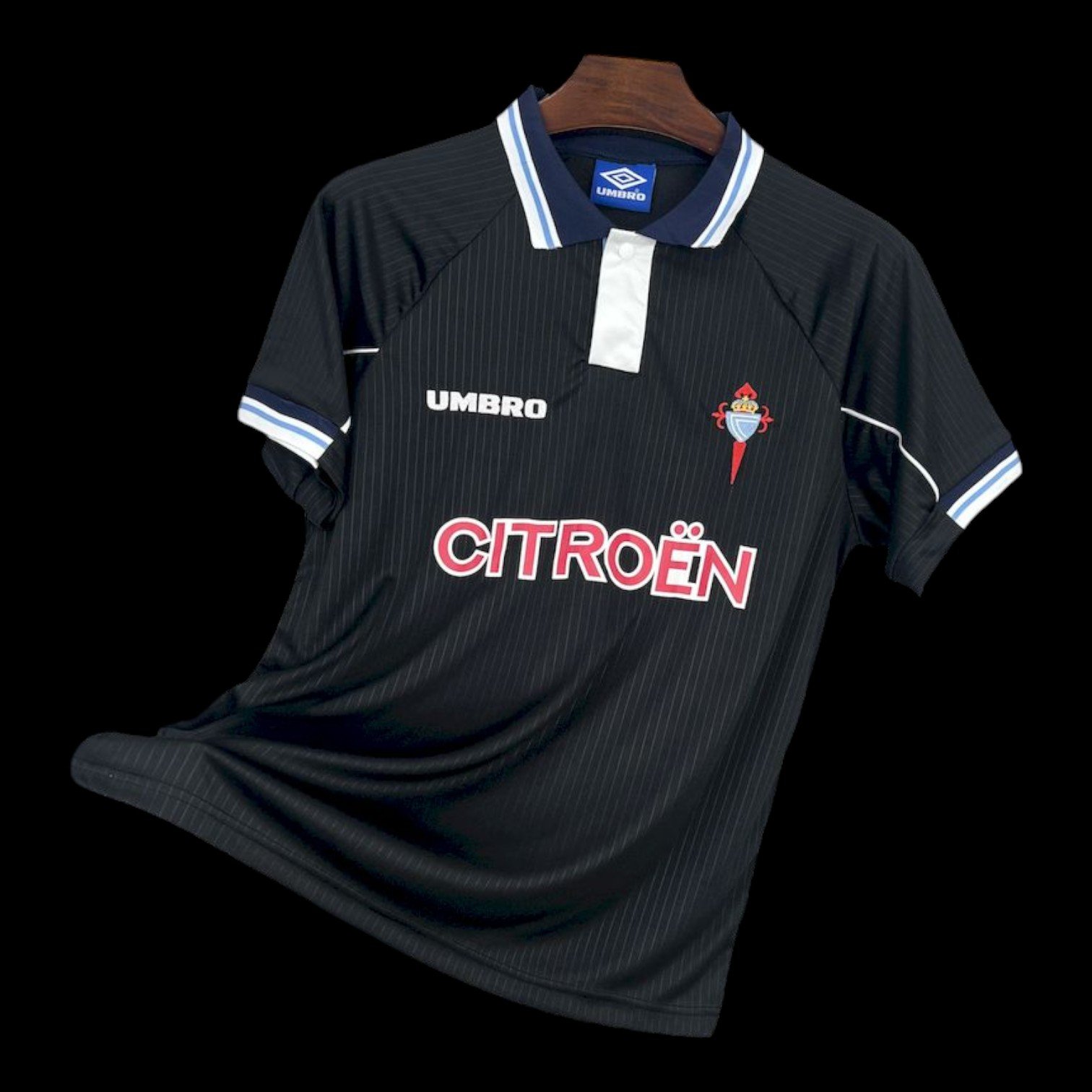
The full Celta Vigo collection is available: home jersey in sky blue, away, third, player version, fan version, and retro jerseys that recall the EuroCelta era of the 2000s.