
May 26, 1999, Barcelona’s Camp Nou, Champions League final. In the 90th minute, Manchester United trailed 1-0 to Bayern Munich, who had scored in the 6th minute through Mario Basler from a free kick. Three minutes of stoppage time were announced. Sir Alex Ferguson was already looking at his players with resignation. And then everything changed in 90 seconds: Teddy Sheringham equalized from a corner in the 91st minute, and Ole Gunnar Solskjær gave the win in the 93rd. The English commentators screamed. Bayern collapsed on the pitch. Manchester United completed a treble of Premier League – FA Cup – Champions League that had never been done in English football.
Here is the full story of this exceptional 1998-1999 season: winning the league in the last days, lifting the FA Cup at Wembley, and the Camp Nou final that will remain in everyone’s memory as the wildest in European Cup history.
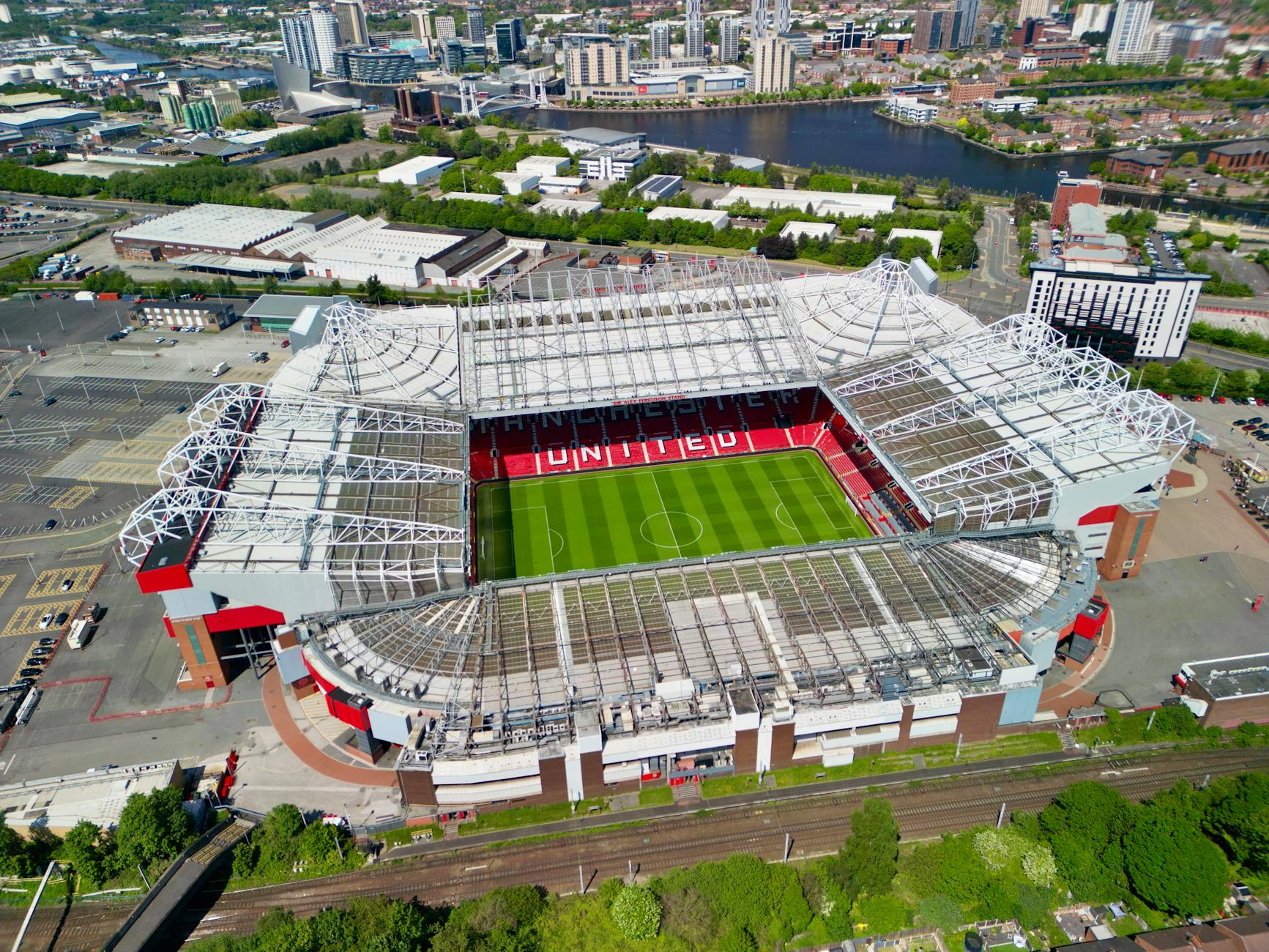
The context: Ferguson in pursuit of the European grail
In the summer of 1998, Sir Alex Ferguson had already led Manchester United for nearly twelve years. He had already won four Premier Leagues, two FA Cups, one League Cup and one Cup Winners’ Cup (1991). But the big target remained out of reach: the European Cup, which United had not lifted since 1968. Ferguson knew that without that trophy his era would remain incomplete.
The 1998 transfer market was targeted. United signed Jaap Stam (Dutch center back from PSV) for 10 million pounds, an absolute record for a defender at the time. Dwight Yorke arrived from Aston Villa for 12.6 million as a complement to Andy Cole. Jesper Blomqvist (Swedish winger) arrived from Parma for added depth. The squad was complete, balanced, and ready to compete on three fronts at once.
The 1998-1999 season did, however, start badly. United lost their first two Premier League matches against Leicester and West Ham. But Ferguson stayed calm. He knew his team had enough depth to hold on. The machine started working steadily.
The 1998-1999 United squad
The United squad this season is one of the most complete of the Ferguson era. In goal: Peter Schmeichel, the giant Danish keeper, in his final season at the club before moving to Sporting Lisbon. In central defense: Jaap Stam (signed in summer) and Ronny Johnsen (Norwegian) or Henning Berg (Norwegian). On the sides: Gary Neville (English, right back) and Denis Irwin (Irish, left back), two models of consistency.
In midfield: Roy Keane (Irish, captain, metronome) and Paul Scholes (English, playmaker). In the wide midfield positions: David Beckham (English, right, future global superstar) and Ryan Giggs (Welsh, left, capable of an unstoppable one-on-one). Up front: Andy Cole and Dwight Yorke, an offensive duo that often swapped roles. On the bench: Teddy Sheringham (English, veteran), Ole Gunnar Solskjær (Norwegian, the so-called super-sub, nicknamed the baby-faced assassin).
The squad was also shaped by the Class of ’92 developed at the club: Beckham, Scholes, Giggs, Gary and Phil Neville, Nicky Butt. This is the English spine that gave United its unique identity at that time and earned admiration across England.
The Premier League won at Old Trafford on May 16
The Premier League season was a constant battle with Arsenal, the reigning champions. The two clubs traded first place throughout the season. United exploded in April after eliminating Arsenal in the FA Cup semifinal (1-2 then 2-1 thanks to Giggs’ legendary dribble in extra time, April 14, 1999).
The title came down to the final day. On May 16, 1999, United hosted Tottenham at Old Trafford. One win was enough to become champions. Spurs opened the scoring through Les Ferdinand in the 24th minute. David Beckham equalized in the 42nd minute with a right-footed strike that caught Ian Walker off guard. In the 47th minute, Andy Cole changed everything, lobbing the Spurs keeper after a pass from Sheringham. United won 2-1 and became English champions for the fifth time under Ferguson.
The title won over Tottenham is almost ironic: it was Sheringham’s former club, and he scored on the key pass. This first trophy of the treble was followed six days later by the FA Cup at Wembley.
The FA Cup won at Wembley against Newcastle
On May 22, 1999, at Wembley, Manchester United faced Newcastle United in the FA Cup final. The context was unique: the FA Cup was still a major trophy at the time, and both clubs were deeply invested in it. On the pitch, things turned quickly.
In the 10th minute, Roy Keane was injured in a tackle by Gary Speed and had to leave, replaced by Teddy Sheringham. Sheringham scored on his very first touch, in the 11th minute, finishing from a cross by Paul Scholes. 1-0. In the 53rd minute, Paul Scholes himself doubled the margin with a shot from 18 meters. 2-0. United won comfortably. It was the second FA Cup of the Ferguson era.
Only four days now separated the team from Camp Nou. The trip to Barcelona was tense: Roy Keane, captain, was suspended for the final (a yellow card against Juventus in the semifinal, second warning in knockout phase). Paul Scholes was also suspended for the same reason. Two major regular starters were absent for the most important final in the club’s recent history.
May 26, 1999, Camp Nou: the context of the final
Camp Nou hosted the 1999 final before 90,245 spectators. It was the 90th birthday of Sir Matt Busby (legendary former manager, who died in 1994), a symbolic detail highlighted by the English press. United therefore fielded a side changed by the suspensions, with David Beckham at defensive midfield (a position he had never played before) and Nicky Butt as central partner.
Bayern Munich, coached by Ottmar Hitzfeld, was the favorite. The German side had stars: Oliver Kahn in goal, Lothar Matthäus as sweeper, Stefan Effenberg, Mario Basler, Carsten Jancker, Mehmet Scholl. Bayern had already won the European Cup in 1974, 1975 and 1976, and wanted to reclaim that trophy. For United, it was the first European Cup final since 1968.
The referee was Italian Pierluigi Collina, considered the best referee in the world at the time. He would later describe the post-match atmosphere as a lion’s roar when United supporters exploded in joy at the final whistle.
The match minute by minute
6th minute. Bayern won a free kick at 25 meters through the center. Mario Basler went around, curling his right foot around the wall (the wall jumped). Schmeichel could do nothing. 1-0 for Bayern. Camp Nou was silent for United, while it exploded for the Germans.
The rest of the first half was dominated by the Germans. United, unsettled by the absences of Keane and Scholes, created almost no real chances. Beckham battled in midfield, while Yorke and Cole were smothered by Matthäus and Linke. At the interval, Bayern led with merit.
Second half. Bayern kept controlling. In the 78th minute, Mehmet Scholl won the ball back and tried a beautiful lob on Schmeichel: the shot hit the post. In the 84th minute, Carsten Jancker received a floated pass from Effenberg and struck a half-volley: the crossbar sent the ball out. Two huge chances, two misses. Those posts and crossbars would leave a permanent mark on the story of the final.
Ferguson brought on Sheringham in the 67th (for Blomqvist), then Solskjær in the 81st (for Cole). Two offensive substitutions, a desperate move that changed history. In the 90th minute, the referee announced three minutes of stoppage time. Bayern seemed to be holding on. But everything was about to turn.
The 90 seconds that changed everything
91st minute. Corner for United, taken by Beckham from the right side. Schmeichel, the Danish keeper, moved up to within six meters to cause confusion. Ryan Giggs mishandled the ball in the box, Sheringham turned and poked it into the back of the net. 1-1. Camp Nou exploded for the United supporters. Bayern was stunned but remained organized.
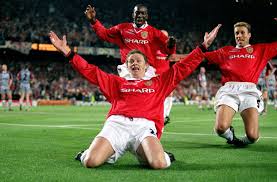
93rd minute. Another corner for United, again taken by Beckham. Sheringham headed back to the second post. Solskjær burst into the area, put his right foot across the line and drove the ball into Oliver Kahn’s top corner. 2-1. Solskjær spread his arms and sank to one knee, an image that became iconic. The German players literally collapsed on the turf, some in tears.
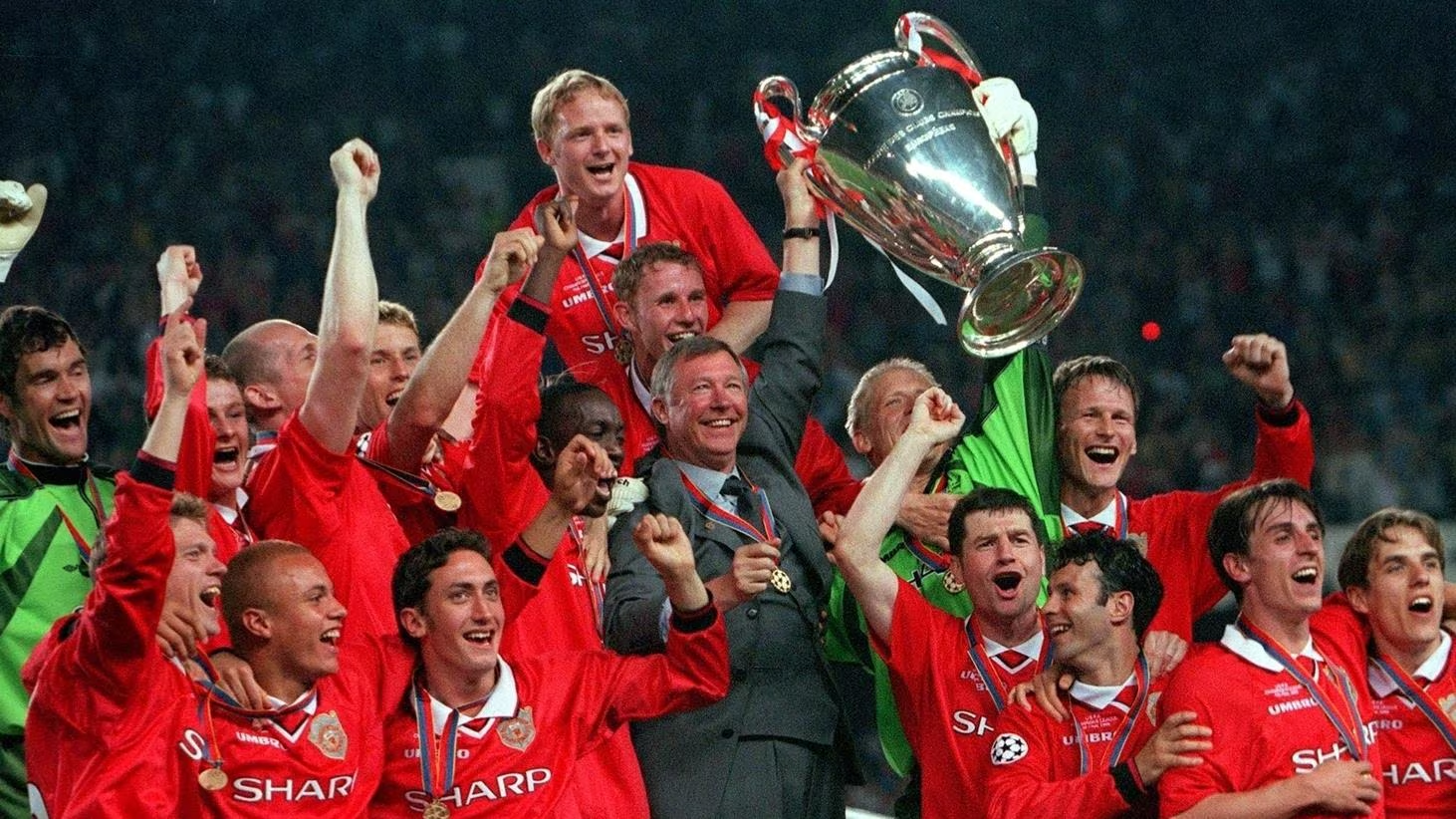
A few seconds later, the final whistle released Manchester United. Pierluigi Collina nearly cried with emotion. Sir Alex Ferguson ran toward his players and shouted his famous line: “Football, bloody hell!” This final has become part of the global football consciousness. In 90 seconds, United overturned the impossible and completed an unprecedented treble.
The legacy: a treble unmatched in England until 2023
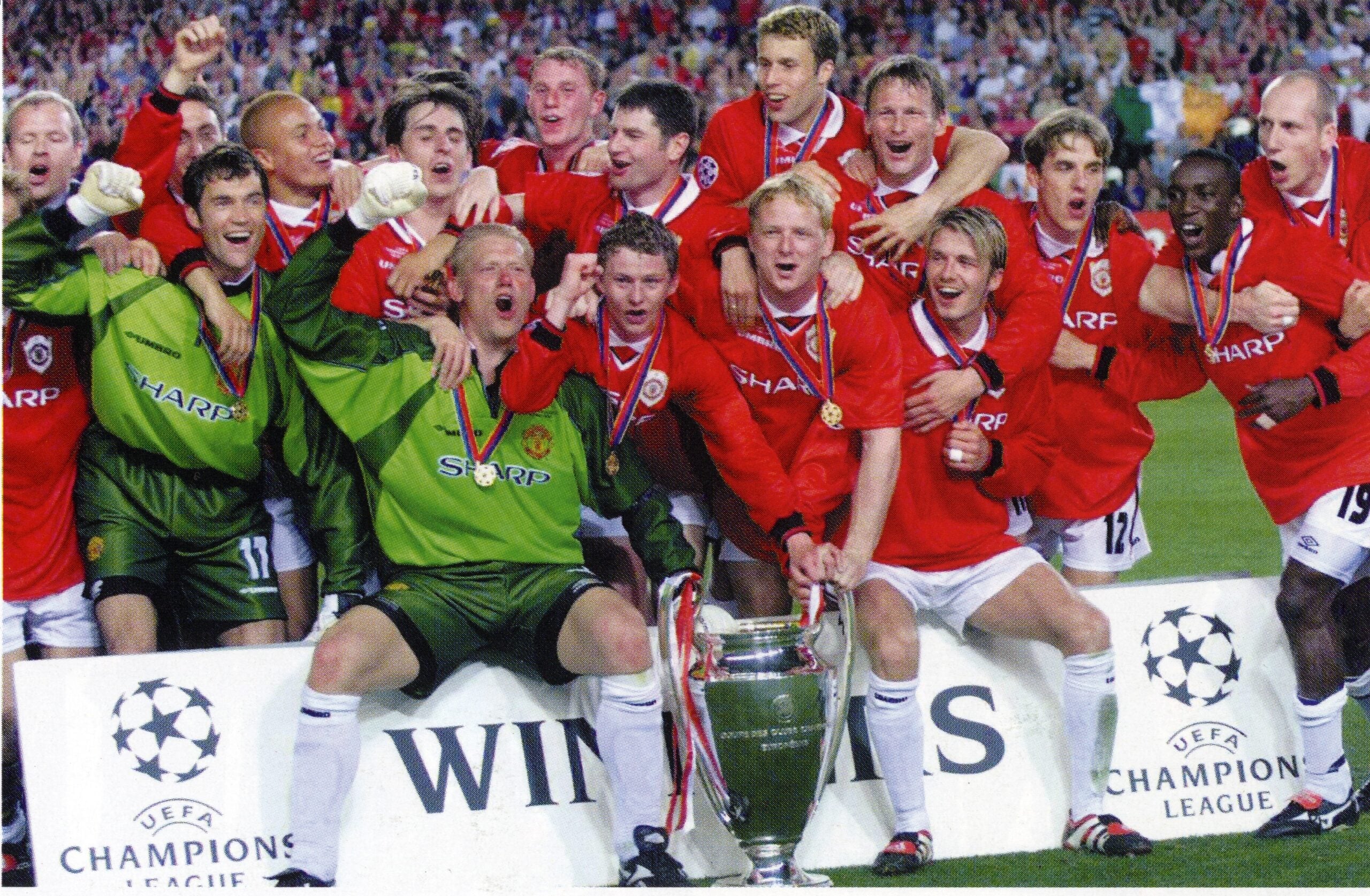
The Premier League – FA Cup – Champions League treble of 1998-1999 remained, for 24 years, the only one in English football history. No other club managed to win all three trophies in the same season. Liverpool came close several times but never completed it. Arsenal never came close. Chelsea and Manchester City won the Premier-FA-Champions trio with a few years in between, but never in the same season, until Manchester City did in June 2023.
For Ferguson, it was his peak. He was knighted by Queen Elizabeth II a few weeks later and became Sir Alex. For Sheringham, a veteran who arrived in 1997 without a heavy trophy cabinet, it was the career-defining moment. For Solskjær, the super-sub nickname became a brand. The Norwegian would score many decisive goals from the bench in the following years, and later returned as United manager (2018-2021).
For Bayern Munich, it was a wound that took time to heal. The club would still lose a final in 2010 (to Inter in Madrid) and 2012 (to Chelsea in Munich), before finally winning its fifth Champions League in 2013 against Dortmund at Wembley. For the complete history of Manchester United, we published a dedicated article that places 1999 in the long saga of the Red Devils.
What to remember
- Manchester United won the Premier League – FA Cup – Champions League treble in 1998-1999, becoming the first English club to achieve this feat.
- The Premier League title was won on May 16, 1999 at Old Trafford against Tottenham (2-1, goals by Beckham and Cole).
- The FA Cup was won on May 22, 1999 at Wembley against Newcastle (2-0, goals by Sheringham and Scholes).
- The Champions League final was played on May 26, 1999 at Barcelona’s Camp Nou against Bayern Munich, before 90,245 spectators.
- Final score: Manchester United 2-1 Bayern Munich. Goals: Basler (6th) for Bayern, Sheringham (90+1) and Solskjær (90+3) for United.
- Roy Keane (captain) and Paul Scholes were suspended for the final after two yellow cards in the semifinal against Juventus.
- No English club had ever completed this treble before Manchester City in 2022-2023, 24 years later.
Explore further
To explore the Red Devils universe in more depth, we recommend our articles on the complete history of the club, on the history of Manchester City, the second English club to complete the treble in 2023, and on the 2005 Istanbul final, another major European turnaround for English football. Our ranking of the best Premier League jerseys also revisits United’s iconic 1999 red jersey.
Frequently asked questions
What was the score of the 1999 Manchester United-Bayern Munich final?
Manchester United beat Bayern Munich 2-1 on May 26, 1999 at Barcelona’s Camp Nou. Bayern opened the scoring in the 6th minute through Mario Basler from a free kick. United equalized in 90+1 through Teddy Sheringham, then took the lead in 90+3 through Ole Gunnar Solskjær.
Who was Manchester United’s coach in 1999?
Sir Alex Ferguson, who had been the club’s manager since November 1986, was 57 in 1999. He had already won four Premier Leagues, two FA Cups, one League Cup and one Cup Winners’ Cup. The Camp Nou victory gave him his first European Cup and his knighthood from Queen Elizabeth II.
Why did Roy Keane and Paul Scholes not play the final?
Roy Keane (captain) and Paul Scholes were suspended for the Camp Nou final. Both had been booked in the semifinal against Juventus, their second yellow card in the knockout phase, which automatically meant suspension for the next match.
Who scored the Manchester United goals in the final?
Teddy Sheringham (subbed on in the 67th minute for Blomqvist) equalized in 90+1 from a Beckham corner. Ole Gunnar Solskjær (subbed on in the 81st minute for Cole) scored the winner in 90+3, from a headed flick from Sheringham to the far post.
Which trophies did Manchester United win for the 1999 treble?
Manchester United won the Premier League (May 16, 1999), the FA Cup (May 22, 1999) and the Champions League (May 26, 1999), for a total of three trophies in ten days. It was the first English Premier-FA-Champions treble by one club. Manchester City only repeated the feat in 2023.
Does the 1999 treble jersey catch your eye?
Our store features Manchester United jerseys from the legendary Ferguson era, including the 1999 Camp Nou retro, as well as the current home, away, and third jerseys of the Red Devils.