
On May 22, 2024, in Dublin, Atalanta Bergamo won the Europa League by beating Bayer Leverkusen 3-0, with a hat trick from Ademola Lookman. That same evening, a club from Lombardy, founded in 1907 by Bergamo students, lifted the first major European trophy in its history. In the same match, Atalanta ended the Germans' 51-match unbeaten run, which made the achievement even more extraordinary for a club worth only a few dozen million against a rival budget ten times higher.
Atalanta's story is that of a provincial club that, through patience, recruitment intelligence and loyalty to a project, eventually shook the hierarchy of European football. This article traces this saga, from its founding in Bergamo in 1907 to the Gasperini era that began in 2016, through the Champions League seasons and the 2024 European crowning.
1907, founded by Bergamo students
Atalanta Bergamasca Calcio was born on October 17, 1907 in Bergamo, a Lombard city about fifty kilometers from Milan. The club was founded by a group of Bergamo students passionate about football, at a time when the sport was still a low-profile activity reserved for an elite. The choice of name reflects the founders' cultured spirit: Atalanta, the Greek mythological heroine, is associated with hunting, fast running and female freedom.
During the first decades, Atalanta played in lower divisions before reaching Serie A in 1937. The club gradually established itself as a stable institution in Italian football, without ever claiming to compete with the northern giants (Juventus, Milan, Inter, Torino). Bergamo, a modest city compared to major metropolises, did not have the financial means or population of the big clubs.
Atalanta's story in the first half of the twentieth century is that of a club that built its character: tenacious, hard-working, grounded in Lombard discipline. Only one Coppa Italia in 1963 adorns a long, modest trophy cabinet. For decades, the main objective was staying in Serie A, something that was sometimes missed (the club has had several ups and downs to Serie B).
Atalanta, the Greek goddess who gives the club its name
The name of the club refers to Atalanta, the Greek mythological heroine known for her speed and her initial refusal of marriage. According to legend, she proposed a footrace to her suitors and killed those who lost. This name, with its athletic and heroic overtones, is a perfect match for a sports club founded by students steeped in classical culture.
The nickname La Dea (the Goddess) comes directly from this mythological reference and remains the favorite name of the Bergamo supporters. The other nickname, Nerazzurri (Black and Blue), refers to the club colors, adopted in 1920 after a merger with rival club Bergamasca, which brought those tones. Atalanta's black and blue vertical stripes resemble those of Inter Milan, but with a different history and identity.
The club crest features a stylized figure of Atalanta. This ancient identity, both scholarly and popular, gives the club a distinct character that sets it apart from other Italian clubs. For Bergamo supporters, La Dea is not just a nickname; it is a guiding figure that accompanies the club in its great seasons and its hard hours.
The provincial side of Italian football
For most of its history, Atalanta has been the quintessential provincial club of Italian football. Without ambitions of major silverware, without a big international star and without the budget of top clubs, the team embodied the sporting modesty of a medium-sized city in Lombardy. This identity as a "provincial" club was embraced and even claimed by supporters as a form of footballing purity against the money of big football.
The club's youth academy, one of the best in Italy since the 1980s, regularly produced major players sold at high prices to top clubs. Among the atalantini developed in Bergamo who reached the highest level: Gianpaolo Bellini, Roberto Donadoni, Antonio Cassano, Giampaolo Pazzini, Riccardo Montolivo, Domenico Criscito, Manolo Gabbiadini, Alessio Cerci, and more recently Caleb Okoli, Giorgio Scalvini.
This policy of developing and selling players, combined with prudent financial management, helped the club survive decades of unequal competition. But it also prevented any ambition above 7th or 8th place in the league. The arrival of a visionary coach would change everything.
Gasparini's arrival in 2016
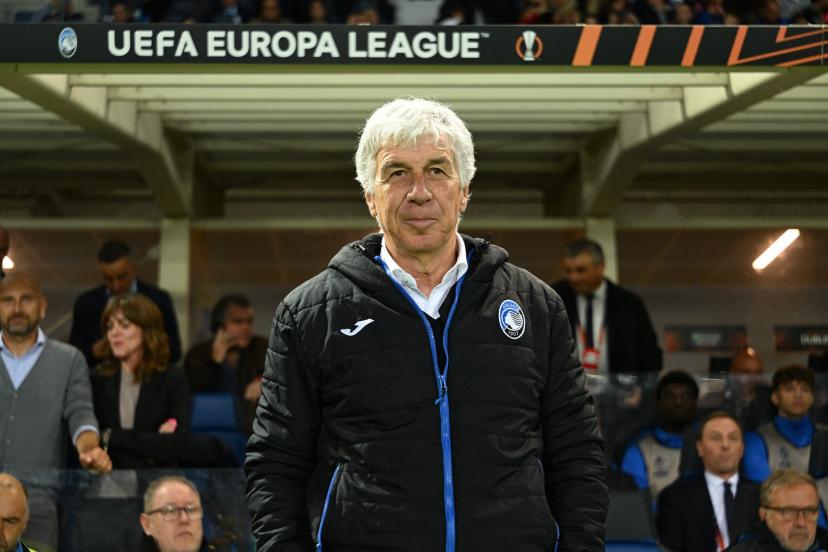
Gian Piero Gasperini took over Atalanta in the summer of 2016. The Piedmont coach, former Italian youth national team coach, and former coach at Genoa and Inter (a missed stop in 2011), arrived with a precise tactical vision: an ultra-attacking 3-4-2-1, relentless physical intensity, and systematic high pressing. His first season was immediately remarkable: Atalanta finished 4th in Serie A, qualifying for the Europa League for the first time in 25 years.

Under Gasperini, Atalanta gradually became one of Europe's most attractive teams. The attacking style, collective movement, and goal output (the club is regularly among Europe's best attacks per match) attracted attention well beyond Italy's borders. The team plays bright, technical, courageous football that breaks with the traditional conservative image of calcio.
This rise was progressive: 7th in 2018, 3rd in 2019 (historic qualification for the Champions League), followed by consecutive seasons at the top end of the table. Gasperini stayed loyal to the club, rejecting calls from more prestigious organizations, which helped project stability and boosted supporter confidence.
2019-2020, the first Champions League campaigns
The 2019-2020 season marked Atalanta's entry into European deep waters. For its first Champions League participation, the club had a rough start (zero points after three matches), then pulled back and reached the round of 16. There, Atalanta eliminated Valencia (4-1, 4-3 across both matches) with an offensive display in Bergamo that could have been played behind closed doors because of Covid-19 (the match was identified as one of the spreaders of the outbreak in Lombardy).
In the quarterfinals, Atalanta faced Paris Saint-Germain in Lisbon in a single match due to pandemic protocol. Trailing 0-1 after a goal from Mario Pašalić, the Bergamo side was ten minutes from a historic semifinals berth, before Marquinhos and then Eric Maxim Choupo-Moting scored the goals for Paris's 1-2 win. The exit was cruel, but Atalanta proved it could play with the best.
The following seasons saw the club regularly qualify for European competitions. The Champions League became a recurring target, and Atalanta confirmed its status as the fifth power in Italian football, behind the four historical giants (Juventus, Inter, Milan, Naples).
May 22, 2024: Dublin, Lookman and the European crowning
The crowning moment came on May 22, 2024 at Dublin's Aviva Stadium. Atalanta played the Europa League final against Bayer Leverkusen, a German club that had been unbeaten in 51 matches across all competitions. The balance of power seemed to favor the Germans, coached by Xabi Alonso. But Atalanta played a perfect match.
Ademola Lookman, a Nigerian forward who joined from RB Leipzig in 2022, was the man of the match. He scored a hat trick (12th, 26th, 75th minute), leading Atalanta to a 3-0 win with no doubt. Lookman joined the select group of players who have scored a hat trick in a major European final and was named Player of the Tournament and Player of the Final.
This victory was Atalanta's first major European trophy ever. For Bergamo, a city tragically hit by Covid-19 in 2020 (one of Italy's hardest-hit cities), this title took on a special symbolic meaning. The club, which had committed to donations and support for the local population during the health crisis, gave the city a trophy that resonates beyond sport.
The recruitment business model
Atalanta's success is based on a unique economic model in Europe. The club buys undervalued players at low cost (young talents, second-choice players from major leagues, prospects from less exposed competitions), raises their value through the work of Gasperini and his staff, then sells them at high prices to top European clubs. This "trading talent" logic generates substantial profits and finances the long-term sustainability of the project.
Several major players were identified or enhanced in Bergamo: Gianluca Mancini, Mario Pašalić, Robin Gosens, Cristian Romero, Duván Zapata, Josip Iličić, Papu Gómez, Joakim Mæhle, Rasmus Højlund, Teun Koopmeiners. The moves of these players to more prestigious clubs have produced revenue in the hundreds of millions of euros over the last decade.
This financial discipline, combined with Gasperini's loyalty and stable leadership (the Percassi family has been at the helm since 2010), makes Atalanta a case study for European clubs. The partial acquisition by the consortium led by Stephen Pagliuca in 2022 (55% of the shares) strengthened the club further without disrupting the model.
The Gewiss Stadium, owned by the club
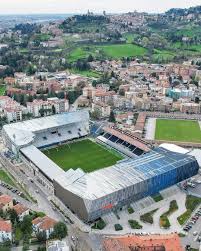
Atalanta plays at the Gewiss Stadium, formerly called Stadio Atleti Azzurri d'Italia. The club bought the stadium from the Bergamo city hall in 2017, a rarity in Italy, where most stadiums remain publicly owned. This purchase allowed a full renovation, modernizing the stands, boxes and facilities without dependence on political authorities with often different priorities.
The venue now holds about 24,950 seats, making it one of the smallest Serie A stadiums for a top-six club. This limited capacity partly explains the unique atmosphere in the Curva Nord, where Bergamo supporters are known for their passion and loyalty in a city of under 120,000 inhabitants that can fill its stadium for every home match.
The naming-rights deal with Gewiss (an Italian industrial group specialized in electricity, based near Bergamo) also strengthens revenue. The stadium has thus become a revenue-generating asset, both sporting, commercial and identity-related.
For more on Italian calcio, we also published a piece on Juventus and the Agnelli empire, and on Fiorentina and the violets of Florence.
What to remember
- Atalanta Bergamo was founded on October 17, 1907 by a group of Bergamo students, under the name Atalanta Bergamasca Calcio.
- The name refers to Atalanta, the Greek goddess of hunting and running, and from there comes the nickname La Dea.
- The black and blue colors were adopted in 1920 after a merger with rival club Bergamasca.
- Gian Piero Gasperini took charge in 2016 and imposed a tactical revolution with an ultra-attacking 3-4-2-1.
- First Champions League qualification came in 2019, followed by a quarterfinal in 2020 narrowly lost to PSG (1-2).
- First Europa League title in 2024 against Bayer Leverkusen (3-0) in Dublin, with a Lookman hat trick.
- The club bought its stadium in 2017 (Gewiss Stadium, ex-Atleti Azzurri d'Italia, 24,950 seats), a rarity in Italy.
- The business model is based on buying undervalued players, increasing their value under Gasperini, then selling them at high prices.
For further reading
To explore other figures from Italian calcio, read our articles on Juventus and the Agnelli dynasty, Fiorentina and the violets of Florence, and SSC Napoli from Maradona to Spalletti. Our top 10 of the best Serie A jerseys revisits iconic pieces from Italian calcio, including Atalanta's nerazzurro jersey.
Frequently Asked Questions
When was Atalanta founded?
Atalanta Bergamo was founded on October 17, 1907 in Bergamo, in Lombardy, by a group of football-loving students. The full official name is Atalanta Bergamasca Calcio, referring to the Greek goddess Atalanta.
Why is the club called Atalanta?
The name refers to Atalanta, a Greek mythological heroine known for her speed in running and her refusal of marriage. This choice reflects the cultivated spirit of the founding students in 1907. The nickname La Dea (the Goddess) comes directly from this mythological reference.
What European trophy has Atalanta won?
Atalanta won the Europa League on May 22, 2024 in Dublin, beating Bayer Leverkusen 3-0 thanks to a hat trick by Ademola Lookman. It was the first major European trophy in the club's history and ended the 51-game unbeaten run of the Germans.
Who is Gian Piero Gasperini?
Gian Piero Gasperini is the coach who transformed Atalanta since his arrival in 2016. His ultra-attacking 3-4-2-1 and constant physical intensity made Atalanta one of the most attractive teams in Europe, with regular Champions League qualifications and the Europa League title in 2024.
What is Atalanta's stadium?
Atalanta plays at the Gewiss Stadium, formerly Stadio Atleti Azzurri d'Italia, in Bergamo. The club bought the stadium from the municipality in 2017, which is rare in Italy. It currently holds about 24,950 seats, making it one of the smallest Serie A stadiums for a top-six club.
Ready to wear the colors of the Dea?
The Atalanta collection is waiting for you in store: black-and-blue home jerseys, away, third, player, fan, and retro jerseys that recall the Dea's best years.