
Le 2 juin 1971, à Wembley, l’Ajax Amsterdam bat le Panathinaikos 2 à 0 et soulève sa première Coupe d’Europe des clubs champions. Sur la pelouse, un jeune homme aux cheveux longs orchestre tout depuis n’importe quelle zone du terrain : Johan Cruyff. Sur le banc, un entraîneur austère vient d’imposer à l’Europe une idée révolutionnaire : il n’existe pas de postes figés, tous les joueurs attaquent, tous les joueurs défendent. C’est Rinus Michels, et le concept s’appelle le football total.
Cette finale n’est que le début. L’Ajax remportera trois Coupes d’Europe consécutives entre 1971 et 1973, formera des générations entières de joueurs au sein de son académie De Toekomst, et reviendra au sommet du continent en 1995 avec une équipe d’une jeunesse insolente. Cet article retrace l’histoire de l’Ajax Amsterdam, club néerlandais qui a transformé la manière même de penser le football.
La fondation en 1900 et les premiers titres
L’Ajax Amsterdam est officiellement fondé le 18 mars 1900 par un petit groupe d’Amstellodamois passionnés de football. Le nom du club est emprunté au héros grec Ajax, l’un des plus puissants combattants de la guerre de Troie selon l’Iliade, en cohérence avec une mode de l’époque qui voyait fleurir les clubs aux noms mythologiques. Les couleurs choisies, blanc avec une large bande verticale rouge, deviendront indissociables du club pendant tout le XXe siècle.
Les premières décennies sont laborieuses. L’Ajax remporte sa première Coupe des Pays-Bas (KNVB Cup) en 1917, puis son premier titre national en 1918. Le club s’installe au Het Houten Stadion, un stade en bois inauguré en 1911, avant d’emménager au De Meer Stadion en 1934, une enceinte de 29 500 places dessinée par l’architecte Daan Roodenburgh. L’Ajax y restera plus de soixante ans, jusqu’à l’ouverture de l’Amsterdam ArenA en 1996, rebaptisée Johan Cruyff Arena en 2018.
Pendant la première moitié du XXe siècle, l’Ajax est un club respectable mais sans dimension européenne. Il faudra attendre les années 1960 et l’arrivée d’un entraîneur visionnaire pour que tout bascule.
Rinus Michels et l’invention du football total
Rinus Michels prend la tête de l’Ajax en 1965, alors que le club est sur le point d’être relégué en deuxième division. En quelques mois, il redresse la barre et impose une discipline tactique inédite. Sa méthode repose sur une idée centrale : tous les joueurs doivent être capables de tout faire. Un défenseur peut monter en attaque, un attaquant peut redescendre récupérer le ballon, le gardien sort jouer aux pieds. Le système devient une seule respiration, un mouvement perpétuel où chacun couvre la position vacante laissée par un coéquipier.
Cette philosophie, qui sera baptisée plus tard “totaalvoetbal” en néerlandais ou “football total” en français, révolutionne la pensée tactique européenne. Là où les équipes italiennes excellent dans le catenaccio défensif, l’Ajax propose une domination par la possession, le pressing haut et la fluidité des mouvements. Les adversaires ne savent plus qui marquer : sur un but inscrit par l’Ajax, l’arrière latéral peut très bien terminer dans la surface adverse.
Michels obtient des résultats immédiats. L’Ajax remporte le championnat des Pays-Bas en 1966, 1967, 1968 et 1970. Surtout, le club commence à exister sur la scène européenne, avec une finale de Coupe d’Europe perdue contre le Milan AC en 1969. La méthode est validée. Il manque encore le sacre continental, qui arrivera deux ans plus tard.
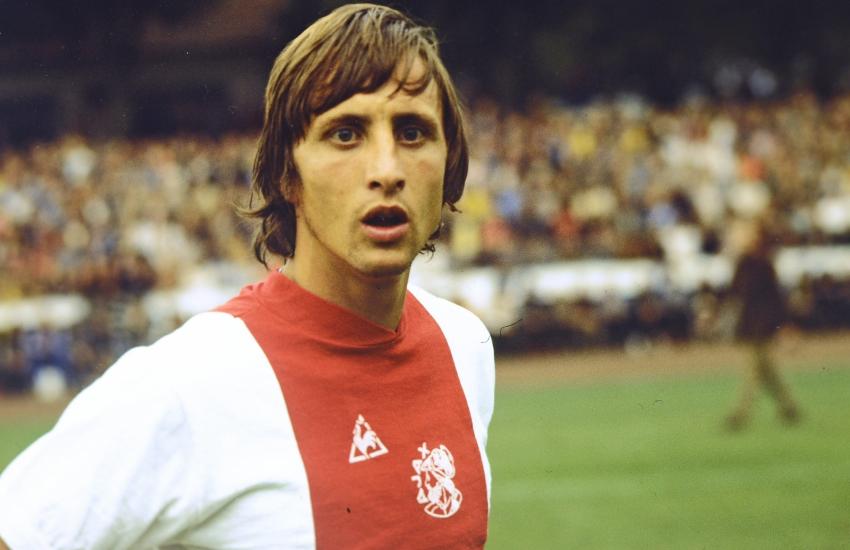
Johan Cruyff, le génie au numéro 14
Le football total a besoin d’un cerveau pour fonctionner sur le terrain. Ce sera Johan Cruyff. Né le 25 avril 1947 à Amsterdam, il grandit à quelques centaines de mètres du De Meer Stadion. Il intègre l’académie ajacide enfant, fait ses débuts professionnels le 15 novembre 1964 et inscrit en quelques années 193 buts en 245 matchs lors de sa première période au club.
Cruyff n’est pas un attaquant classique. Il joue en faux numéro neuf avant que l’expression existe, descend chercher le ballon au milieu, dicte le tempo, déclenche les déplacements de ses partenaires. Son intelligence tactique est telle que Michels reconnaît publiquement que le football total fonctionne parce que Cruyff l’incarne sur le terrain. Le numéro 14 qu’il porte deviendra mythique : c’est encore aujourd’hui le seul numéro retiré par le club.
Cruyff remporte trois Ballons d’Or (1971, 1973 et 1974), trois Coupes d’Europe avec l’Ajax, et part rejoindre le FC Barcelone en 1973 pour 6 millions de florins, soit l’équivalent d’environ 2 millions de dollars de l’époque, un transfert record. La suite de l’aventure barcelonaise est racontée dans notre dossier sur Cruyff au FC Barcelone, où le joueur a remporté le titre dès sa première saison.
Trois Coupes d’Europe consécutives (1971-1973)
Entre 1971 et 1973, l’Ajax devient le maître de l’Europe. La première Coupe d’Europe arrive le 2 juin 1971 à Wembley, contre le Panathinaikos d’Athènes (entraîné par Ferenc Puskás). Le score est de 2 à 0, avec des buts de Dick van Dijk dès la cinquième minute et d’Arie Haan à la 87e. Les 83 179 spectateurs assistent à un récital tactique néerlandais.
L’année suivante, en 1972, l’Ajax conserve son titre en battant l’Inter Milan 2 à 0 à Rotterdam, avec un doublé de Cruyff. C’est le triomphe symbolique du football total contre le catenaccio italien. En 1973, troisième sacre consécutif, contre la Juventus 1 à 0 à Belgrade, but de Johnny Rep. Trois Coupes d’Europe d’affilée, exploit que seuls le Real Madrid de la fin des années 1950 et le Bayern Munich des années 1970 ont réalisé avant ou après.
Cette équipe contient des joueurs devenus légendaires : Cruyff, Johan Neeskens, Ruud Krol, Johnny Rep, Arie Haan, Piet Keizer, Gerrie Mühren, sans oublier le gardien Heinz Stuy. Beaucoup formeront ensuite l’ossature de l’équipe des Pays-Bas finaliste de la Coupe du monde 1974, avec Michels comme sélectionneur. L’Ajax aura ainsi exporté son modèle au plus haut niveau international.
De Toekomst, la fabrique de talents
Au-delà des trophées, l’Ajax s’est construit une réputation mondiale grâce à son académie, baptisée De Toekomst (littéralement “le futur”). Le centre de formation, installé à proximité du Johan Cruyff Arena, applique une philosophie héritée directement de Cruyff lui-même : technique avant tout, intelligence de jeu, polyvalence des postes. Les jeunes recrues passent par un parcours de huit à dix ans avant d’intégrer l’équipe première.
La liste des produits de De Toekomst donne le vertige. Marco van Basten, Frank Rijkaard, Dennis Bergkamp, Edwin van der Sar, Patrick Kluivert, Clarence Seedorf, Edgar Davids, Wesley Sneijder, Rafael van der Vaart, Christian Eriksen, Frenkie de Jong, Matthijs de Ligt : tous ont commencé chez les jeunes de l’Ajax avant de devenir stars dans les plus grands clubs européens. Aucun autre centre de formation au monde n’a produit autant de joueurs de classe mondiale sur une période aussi longue.
Cette politique de formation a un revers commercial. L’Ajax vend régulièrement ses meilleurs éléments à des clubs plus riches, ce qui empêche le club de constituer durablement une équipe au sommet européen. Mais cette même politique alimente les recettes du club et lui permet de continuer à investir dans la formation, dans une boucle qui dure depuis cinquante ans.
Louis van Gaal et la génération 1995
Le retour de l’Ajax au sommet européen passe par Louis van Gaal, entraîneur formé à l’école néerlandaise et nommé à la tête de l’équipe première en 1991. Sa méthode est plus rigide que celle de Michels mais s’inscrit dans la même filiation : possession, pressing, jeu collectif. Van Gaal s’appuie sur une génération exceptionnelle issue de De Toekomst, mêlée à quelques joueurs étrangers ciblés.
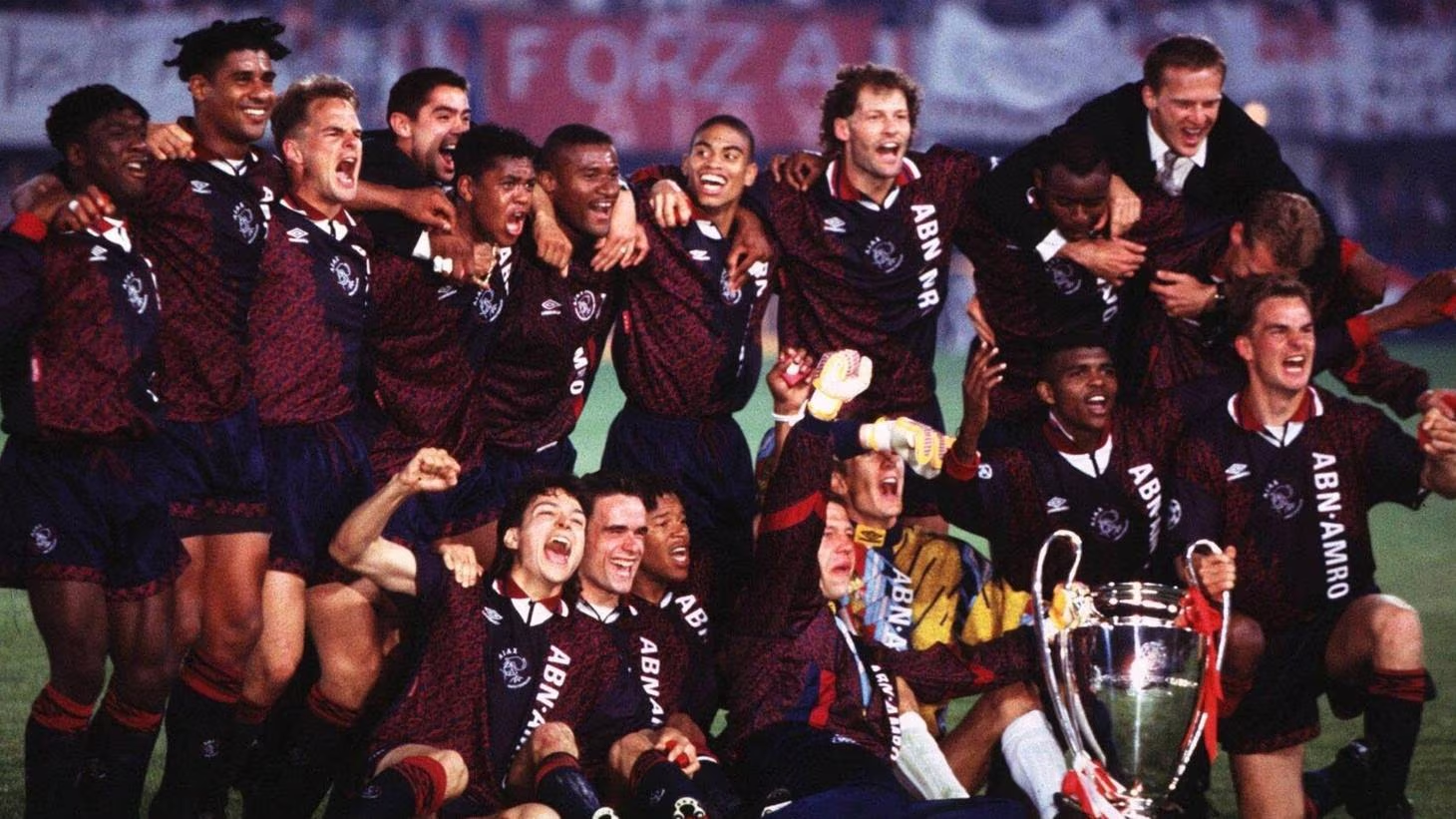
L’apothéose arrive en 1995. L’Ajax termine la saison d’Eredivisie sans aucune défaite, fait unique. En finale de la Ligue des Champions le 24 mai 1995 à Vienne, l’Ajax bat le Milan AC, double tenant du titre, sur un score de 1 à 0. Le but est inscrit à la 85e minute par Patrick Kluivert, 18 ans, entré en jeu peu de temps auparavant. C’est le quatrième sacre européen du club, et le retour symbolique de la philosophie ajacide au plus haut niveau.
L’équipe de cette finale est composée de Van der Sar, Reiziger, Blind, Rijkaard, Frank de Boer, Seedorf, Davids, Litmanen, George, Finidi et Overmars, avec Kluivert et Kanu en sortie de banc. Une mosaïque de jeunes talents et de cadres expérimentés, révélée par le travail de De Toekomst. L’Ajax atteindra à nouveau la finale en 1996, perdue aux tirs au but contre la Juventus, avant de voir partir progressivement la quasi-totalité de cette génération vers les championnats étrangers.
L’identité ajacide : un club qui forme avant de gagner
Comprendre l’Ajax, c’est accepter une singularité : le club ne raisonne pas comme un Real Madrid ou un Bayern Munich. Sa raison d’être n’est pas seulement de gagner des trophées immédiats, mais de produire et transmettre une certaine idée du football. Cette idée s’appelle parfois “ADN ajacide”, parfois “école néerlandaise”, et elle a infusé dans la quasi-totalité des grands clubs européens via les joueurs et entraîneurs formés à Amsterdam.
Le FC Barcelone moderne, refondé par Cruyff comme entraîneur entre 1988 et 1996, doit énormément à cette philosophie ajacide. La Dream Team catalane des années 1990, racontée dans notre papier sur la Dream Team de Cruyff au FC Barcelone, est une transposition directe du football total à la sauce blaugrana. La Masia, le centre de formation du FC Barcelone, s’est construite en s’inspirant ouvertement de De Toekomst.
Pep Guardiola, formé à La Masia justement, prolonge cette filiation à Manchester City. Erik ten Hag, Frank de Boer, Marc Overmars, Edwin van der Sar : presque tous les anciens ajacides occupent aujourd’hui des postes de direction ou d’entraîneur dans le football européen. Le club d’Amsterdam est devenu une école au sens fort du terme : un lieu où l’on apprend une méthode, qu’on exporte ensuite partout.
L’Ajax aujourd’hui : héritage et défis
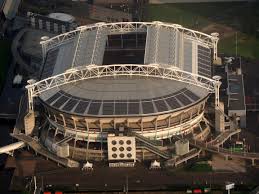
L’Ajax actuel évolue au Johan Cruyff Arena, stade de 55 865 places ouvert en 1996 sous le nom d’Amsterdam ArenA et rebaptisé en 2018 en hommage au numéro 14. Le club totalise 36 titres de champion des Pays-Bas (record national) et 20 Coupes des Pays-Bas. À partir de la saison 2025-26, l’Ajax a d’ailleurs réintroduit son logo classique de 1928, après 34 ans d’utilisation d’une version modernisée. Un retour aux sources qui en dit long sur l’attachement du club à ses racines.
Sur le plan européen, le défi reste de taille. L’écart financier avec les grands championnats anglais, espagnol, allemand et italien rend de plus en plus difficile la conservation des meilleurs joueurs formés au club. Les épopées européennes restent ponctuelles, comme celle de la demi-finale de Ligue des Champions 2018-19, où une équipe très jeune emmenée par De Ligt et De Jong a éliminé le Real Madrid avant de tomber face à Tottenham dans des circonstances cruelles.
Pour autant, l’Ajax demeure un repère unique dans le football européen. Pour explorer d’autres clubs européens majeurs, vous pouvez aussi consulter notre papier sur les 120 ans du Real Madrid. Et la collection Ajax Amsterdam de la boutique permet de retrouver l’esthétique des maillots blanc et rouge qui ont accompagné toutes ces décennies.
Ce qu’il faut retenir
- L’Ajax Amsterdam est fondé le 18 mars 1900, son nom est emprunté au héros grec Ajax de l’Iliade.
- Rinus Michels, entraîneur de 1965 à 1971, invente le football total : tous les joueurs occupent toutes les positions selon le mouvement.
- Johan Cruyff, formé au club, en est l’incarnation sur le terrain et remporte trois Ballons d’Or (1971, 1973, 1974).
- L’Ajax remporte trois Coupes d’Europe consécutives en 1971, 1972 et 1973, contre Panathinaikos, Inter Milan et Juventus.
- Le centre de formation De Toekomst a produit Van Basten, Bergkamp, Van der Sar, Kluivert, Seedorf, Sneijder, De Jong et De Ligt.
- En 1995, sous Louis van Gaal, l’Ajax gagne sa quatrième Ligue des Champions contre le Milan AC (1-0, but de Kluivert).
- Le club joue aujourd’hui au Johan Cruyff Arena (55 865 places), rebaptisé en 2018 en hommage à son joueur le plus emblématique.
Pour aller plus loin
L’histoire de l’Ajax est inséparable de celle du football néerlandais et de ses prolongements européens. Pour creuser le sujet, on vous recommande nos papiers sur Johan Cruyff au FC Barcelone, sur la Dream Team de Cruyff entraîneur au Barça qui prolonge directement le football total, et sur l’histoire complète du Real Madrid, l’autre géant du football européen des années 1950-1970.
Questions fréquentes
Quand l’Ajax Amsterdam a-t-il été fondé ?
L’Ajax a été officiellement fondé le 18 mars 1900 à Amsterdam. Son nom fait référence au héros grec Ajax, l’un des plus puissants combattants de la guerre de Troie selon l’Iliade, dans une mode de l’époque qui voyait fleurir les clubs aux noms mythologiques.
Combien de Coupes d’Europe l’Ajax a-t-il remportées ?
L’Ajax compte quatre Coupes d’Europe des clubs champions ou Ligues des Champions : 1971, 1972 et 1973 sous Rinus Michels avec Cruyff, puis 1995 sous Louis van Gaal avec la génération Kluivert, Seedorf et Davids.
Qu’est-ce que le football total inventé par l’Ajax ?
Le football total est une philosophie tactique imposée par Rinus Michels à l’Ajax à partir de 1965. Tous les joueurs occupent successivement toutes les positions selon le mouvement collectif : un défenseur peut monter en attaque, un attaquant redescendre, dans une fluidité permanente qui a révolutionné le football européen.
Quels grands joueurs sont sortis du centre de formation De Toekomst ?
De Toekomst a formé Johan Cruyff, Marco van Basten, Frank Rijkaard, Dennis Bergkamp, Edwin van der Sar, Patrick Kluivert, Clarence Seedorf, Edgar Davids, Wesley Sneijder, Frenkie de Jong et Matthijs de Ligt, entre beaucoup d’autres. Aucune autre académie au monde n’affiche un palmarès comparable sur cette durée.
Pourquoi le stade s’appelle-t-il Johan Cruyff Arena ?
Le stade a été inauguré en 1996 sous le nom d’Amsterdam ArenA, puis rebaptisé Johan Cruyff Arena en 2018 en hommage au joueur le plus emblématique du club, décédé en mars 2016. Sa capacité est de 55 865 places, et le numéro 14 que portait Cruyff reste le seul numéro retiré par l’Ajax.
Cette histoire vous a donné envie de porter le maillot ?
La collection Ajax Amsterdam est complète sur notre boutique : maillot domicile blanc à bande rouge, version extérieur, tenue third, ainsi que les maillots rétro qui rappellent les grandes saisons du club, de l’ère Cruyff à la génération 1995.