
On November 29, 1899, twelve soccer enthusiasts gathered at the Gimnasio Solé on Montsió Street in Barcelona. Among them was a 22-year-old Swiss man named Hans Gamper, who had adopted the Catalan name Joan Gamper. A few weeks earlier, he had placed an ad in the newspaper *Los Deportes* to recruit players. That evening, the Football Club Barcelona was officially founded. No one could have imagined that it would become one of the most iconic sports institutions of the 20th century.
The history of FC Barcelona is inextricably linked to that of Catalonia. Seven successive presidents, two world wars, a dictatorship, European Cups, two continental trebles, and geniuses like Cruyff, Ronaldinho, and Messi. This article traces 125 years of Barça, from its founding in Switzerland in 1899 to the era of Lamine Yamal.
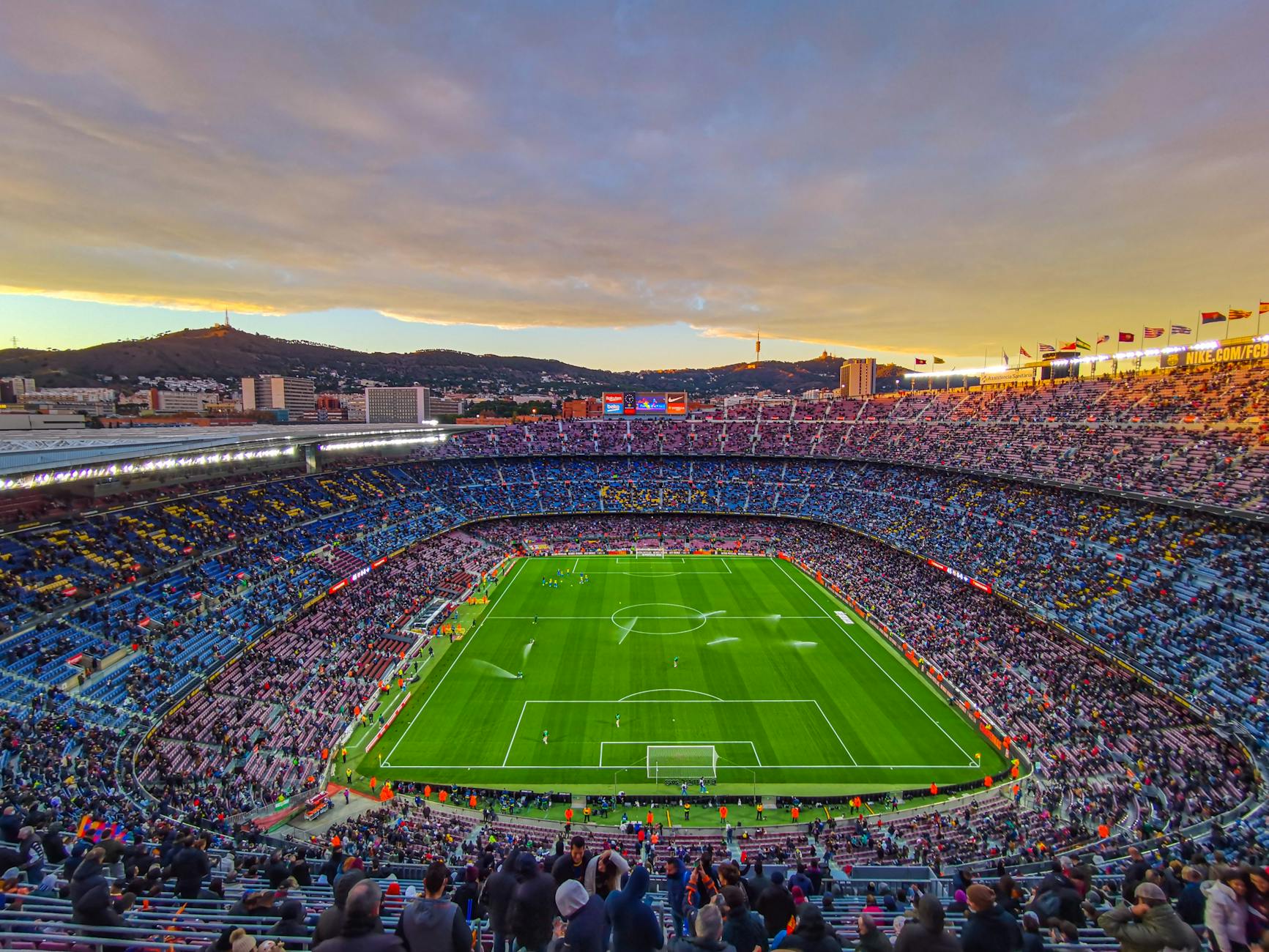
1899: Joan Gamper and the Swiss Foundation
Hans Max Gamper-Haessig was born in Winterthur, Switzerland, on November 22, 1877. A trained accountant and sports enthusiast, he discovered Barcelona in 1899 and settled there. On October 22, 1899, he placed an ad in *Los Deportes* to bring together players to form a soccer club. On November 29, twelve men gathered: Swiss, British, German, and Spanish. The Englishman Walter Wild was elected the first president. Joan Gamper, for his part, would serve as president five times between 1908 and 1925, marking the longest cumulative tenure in the club’s early history.
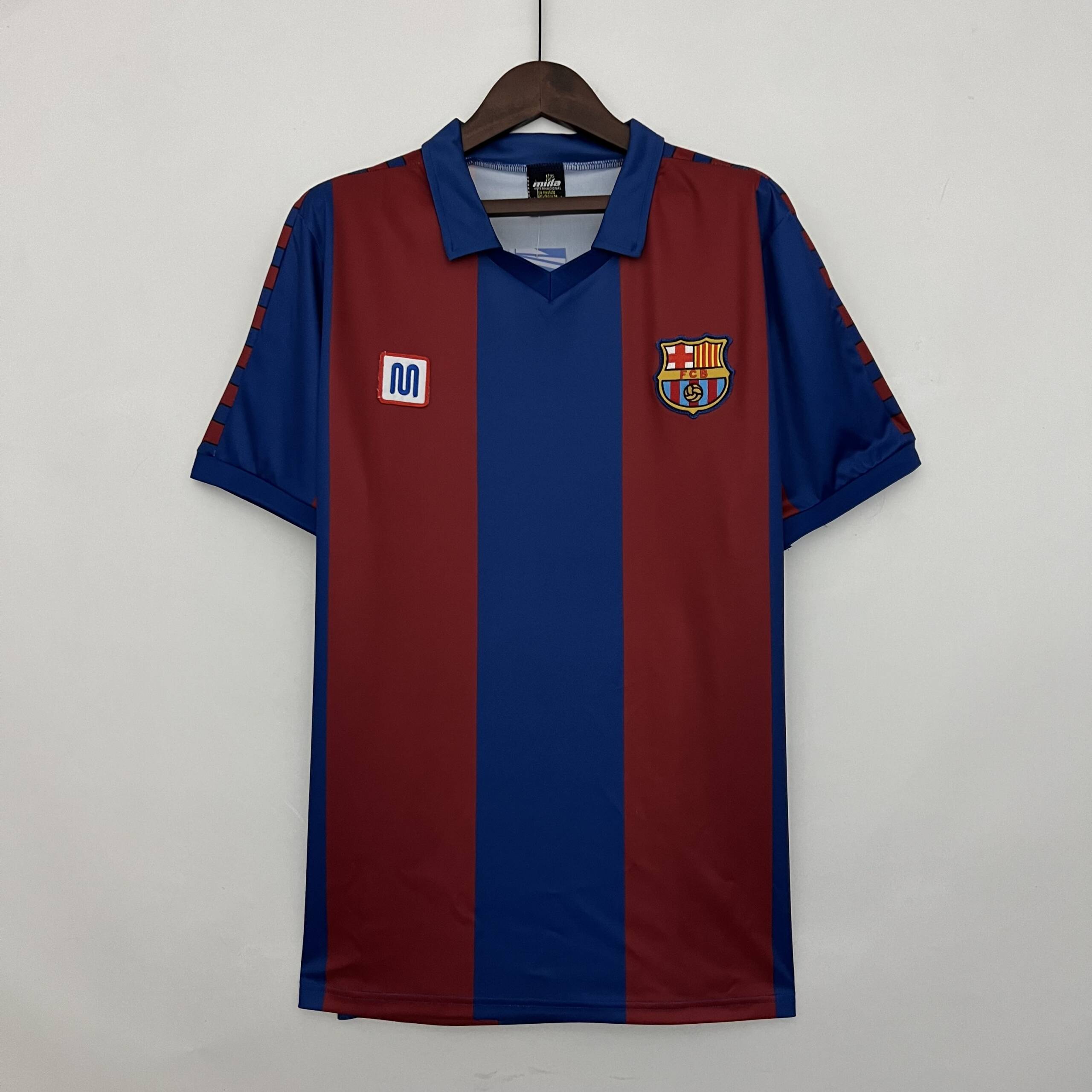
The choice of blue and maroon remains one of Barça’s great mysteries. Several theories have been debated for 125 years: a legacy from the English club Merchant Taylors’ School, which the Witty brothers attended; a tribute to the colors of the Swiss city of Basel; or simply the availability of fabric in 1899. None has ever been definitively settled, and that is probably for the best. To delve deeper into the matter, we have written an article dedicated to the origins of the Blaugrana colors.
The first field is called Hotel Casanovas. The players pay their dues, buy their own uniforms, and organize the games themselves. It’s a far cry from the modern soccer industry. But the passion is there, and it’s here to stay.
The Early Years and the Development of Identity
Barça was growing fast. In 1909, the club moved to Camp de la Indústria, an 8,000-seat stadium. It was the club’s first real home. In 1922, it moved again, to the Les Corts stadium, which would eventually hold 60,000 spectators after expansions in the 1940s. Sporting success accompanied the growth of the facilities.
Joan Gamper died by suicide on July 30, 1930, in Barcelona, following a period of financial and professional difficulties. His funeral drew a huge crowd. The club would later, in 1966, establish the Joan Gamper Trophy, a preseason friendly tournament named in his honor. His membership card—number one—was retired permanently.
The 1920s and 1930s were marked by a budding rivalry with Real Madrid, a club founded seven years later that was already a powerhouse. The two clubs developed in parallel, one in Madrid and the other in Barcelona, and their rivalry would become one of the most closely followed in world sports. For the Madrid context, our article on the history of Real Madrid traces the club’s origins back to 1902.
Francoism and the Club de Catalunya
The Spanish Civil War (1936–1939) had a profound impact on the club. In 1936, President Josep Sunyol, an elected official of the Generalitat of Catalonia, was executed by Franco’s troops near Madrid. This event left a lasting mark on the collective memory of Barcelona. Under Franco’s regime (1939–1975), the Catalan language was banned and regional institutions dismantled. Barça became one of the few spaces where Catalan identity could be expressed, even indirectly.
The Estadi de les Corts, and later Camp Nou, which opened in 1957, became places where people could shout in Catalan, sing, and express a local pride that was forbidden elsewhere. It was during this period that the phrase “Més que un club” took on its full meaning, even though the expression itself would not be officially adopted until later, in 1968, by President Narcís de Carreras during his inaugural address. For more on the political dimension of Barça, see our analysis of the motto “Més que un club.”
The club’s record during that era remained modest compared to Real Madrid’s, but the cultural resilience embodied by the club built a legitimacy that extended beyond the realm of sports. By the time of his death in 1975, Franco had witnessed several generations of Madridistas at the pinnacle of Spanish soccer. Barça, meanwhile, was still waiting for its moment of continental glory.
The arrival of Cruyff and the turning point of 1973
The year 1973 changed everything. FC Barcelona signed Johan Cruyff, a Dutch forward from Ajax, for 6 million guilders—a world record at the time. A three-time Ballon d’Or winner, Cruyff embodied the “total football” philosophy invented by Rinus Michels. His first season was spectacular: he led Barça to its first La Liga title in fourteen years during the 1973–1974 season.
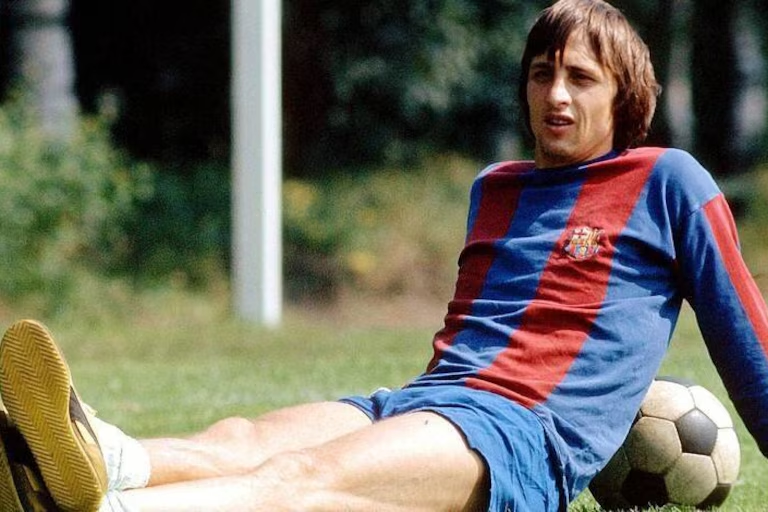
On February 17, 1974, Barça crushed Real Madrid 5–0 at the Santiago Bernabéu Stadium. This score, achieved in the rival’s home stadium, immediately took on symbolic significance. All of Catalonia was buzzing, in a country where public expression of regional identity remained tightly controlled. Cruyff became an icon whose influence extended far beyond sports. He even named his son Jordi, after the patron saint of Catalonia—a powerful political gesture at the time.
Cruyff played four seasons with Barcelona before moving to the Los Angeles Aztecs in 1978. But his time there marked the beginning of a transformation. To explore this defining moment, see our profile on Cruyff at Barça.
The Dream Team and the First European Cup
Cruyff returned to Barça in 1988, this time as head coach. He remained there for eight seasons, the longest tenure of any coach on the Catalan bench. He built what would come to be known as the Dream Team: Koeman in defense, Guardiola in midfield, Stoichkov and Romário up front. Their style of play was attacking, technical, and fluid.
On May 20, 1992, at Wembley, Barça won its first European Cup against Sampdoria of Genoa (1–0, with a goal by Koeman in extra time). It was the culmination of a transformation that had begun twenty years earlier. The Catalan club had finally joined the exclusive circle of European champions.
The Dream Team won four consecutive La Liga titles between the 1990–91 and 1993–94 seasons, a feat never before seen in Catalonia. Cruyff instilled a philosophy that would go down in history: ball possession, triangular passing, and youth development. This philosophy became the club’s DNA, later passed on to Guardiola, Tito Vilanova, and Luis Enrique. Our article on Cruyff’s Dream Team details this seminal season.
Smiling Again Thanks to Ronaldinho
After a difficult end to the Cruyff era and several challenging years of transition (under Núñez and Gaspart), Barça faced a sporting and institutional crisis in the early 2000s. Joan Laporta’s election as president in 2003 and the signing of Ronaldinho that same season—from PSG for €30 million—breathed new life into the club.
The Brazilian forward won two La Liga titles (2004–2005 and 2005–2006), the 2005 Ballon d’Or, and the 2006 Champions League against Arsenal. On November 19, 2005, during a Clásico at the Bernabéu, he scored a brace that sealed a 3-0 victory for Barça. Some of the Real Madrid fans stood up to applaud him, a rare tribute reserved for very few opposing players in the club’s history. For this unique moment, see our profile of Ronaldinho at Barça.
Pep Guardiola and the era of tiki-taka
In June 2008, Pep Guardiola took the reins of the first team. A former captain of the Dream Team and a product of La Masia, he knew the club inside and out. His first season would be one of the most impressive in soccer history: a treble of La Liga, the Copa del Rey, and the Champions League in 2008–2009, topped off by the Spanish and European Super Cups and the Club World Cup in 2009. Six trophies in a single calendar year—a feat never before achieved.
In the Champions League final on May 27, 2009, in Rome, Barça defeated Manchester United 2–0 (goals by Eto’o and Messi). Tiki-taka, characterized by short passes and constant movement, became the global tactical benchmark. In four seasons, Guardiola won 14 trophies with the club, including three La Liga titles and two Champions League titles (2009 and 2011). Our article on Guardiola at Barça provides a detailed look at this period.
This team is led by an entire generation of players developed at La Masia: Messi, Xavi, Iniesta, Busquets, Piqué, and Pedro. In 2010, all three Ballon d’Or finalists (Messi, Iniesta, and Xavi) came from the same youth academy—a feat unmatched in the history of soccer. See our analysis of La Masia to understand how this generation emerged.
The Messi Era and the Post-Messi Era
From 2004 to 2021, Lionel Messi scored 672 goals for FC Barcelona, setting the club’s all-time record. He won 10 La Liga titles, 4 Champions League titles (2006, 2009, 2011, 2015), and 8 Ballon d’Or awards. His 17-season tenure at Camp Nou has made him a unique figure in modern soccer, comparable only to the greatest love stories between a player and a club.
On August 5, 2021, Messi left the club to join PSG, as Barça was unable to extend his contract due to La Liga’s financial fair play regulations. It was a seismic event, both in sports and emotionally. For more on the rest of his career in Catalonia, see our profile dedicated to Messi at Barça.
The post-Messi era is marked by a rebuilding process. Xavi took the reins of the team in November 2021, won La Liga in the 2022–2023 season, and then handed the reins to Hansi Flick in the summer of 2024. The new generation, led by Lamine Yamal, Pedri, Gavi, and Pau Cubarsí, is restoring hope among the fans. Camp Nou, currently undergoing a renovation costing approximately €1.5 billion, is scheduled for completion in 2026.
Key Takeaways
- FC Barcelona was founded on November 29, 1899, by the Swiss national Joan Gamper and eleven other enthusiasts at the Gimnasio Solé.
- Under Franco’s regime, the club became one of the few places where Catalan identity could be expressed.
- Cruyff's arrival as a player in 1973 marked the beginning of a transformation, sealed by the 5-0 victory at the Bernabéu in February 1974.
- Cruyff's "Dream Team" won the club's first European Cup at Wembley in 1992 against Sampdoria.
- The Guardiola era (2008–2012) yielded 14 trophies, including two Champions League titles, and established tiki-taka as the global tactical standard.
- Lionel Messi scored 672 goals over 17 seasons and won four Champions League titles before leaving in 2021.
- The renovated Camp Nou, scheduled for completion in 2026, is setting the club up for a new era.
Learn more
Barça’s history is marked by specific moments that we’ve covered elsewhere. We recommend our articles on the history of Camp Nou, the historic treble of 2009, the comeback against PSG in 2017, and Lamine Yamal and the new generation taking over at Camp Nou.
Frequently Asked Questions
When was FC Barcelona founded?
FC Barcelona was founded on November 29, 1899, at the Gimnasio Solé in Barcelona. The Swiss national Joan Gamper had placed an ad in the newspaper Los Deportes on October 22, 1899, to recruit players. Eleven other enthusiasts responded, and the club was officially established, with the Englishman Walter Wild serving as its first president.
Who is Joan Gamper, the founder of Barça?
Hans Max Gamper-Haessig, known as Joan Gamper, was a Swiss accountant born in Winterthur on November 22, 1877. He founded FC Barcelona in 1899 and served as its president five times between 1908 and 1925. He died in Barcelona on July 30, 1930. The Joan Gamper Trophy, established in 1966, honors his memory every summer.
How many Champions League titles has Barcelona won?
FC Barcelona has won the European Cup or Champions League five times: in 1992 against Sampdoria, in 2006 against Arsenal, in 2009 against Manchester United, in 2011 against Manchester United, and in 2015 against Juventus.
Why do people say that Barça is more than just a club?
The slogan “Més que un club” was officially adopted in 1968 by President Narcís de Carreras. It reflects the role Barça played during the Franco era as one of the few spaces where Catalan identity could be expressed, and more broadly, its cultural and political significance beyond the realm of sports alone.
Who is the all-time leading scorer in FC Barcelona's history?
Lionel Messi is the club’s all-time leading scorer with 672 goals scored between 2004 and 2021 across all competitions. He is well ahead of César Rodríguez and Luis Suárez in the Blaugrana’s all-time scoring rankings.
Want to wear the Blaugrana colors?
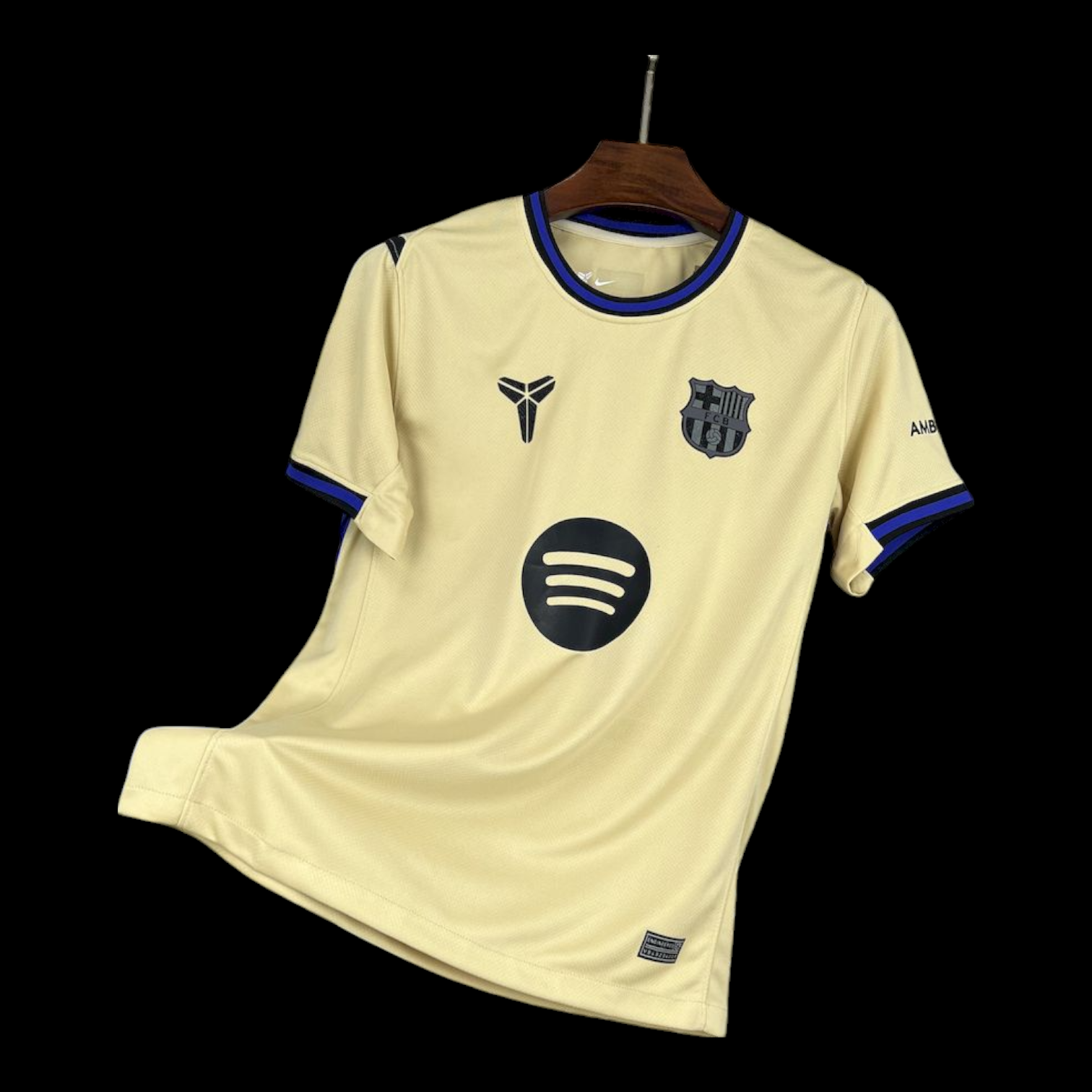
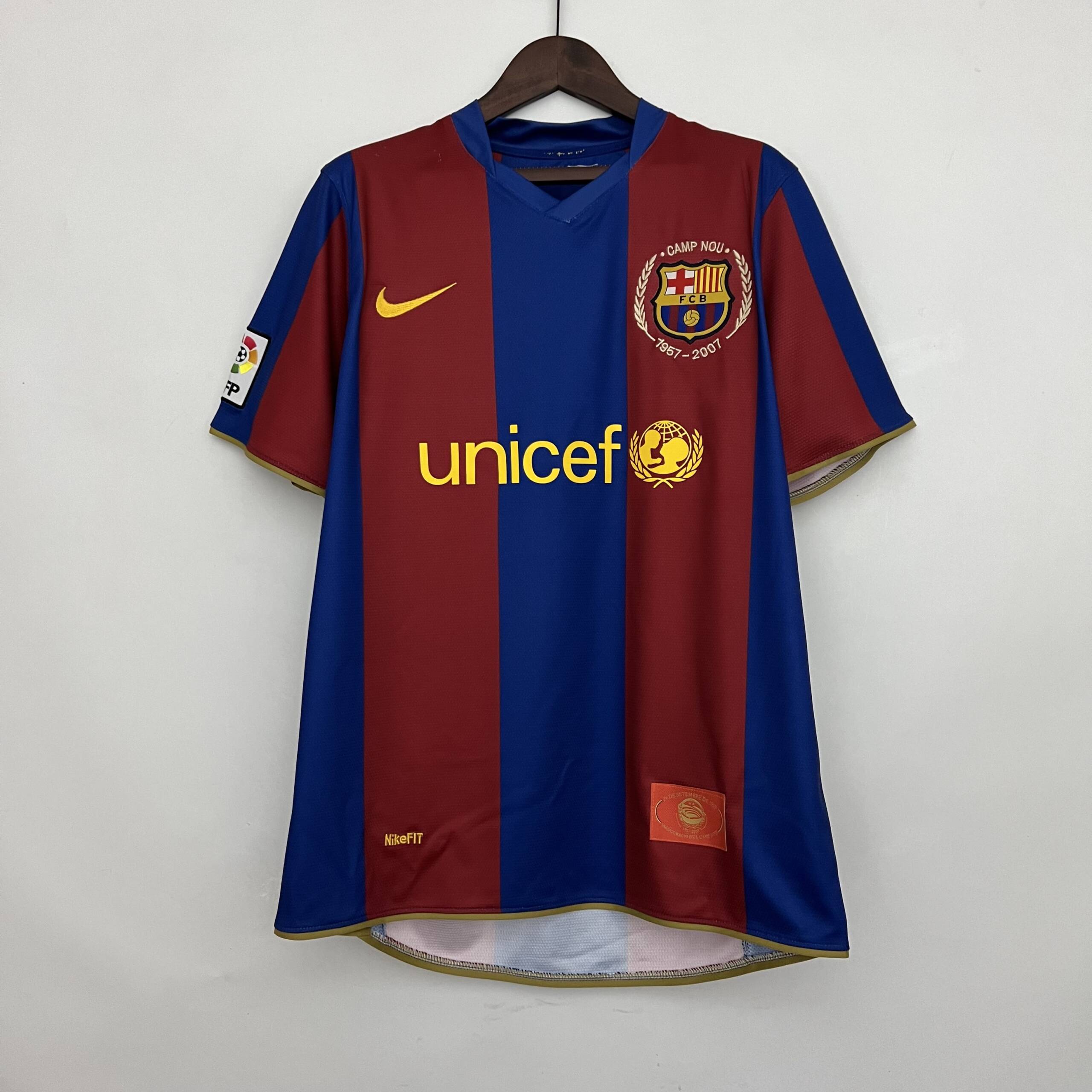
All FC Barcelona jerseys are available in-store: home, away, third, player editions, fan editions, and the retro jerseys from the club’s greatest seasons.