
Bleu marine d’un côté, grenat profond de l’autre, séparés par des bandes verticales : le maillot du FC Barcelone est l’un des plus reconnaissables au monde. Le mot blaugrana, contraction de blau (bleu) et grana (grenat) en catalan, est devenu un raccourci pour désigner le club lui-même. Pourtant, 125 ans après la fondation, personne ne sait précisément d’où viennent ces couleurs.
Plusieurs théories s’affrontent depuis le début du XXe siècle. Aucune n’a jamais été tranchée par une preuve écrite formelle. Le club lui-même reconnaît cette incertitude. Cet article fait le point sur l’origine des couleurs du Barça, leur évolution sur le maillot, et leur place dans l’identité catalane d’aujourd’hui.

Un mystère vieux de 125 ans
Le 29 novembre 1899, lors de la réunion fondatrice du FC Barcelone au Gimnasio Solé, douze passionnés décident de créer un club de football. Aucun procès-verbal connu n’évoque le choix des couleurs. Aucune lettre, aucun témoignage écrit de l’époque ne donne d’explication formelle. Quand le maillot apparaît, il est déjà bleu et grenat, à rayures verticales, et cette combinaison ne sera plus jamais remise en cause.
Cette absence de trace explique pourquoi trois théories principales coexistent encore aujourd’hui, sans qu’aucune ne s’impose totalement. Le club lui-même reconnaît dans ses propres communications qu’il n’existe pas de version officielle unique. C’est sans doute ce qui fait le charme de l’énigme : 125 ans après, le mystère reste entier, transmis comme une légende d’une génération de supporters à l’autre.
Le contexte de fondation du club est déjà internationalisé. Le Suisse Joan Gamper, l’Anglais Walter Wild, des Allemands, des Espagnols. Les couleurs ont peut-être tout simplement été choisies au croisement de plusieurs traditions, sans qu’aucune n’ait pris l’ascendant officiel sur les autres. Pour le contexte fondateur, voir notre article complet sur l’histoire du FC Barcelone.
La théorie Witty et l’école anglaise
La théorie la plus souvent citée tourne autour des frères Witty, Arthur et Ernest, deux Britanniques nés à Barcelone d’un père marchand anglais. Tous deux ont étudié à la Merchant Taylors’ School de Crosby, près de Liverpool. Or, les couleurs de cette école sont précisément le bleu et le grenat, portées sur les uniformes scolaires et sur les tenues sportives.
Selon cette hypothèse, les frères Witty auraient suggéré ces couleurs au moment de la création du club, en hommage à leurs années de formation. Arthur Witty deviendra par ailleurs président du Barça en 1903-1905, ce qui renforce l’idée qu’ils ont joué un rôle dans la définition de l’identité visuelle du club. C’est la théorie la plus largement reprise dans la littérature catalane sur le sujet.
Cette piste a toutefois ses limites. Les Witty n’étaient pas présents à la réunion du 29 novembre 1899 selon les listes de fondateurs publiées par le club. Leur influence se serait plutôt exercée dans les années qui ont suivi, ce qui pose un problème de chronologie pour expliquer un choix de couleurs censé être effectué dès la fondation.
La piste suisse du FC Bâle
Une autre théorie, défendue par certains historiens du sport, attribue le choix des couleurs à Joan Gamper lui-même. Avant de venir s’installer à Barcelone, le jeune Suisse aurait joué au FC Bâle, club fondé en 1893, dont les couleurs sont également le bleu et le rouge. L’idée serait que Gamper, en cofondant le Barça, aurait voulu reprendre les teintes du club de sa jeunesse.
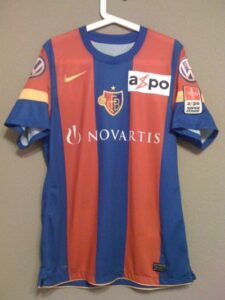
Cette théorie est séduisante par sa simplicité. Gamper était de Winterthur, mais ses années de pratique sportive en Suisse l’ont mis en contact avec le FC Bâle. Le rouge bâlois et le grenat barcelonais ne sont toutefois pas exactement les mêmes teintes, ce qui rend la filiation directe discutable. Le rouge vif du FC Bâle aurait dû s’imposer plutôt qu’un grenat profond.
Cette hypothèse n’est documentée par aucun témoignage écrit de Gamper lui-même. Lui-même, dans les rares textes qu’il a laissés, n’a jamais évoqué publiquement la question des couleurs. Le mystère reste donc entier, malgré la cohérence apparente de l’hypothèse suisse.
L’hypothèse du crayon de comptable
La troisième théorie, plus pittoresque, voudrait que les couleurs aient été choisies à partir d’un crayon de comptable. À l’époque, certains crayons utilisés dans les bureaux étaient bicolores : une mine bleue et une mine rouge ou grenat aux deux extrémités. Joan Gamper, comptable de profession, en aurait utilisé pour griffonner un projet de tenue, et le hasard aurait fait le reste.
Cette anecdote n’est attestée par aucune source contemporaine de la fondation. Elle ressemble davantage à une légende urbaine née bien après les faits, peut-être pour donner une touche romanesque à un choix dont personne ne se souvenait précisément. Reste qu’elle circule toujours, signe que le mystère nourrit l’imaginaire des supporters.
D’autres pistes plus marginales évoquent un lien avec les couleurs des Pyrénées catalanes, ou avec les drapeaux d’institutions locales du XIXe siècle. Aucune n’a vraiment réussi à s’imposer face aux trois théories principales. Le débat reste ouvert, et le club n’a jamais cherché à le clore.
125 ans d’évolution du maillot
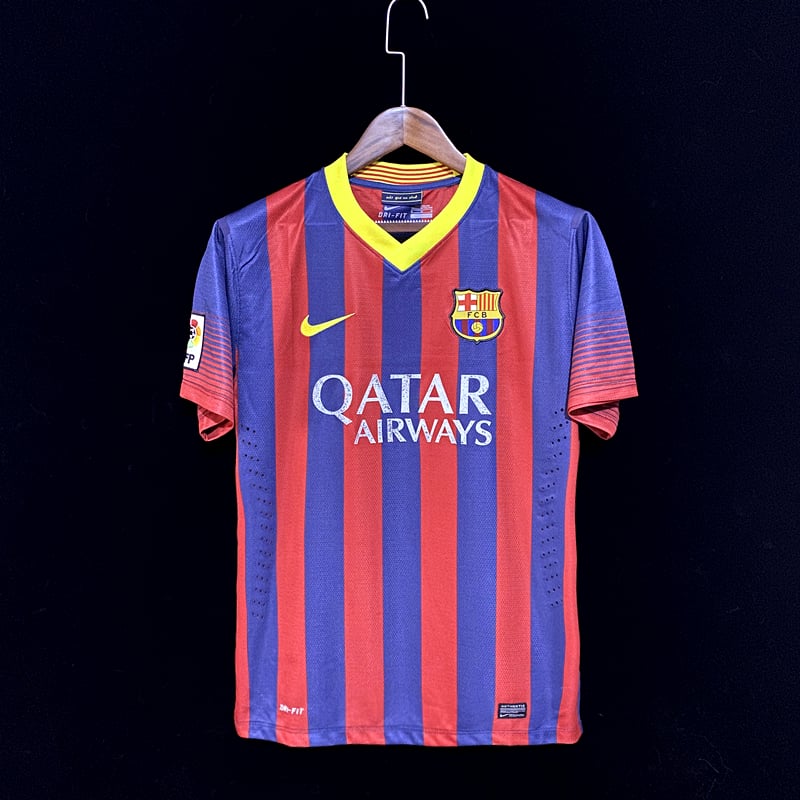
Si les couleurs sont restées identiques depuis la fondation, le design du maillot a beaucoup évolué. Au début du XXe siècle, les rayures sont fines et nombreuses. Dans l’entre-deux-guerres, elles s’élargissent. Dans les années 1970, l’arrivée des sponsors textiles modifie les proportions. Mais la combinaison bleu-grenat n’est jamais remise en question, contrairement à beaucoup de clubs qui ont changé d’identité chromatique au fil de leur histoire.
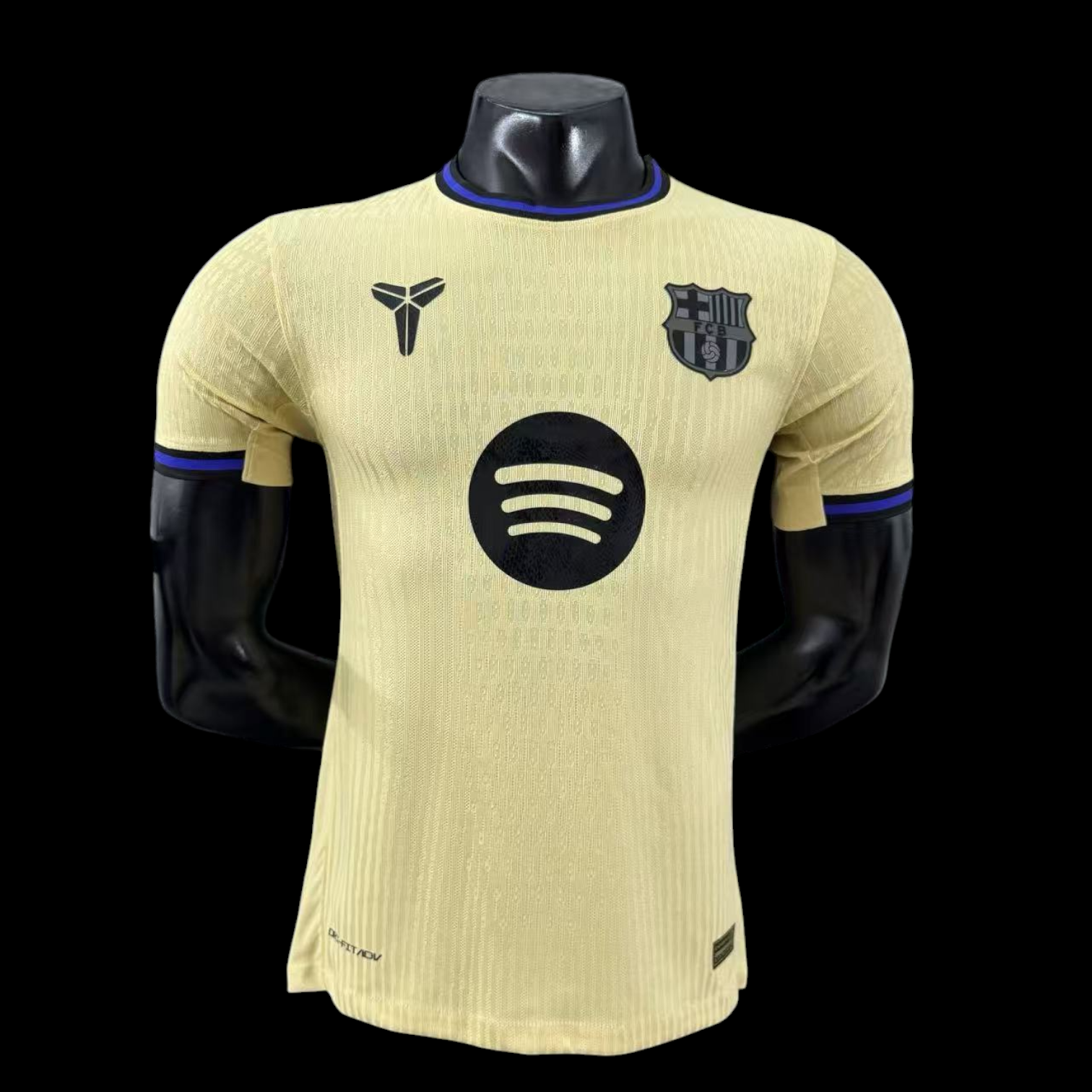
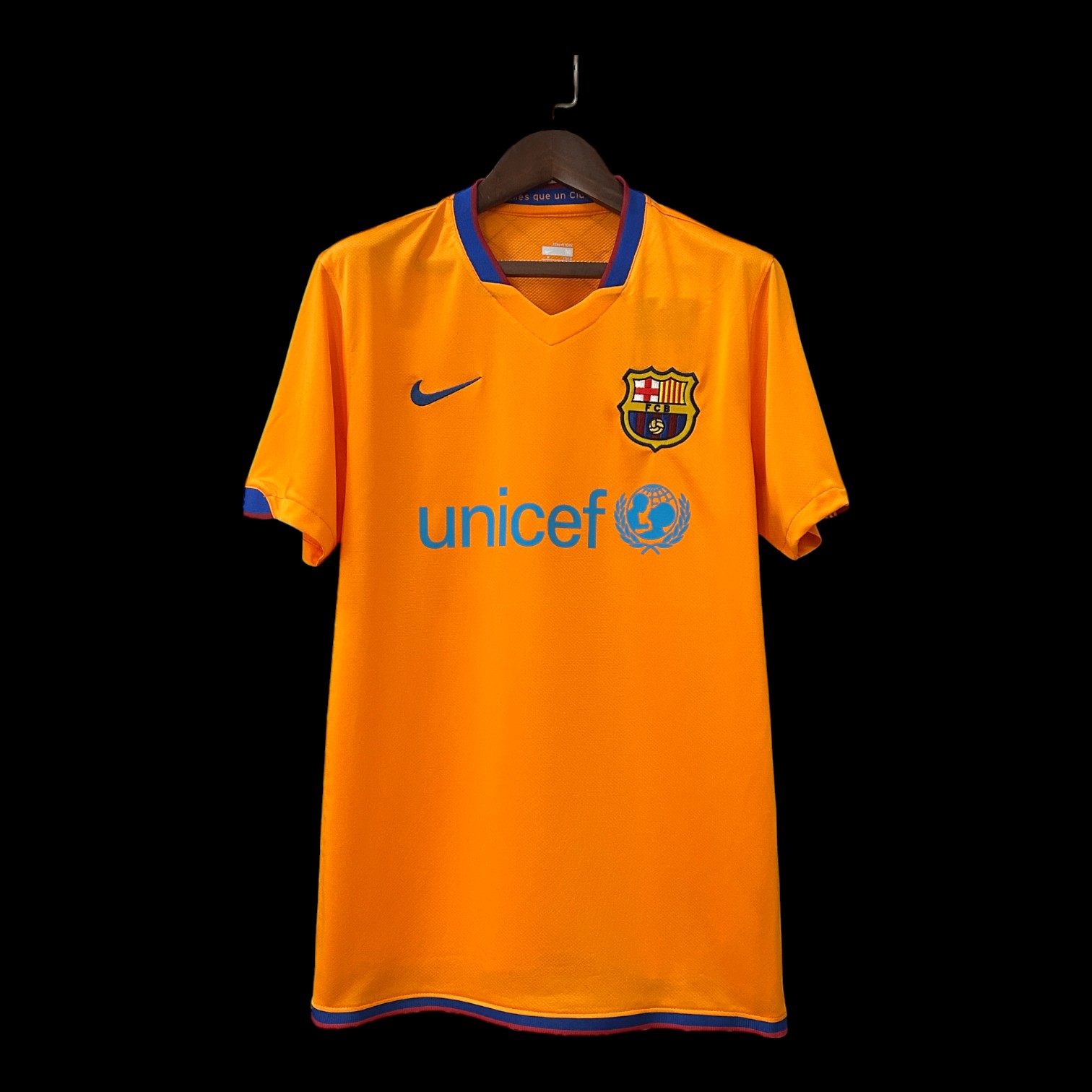
Le maillot extérieur, lui, a connu beaucoup plus de variations : jaune, blanc, noir, vert, orange, parfois rose dans les années 2010. Mais le domicile reste sacré. Aucun équipementier (Meyba, Kappa, Nike depuis 1998) n’a jamais osé toucher à la base bleu-grenat, malgré quelques expérimentations rejetées avec véhémence par les supporters. Pour suivre cette évolution, voir notre papier dédié à l’histoire du maillot du Barça.
Le blaugrana comme marqueur d’identité
Au-delà de leur origine, ces couleurs sont devenues un marqueur identitaire fort. Sous le franquisme (1939-1975), porter le maillot blaugrana était l’un des rares moyens d’afficher publiquement son attachement à la Catalogne. Le bleu et le grenat ont alors pris une dimension politique et culturelle qui dépassait largement le simple sport.
Cette dimension reste vivace aujourd’hui. Lors des matchs au Camp Nou, les supporters mêlent souvent les couleurs du club à celles du senyera, le drapeau catalan jaune et rouge. La frontière entre identité du club et identité régionale s’efface. Pour creuser cette dimension, voir notre analyse de la devise Més que un club.
Le blaugrana est ainsi devenu plus qu’une combinaison chromatique : c’est un signe de reconnaissance, un drapeau implicite, un héritage transmis de génération en génération. Que son origine soit anglaise, suisse, comptable ou catalane importe finalement peu : ce qui compte, c’est ce qu’il signifie aujourd’hui pour les millions de supporters qui le portent.
Ce qu’il faut retenir
- Le mot blaugrana vient du catalan : blau (bleu) et grana (grenat).
- L’origine exacte des couleurs n’est attestée par aucun document de la fondation en 1899.
- La théorie Witty attribue le choix aux frères anglais formés à la Merchant Taylors’ School de Crosby, aux mêmes couleurs.
- La théorie suisse évoque un hommage de Joan Gamper aux teintes du FC Bâle où il aurait joué.
- Une autre hypothèse pittoresque parle d’un crayon de comptable bicolore utilisé par Gamper.
- Le maillot domicile bleu-grenat n’a jamais été modifié sur sa base depuis 125 ans, contrairement aux extérieurs très variés.
- Sous le franquisme, le blaugrana est devenu un signe d’identité catalane, et l’est resté depuis.
Pour aller plus loin
Pour replacer cette énigme dans le contexte plus large du club, on vous recommande nos papiers sur l’histoire complète du FC Barcelone, sur 125 ans d’évolution du maillot blaugrana, et sur la devise Més que un club et son ancrage catalan.
Questions fréquentes
Que veut dire blaugrana en catalan ?
Le mot blaugrana est la contraction de deux mots catalans : blau, qui signifie bleu, et grana, qui désigne le grenat. C’est ainsi qu’on désigne couramment le FC Barcelone, ses joueurs et ses supporters, en référence aux couleurs traditionnelles du maillot domicile.
Pourquoi le maillot du Barça est-il bleu et grenat ?
L’origine exacte n’est pas formellement documentée. Trois théories principales s’affrontent depuis 125 ans : un héritage des frères Witty et de leur école anglaise Merchant Taylors’, un hommage aux couleurs du FC Bâle où Joan Gamper aurait joué, ou plus pittoresquement un crayon de comptable bicolore. Aucune n’a jamais été tranchée définitivement.
Le maillot domicile a-t-il déjà changé de couleurs ?
Depuis 1899, le maillot domicile du FC Barcelone est resté fidèle au bleu et grenat à rayures verticales. Seules les proportions, les motifs et la disposition exacte ont évolué selon les équipementiers (Meyba, Kappa, puis Nike depuis 1998). Aucun changement de couleurs de base n’a été accepté par les supporters.
Pourquoi parle-t-on des Witty pour les couleurs du Barça ?
Les frères Arthur et Ernest Witty, Britanniques nés à Barcelone, ont étudié à la Merchant Taylors’ School de Crosby, dont les couleurs scolaires sont précisément le bleu et le grenat. Arthur Witty a même été président du Barça entre 1903 et 1905. Cette piste reste la plus populaire pour expliquer le choix initial.
Le bleu et grenat ont-ils une signification politique ?
Pas à l’origine, mais l’histoire les a chargés d’une dimension identitaire. Sous le franquisme (1939-1975), porter le maillot blaugrana était l’une des rares manières d’afficher publiquement son attachement à la Catalogne. Cette charge symbolique a perduré et s’est consolidée au fil des décennies.
Le maillot blaugrana vous fait de l’œil ?
La collection FC Barcelone est complète sur notre boutique : maillot domicile, extérieur, third, version joueur, version supporter, et les maillots rétro qui ont marqué les grandes époques du club.