
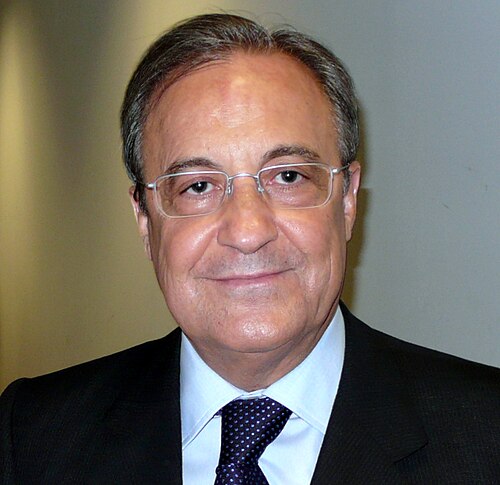
Le 16 juillet 2000, un homme d’affaires madrilène de 53 ans est élu président du Real Madrid. À l’époque, peu d’observateurs imaginent que Florentino Pérez ouvrira une ère qui durera, en deux mandats, plus d’un quart de siècle. Vingt-cinq ans plus tard, le bilan est sans équivalent dans l’histoire du club : sept Ligues des Champions remportées sous sa présidence, un stade Bernabéu rénové pour plus d’un milliard d’euros, et un Real Madrid devenu la marque sportive la plus valorisée au monde.
Ce portrait retrace la trajectoire de Florentino Pérez, ingénieur devenu patron du BTP espagnol puis dirigeant du Real Madrid. Cet article raconte l’arrivée au club, le projet Galactiques, la traversée du désert, le retour victorieux, la rénovation du stade et le rôle controversé dans le projet Super League. Un parcours qui éclaire la manière dont le Real Madrid contemporain s’est construit.
Origines : ingénieur devenu patron du BTP
Florentino Pérez Rodríguez naît le 8 mars 1947 dans le quartier d’Hortaleza à Madrid. Il suit une formation d’ingénieur civil à l’Université Polytechnique de Madrid, école d’élite qui forme la majorité des cadres techniques de l’Espagne franquiste puis post-franquiste. Sa carrière débute dans le secteur public, notamment au sein de l’administration urbaine de Madrid.
Dans les années 1980, il s’engage en politique au sein de l’Union du Centre Démocratique puis du Parti Réformiste Démocratique, dont il devient secrétaire général entre 1982 et 1986. Cette expérience politique l’aide à tisser un réseau d’influence qui lui sera précieux lorsqu’il prendra les rênes du Real Madrid une quinzaine d’années plus tard.
Sa carrière dans le privé décolle dans les années 1990 avec sa prise de fonctions chez OCP Construcciones, qui devient le groupe ACS après plusieurs fusions. Sous sa direction, ACS s’impose comme la première entreprise de BTP espagnole, présente dans plusieurs pays, avec des chantiers d’infrastructures majeurs. Cette stature de grand patron lui donne le poids financier et l’aura nécessaires pour briguer la présidence du Real Madrid.
L’élection de 2000 et le projet Galactiques
Le 16 juillet 2000, Pérez bat le président sortant Lorenzo Sanz lors des élections présidentielles du club, avec environ 55 % des voix. Sa campagne repose sur une promesse spectaculaire : faire signer Luís Figo, le meneur de jeu portugais du FC Barcelone. Personne n’y croit jusqu’à ce que le transfert se concrétise, quelques jours après l’élection.
Cette signature inaugurale donne le ton d’une décennie de recrutements record. Pérez théorise sa stratégie autour d’un principe simple : recruter une superstar mondiale chaque été, pour à la fois renforcer l’équipe et générer des revenus marketing massifs. Le projet est baptisé Galactiques par la presse, en référence à l’idée d’une équipe stellaire constituée des meilleurs joueurs au monde à leur poste.
Suivront en quatre ans Zinédine Zidane (2001), Ronaldo Nazário (2002), David Beckham (2003) et Michael Owen (2004). Chacun de ces transferts bat des records financiers et fait du Real Madrid le centre du marché mondial des joueurs. Le club assume sa transformation en marque globale, avec des tournées asiatiques et nord-américaines qui démultiplient ses revenus commerciaux.
Premier mandat (2000-2006) : sommets et impasse
Le premier mandat connaît un point culminant rapide : la victoire en Ligue des Champions à Glasgow le 15 mai 2002, contre le Bayer Leverkusen, grâce à la fameuse reprise de volée de Zidane. Le Real soulève sa neuvième Coupe d’Europe (la Novena), et Pérez voit sa stratégie validée par le titre continental le plus prestigieux. La Liga 2002-2003 s’ajoute au palmarès, ainsi qu’une Coupe Intercontinentale.
Mais à partir de l’été 2003, l’arrivée de Beckham et le départ de Claude Makélélé (vendu à Chelsea) déséquilibrent l’équipe. Trop d’attaquants au milieu, plus de récupérateur, défense vieillissante. Le Real ne remporte plus aucun trophée majeur entre 2003 et 2006. La pression sur Pérez monte, le carrousel d’entraîneurs (Queiroz, Camacho, García Remón, Luxemburgo, López Caro) ne stabilise rien, et les socios commencent à protester ouvertement.
Le 27 février 2006, Florentino Pérez démissionne. Il invoque l’absence de résultats et son incapacité à redresser la barre. C’est une chute dure, après les triomphes du début de mandat. Pendant trois ans, il quitte la scène publique du club, tout en conservant son influence dans les coulisses.
Le retour de 2009 et la nouvelle ère
Le 1er juin 2009, Florentino Pérez est réélu président du Real Madrid, sans opposition. Il a tiré les leçons de son premier mandat. Cette fois, le projet Galactiques s’accompagne de garde-fous tactiques. Cristiano Ronaldo (94 millions d’euros depuis Manchester United) et Kaká (67 millions d’euros depuis l’AC Milan) arrivent l’été même, mais les recrutements suivants équilibrent l’effectif.
Xabi Alonso, Sami Khedira, Mesut Özil, Karim Benzema, Pepe sont signés pour structurer l’équipe autour de Cristiano Ronaldo. José Mourinho est appelé sur le banc en 2010 et apporte la rigueur défensive et la culture de la gagne. Plus tard, Carlo Ancelotti puis Zinédine Zidane comme entraîneurs prendront le relais avec un style plus offensif.
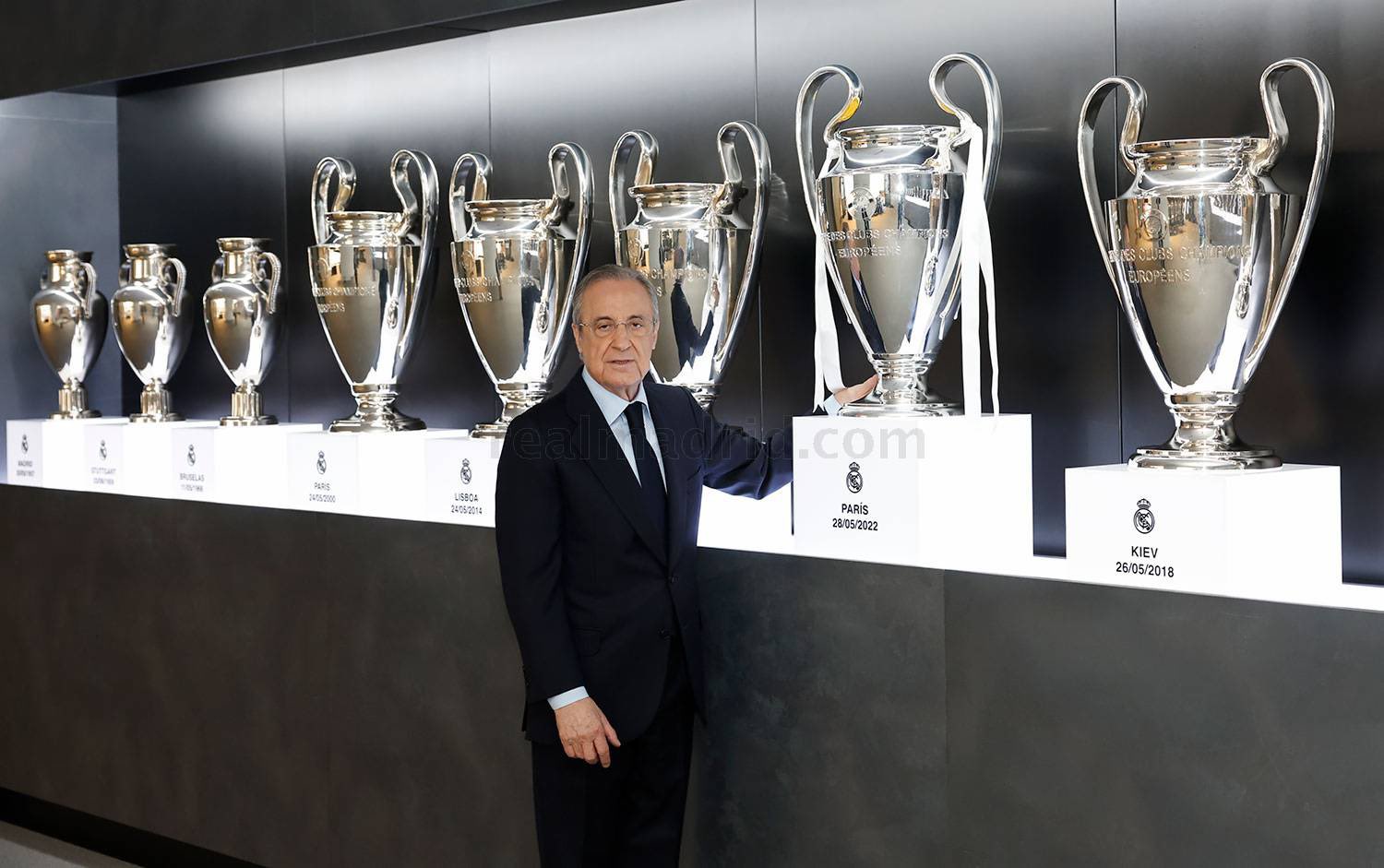
Sur le terrain, les résultats suivent. La Décima est conquise à Lisbonne en 2014 contre l’Atlético Madrid (4-1 après prolongations), mettant fin à douze ans d’attente européenne. Le triplé Ligue des Champions 2016-2017-2018 sous Zidane (l’ancien joueur devenu entraîneur) consacre l’équipe la plus dominante de l’histoire moderne de la compétition.
Sept Ligues des Champions sous sa présidence
Florentino Pérez a remporté sept Ligues des Champions à la présidence du Real Madrid : 2002, 2014, 2016, 2017, 2018, 2022 et 2024. Aucun président de club européen n’égale ce bilan continental. À titre de comparaison, son prédécesseur historique Santiago Bernabéu en avait gagné six, dont les cinq premières consécutives entre 1956 et 1960.
Le bilan global de Pérez à fin 2024 dépasse les 30 trophées majeurs sur l’ensemble de ses deux mandats : sept Ligues des Champions, plusieurs titres de Liga, des Coupes du Roi, des Supercoupes d’Europe, des Coupes du Monde des Clubs, des Coupes Intercontinentales. Il devient ainsi le président le plus titré de l’histoire du Real Madrid, devant Santiago Bernabéu lui-même.
Cette domination s’explique par la combinaison de plusieurs facteurs : recrutements ambitieux mais désormais ciblés, choix d’entraîneurs reconnus, complémentarité avec La Fabrica (le centre de formation continue de produire des cadres), et stabilité institutionnelle. Pérez a su, après l’échec du premier mandat, ajuster son modèle pour le rendre durablement gagnant.
La rénovation du Bernabéu : un projet à plus d’un milliard d’euros
Annoncé en 2019, le projet de rénovation du stade Santiago Bernabéu est l’un des chantiers les plus ambitieux du sport mondial. Le coût initial est estimé à environ 525 millions d’euros, mais il finira par atteindre près de 1,17 milliard d’euros à la fin des travaux principaux en 2023-2024. Une enveloppe qui reflète la complexité technique du chantier, mené sans interrompre durablement la saison sportive.
Le nouveau Bernabéu intègre un toit rétractable, une façade illuminée à 360 degrés en éclairage LED, et un terrain escamotable permettant d’accueillir d’autres événements (concerts, compétitions de NFL ou NBA, spectacles). La capacité reste comparable à l’ancien stade (autour de 80 000 places), mais le confort et les loges premium sont entièrement repensés pour générer des revenus annuels considérables.
Cette rénovation est l’un des grands accomplissements personnels de Florentino Pérez, ingénieur de formation et patron du BTP. Le projet combine son expertise technique et sa vision stratégique du Real Madrid comme machine à revenus. Le pari est de transformer le Bernabéu en équipement événementiel utilisable 365 jours par an, et non plus seulement pour les matchs du Real.
Le projet Super League : la controverse de 2021
En avril 2021, Florentino Pérez devient le premier président de la European Super League annoncée publiquement, un projet de compétition fermée regroupant douze grands clubs européens. Le projet vise à concurrencer la Ligue des Champions par une compétition aux revenus garantis et à la participation pérenne des clubs fondateurs, sans risque de descente sportive.
L’annonce déclenche un tollé international. La UEFA, les fédérations nationales, les supporters et de nombreux gouvernements européens dénoncent un projet contraire à l’esprit du sport. Sous la pression, les clubs anglais retirent leur participation en moins de 72 heures, et le projet s’effondre à court terme. Pérez maintient pourtant que le projet est seulement reporté.
En décembre 2023, la Cour de Justice de l’Union Européenne donne partiellement raison à Pérez en jugeant que la FIFA et la UEFA ont enfreint le droit européen de la concurrence en menaçant les clubs participants. Cette décision relance le débat sans pour autant ressusciter le projet à court terme. La Super League reste un dossier de fond pour le futur du football européen.
Bilan et héritage : un président bâtisseur
Au-delà des trophées, le bilan de Florentino Pérez est aussi structurel. Il a transformé le Real Madrid en première marque sportive mondiale, avec une valeur de marque qui n’a cessé d’augmenter sur deux décennies. Il a rénové le stade emblématique du club. Il a fait éclore plusieurs grandes équipes successives, sous des entraîneurs très différents. Il continue de présider l’institution à plus de 75 ans, sans concurrent crédible en interne.
Cet héritage suscite aussi des critiques. Le projet Super League a abîmé son image internationale. Certains choix de communication face à la presse passent mal en dehors d’Espagne. Sa proximité avec les pouvoirs politiques espagnols est régulièrement débattue. Mais sur le bilan sportif et économique brut, son mandat reste incomparable dans l’histoire du club.
Pour comprendre l’héritage qu’il a hérité avant de le dépasser, on a écrit un papier sur Santiago Bernabéu, le président bâtisseur du XXe siècle. Et pour explorer la grande aventure des recrutements de stars, le papier sur les Galactiques détaille la première et la deuxième vague initiées sous Pérez.
Ce qu’il faut retenir
- Florentino Pérez Rodríguez (né le 8 mars 1947 à Madrid) est ingénieur civil et patron du groupe ACS, première entreprise espagnole de BTP.
- Il est élu président du Real Madrid en juillet 2000, démissionne en février 2006, puis revient en juin 2009 et préside encore le club aujourd’hui.
- Sa stratégie Galactiques consiste à recruter chaque été une superstar mondiale, pour conjuguer ambition sportive et puissance marketing.
- Sept Ligues des Champions remportées sous sa présidence : 2002, 2014, 2016, 2017, 2018, 2022 et 2024.
- Il a piloté la rénovation du stade Santiago Bernabéu, projet à plus d’un milliard d’euros achevé sur 2023-2024.
- Il a porté le projet European Super League en avril 2021, qui s’est effondré en quelques jours sous la pression des supporters et des institutions.
- Avec plus de 30 trophées majeurs en deux mandats, il devient le président le plus titré de l’histoire du club, devant Santiago Bernabéu.
Pour aller plus loin
Le mandat de Florentino Pérez s’inscrit dans une longue lignée présidentielle au Real Madrid. Pour explorer d’autres facettes, on vous recommande nos papiers sur Santiago Bernabéu, prédécesseur historique dont Pérez se réclame, sur les Galactiques et leur grande aventure des années 2000, et sur l’histoire complète du Real Madrid depuis 1902. Pour la dimension architecturale, le dossier sur le bâtisseur du stade originel éclaire la filiation entre les deux grands présidents.
Questions fréquentes
Qui est Florentino Pérez ?
Florentino Pérez Rodríguez, né le 8 mars 1947 à Madrid, est ingénieur civil de formation, patron du groupe ACS (première entreprise espagnole de BTP) et président du Real Madrid depuis 2009 (après un premier mandat de 2000 à 2006). Il est l’un des dirigeants les plus influents du football mondial.
Quand Florentino Pérez est-il devenu président du Real Madrid ?
Il a été élu une première fois en juillet 2000 face à Lorenzo Sanz, puis a démissionné en février 2006. Il est revenu à la présidence en juin 2009, sans opposition, et préside toujours le club aujourd’hui après plus de 16 années consécutives lors de ce second mandat.
Combien de Ligues des Champions Florentino Pérez a-t-il remportées ?
Sept Ligues des Champions ont été remportées sous sa présidence : 2002 (lors du premier mandat), puis 2014, 2016, 2017, 2018, 2022 et 2024 lors du second mandat. C’est le bilan continental le plus important d’un président dans l’histoire du football européen.
Quel est le rôle de Florentino Pérez dans la rénovation du Bernabéu ?
Pérez a piloté personnellement le projet de rénovation du stade Santiago Bernabéu, annoncé en 2019 et achevé pour l’essentiel en 2023-2024. Le coût final approche 1,17 milliard d’euros, avec un toit rétractable, une façade LED 360 degrés et un terrain escamotable pour multiplier les usages du stade.
Pourquoi Florentino Pérez est-il controversé ?
Plusieurs raisons : son rôle moteur dans le projet European Super League en avril 2021 (qui s’est effondré sous la pression), sa proximité avec certains pouvoirs politiques espagnols, et ses prises de position parfois jugées arrogantes par la presse internationale. Son bilan sportif et économique reste néanmoins exceptionnel.
Prêt à enfiler les couleurs du Real Madrid ?
Toute la collection du Real Madrid est en boutique : maillots domicile, extérieur, third, version joueur, version supporter, et maillots rétro qui retracent les grandes saisons de l’ère Pérez.