
On March 9, 1908, in a restaurant in Milan, a group of dissidents leaves Milan Foot-Ball and Cricket Club. Their grievance: the parent club refused to accept foreign players. That day they founded Football Club Internazionale Milano, whose name itself is a manifesto: Internazionale, open to the world, against the identity retreat they denounced. Inter Milan was born, and with it Italy’s most passionate derby.
More than 115 years later, Inter Milan has 20 Scudetti, three Champions Leagues and remains one of Italy’s most decorated clubs. This article retraces the history of the Nerazzurri, from the 1908 founding to the Grande Inter of Helenio Herrera, from the 2010 treble under Mourinho to the modern revival under Simone Inzaghi.
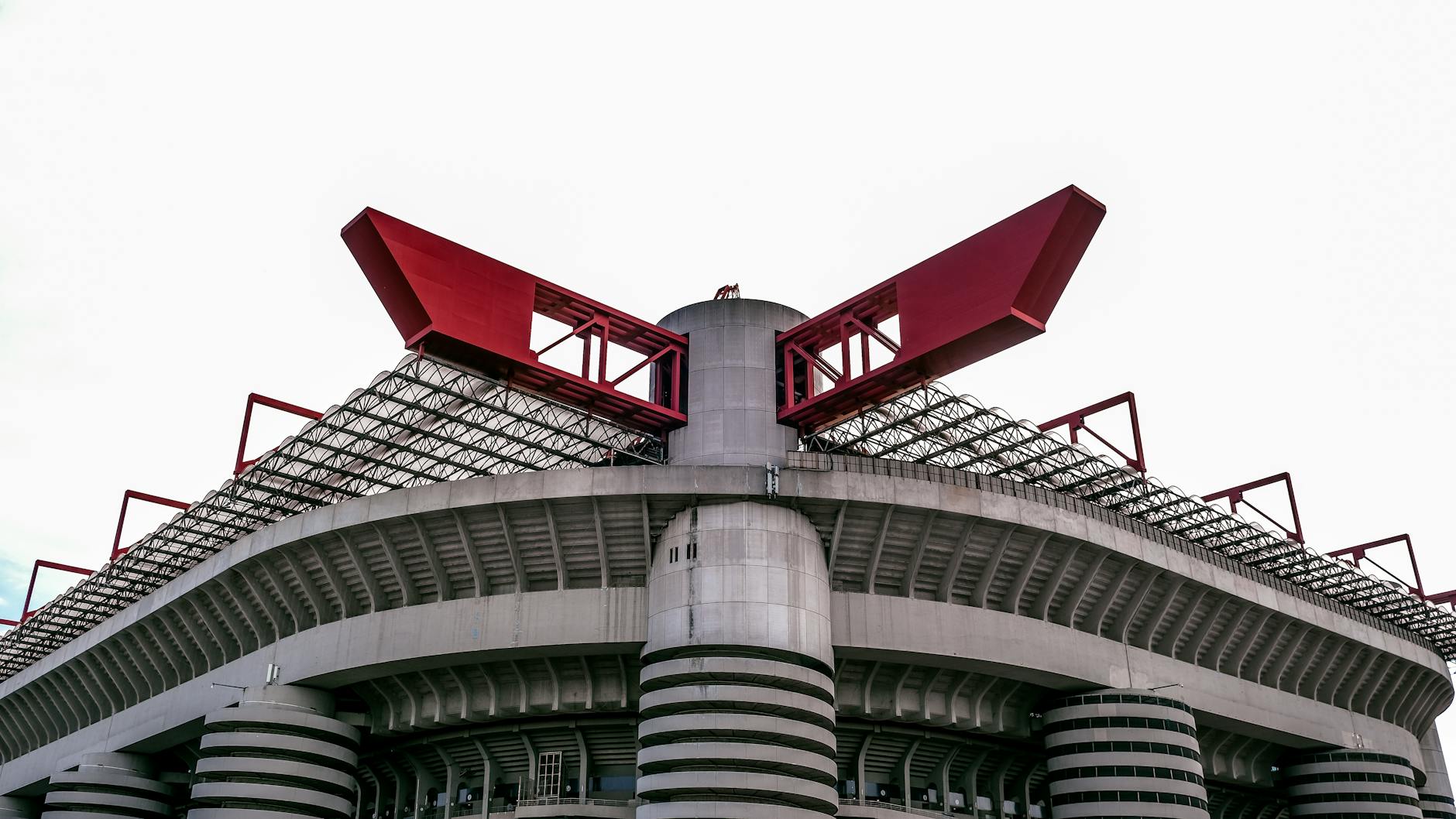
1908, the founding by the dissidents
On March 9, 1908, 44 dissidents from AC Milan gathered at the L’Orologio restaurant on Via Manzoni in Milan. They were led by painter Giorgio Muggiani, who would draw the club’s first crest, as well as a core group of industrialists and football enthusiasts from diverse backgrounds. The name they chose, Football Club Internazionale Milano, was both a political and sporting statement: rejecting inward-looking identity, welcoming players of all nationalities.
The black-and-blue colors (nerazzurri) were also chosen in contrast to AC Milan’s red and black. The nickname Nerazzurri comes from this, but Inter also has other nicknames: Beneamata (the Beloved), Biscione (the Great Serpent, the animal that appears on Milan’s coat of arms and inspired the logo). The first Scudetto came in 1910, just two years after the club was founded, as a sign of rapid rise.
This internationalist identity was challenged under the Fascist regime, which forced the club to be called Ambrosiana Inter (after Milan’s patron saint Ambrose) from 1928 to 1945, for the rejection of the prefix Internazionale seen as too universal. The club regained its official name at the end of the war.
The Giuseppe Meazza era and the first Scudetti
In the 1920s and 1930s, Inter found its first club legend: Giuseppe Meazza. Born in Milan in 1910, Peppino joined the youth team at 14 and debuted in the first team at 17. His technique, eye for goal and versatility made him an instant star. He won two World Cups with Italy (1934, 1938) and became inseparable from Inter, with a total of 284 goals in 408 matches, the club record.
During the Meazza era, Inter (or Ambrosiana at the time) won three Scudetti in the 1930s. The club moved to San Siro in 1947, which it now shares with AC Milan. The stadium was named Giuseppe Meazza in 1980, two years after the striker died, in tribute to the legend who had also played for AC Milan at the end of his career.
The 1950s were quieter, but the foundations were laid. Inter had a clear identity (international openness, technical quality, elegance), a legendary stadium and a living legend. Everything was in place for the decade that would make the club shine: the Grande Inter.
Helenio Herrera and the Grande Inter
The arrival of Argentine coach Helenio Herrera in 1960 marked the start of the club’s most glorious period. HH, as he was nicknamed, imposed a new style: catenaccio, an ultra-organized five-man defense with a sweeper behind and fast counterattacks. His method, controversial but ruthlessly effective, dominated European football for five seasons.
Under Herrera, Inter relied on stars such as Sandro Mazzola (Valentino’s son, who died in the Superga tragedy with Grande Torino), Luis Suárez the Spaniard (Ballon d’Or winner in 1960), Giacinto Facchetti, a revolutionary full-back who would invent the attacking full-back role, Armando Picchi as sweeper, and Mario Corso in the playmaking role.
The record is dazzling: three Scudetti (1963, 1965, 1966), two consecutive European Cups (1964, a 3-1 win over Real Madrid in Vienna; 1965, a 1-0 win over Benfica at San Siro), and two Intercontinental Cups against Independiente. This Grande Inter is, with 1950s Real Madrid and 1970s Bayern, one of the three greatest European teams of the 1960s.
From the 70s to the 90s, the Beneamata of the passionate fans
After Herrera left in 1968, Inter alternated between brilliant periods and stretches in the desert. Three Scudetti in the 70s and 80s (1971, 1980, 1989), a UEFA Cup in 1991 against AS Roma, but no return to the top of Europe. The club relied on Italian stars (Mazzola, Bergomi, Bagni) and foreign stars (Germaners Karl-Heinz Rummenigge in the 80s, Lothar Matthäus, Andreas Brehme and Jürgen Klinsmann for the 1989 title).
Giovanni Trapattoni’s arrival at the end of the 1980s brought a return to tactical elegance, but the club could not replicate the dominance of neighboring Milan. The rivalry with Milan under Sacchi then Capello defined this period, with frustrating sporting inferiority for the Nerazzurri, who watched the Rossoneri sweep domestic and European titles.
The nickname Beneamata (Beloved) then makes full sense. During those decades of partial success, Inter fans remained loyal, almost in defiance, to the club they love with a devotion that trophies cannot measure. This identity of faithful supporters in hard times still shapes a major part of Inter’s fan culture.
Ronaldo, Zanetti and the long desert crossing
1997 marked the arrival of Ronaldo Luís Nazário de Lima, the Brazilian striker then considered the best player in the world. The Phenomenon signed for 27 million euros, a world-record transfer at the time, and spent five seasons in Milan (1997-2002). He scored goals of the highest class but also suffered severe knee injuries that disrupted his Inter career despite his intact talent.
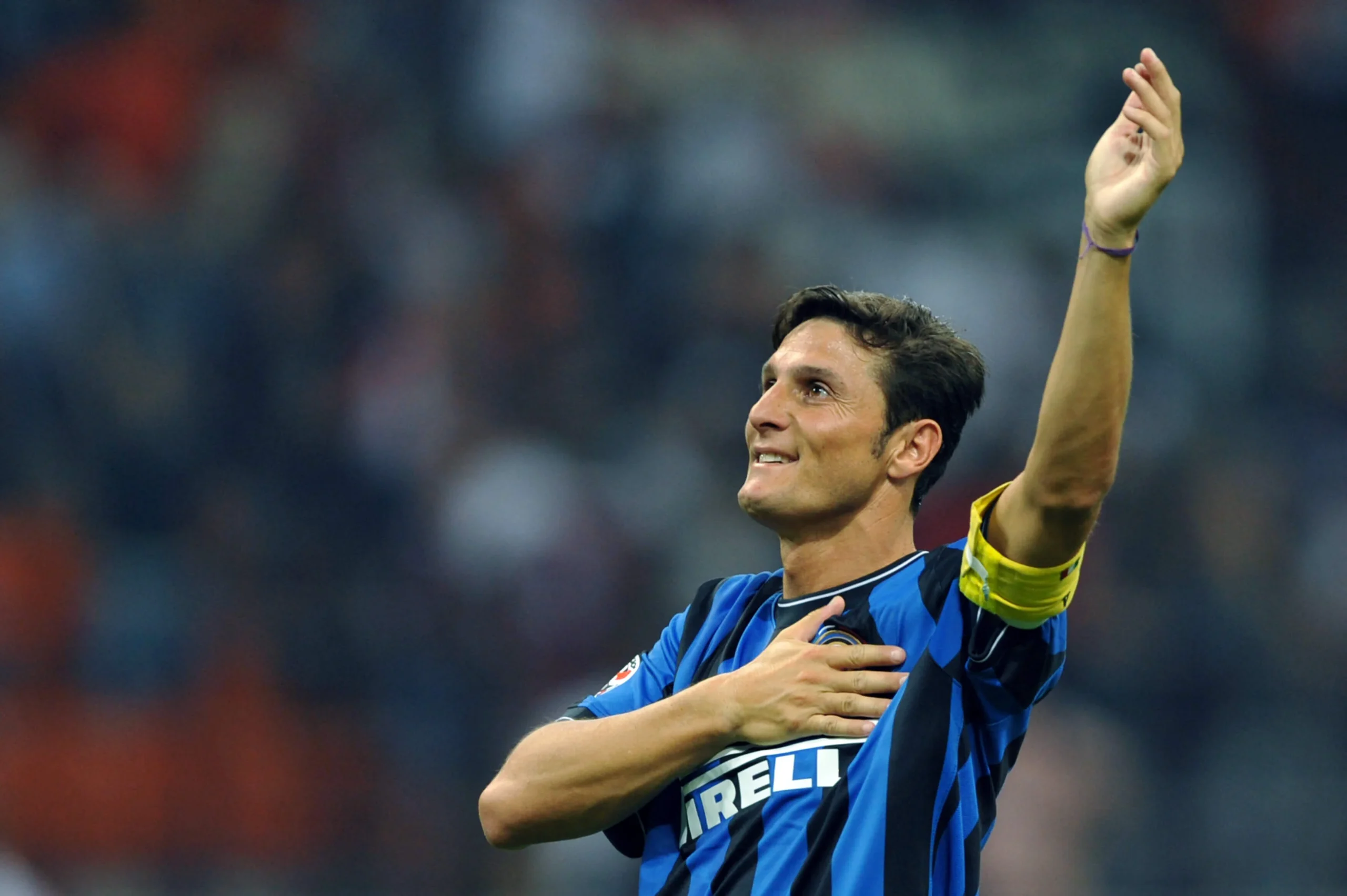
This period was also marked by the arrival of Javier Zanetti, the Argentine full-back who would become the club’s iconic captain. El Tractor played 858 matches in an Inter jersey between 1995 and 2014, spanning 19 seasons, becoming one of the greatest one-club men in European football. He wore the captain armband for 13 years, through dark years and triumphs alike.
Yet, despite Ronaldo, Zanetti, Crespo, Vieri or Recoba, Inter won no Scudetto between 1989 and 2006. It was the longest title drought in the club’s modern history, punctuated by the lost 1997 UEFA Cup final and a classico full of frustration. The revival would come paradoxically from a scandal.
Mourinho and the historic 2010 treble
The 2006 Calciopoli scandal changed everything. Juventus were relegated to Serie B and stripped of the 2004-2005 and 2005-2006 titles (the second was awarded to Inter), while Milan was docked 30 points (then 8 after appeal) in the 2006-2007 season. Inter, spared from punishment, became the big winner of a league in full reset and won five consecutive Scudetti between 2006 and 2010.
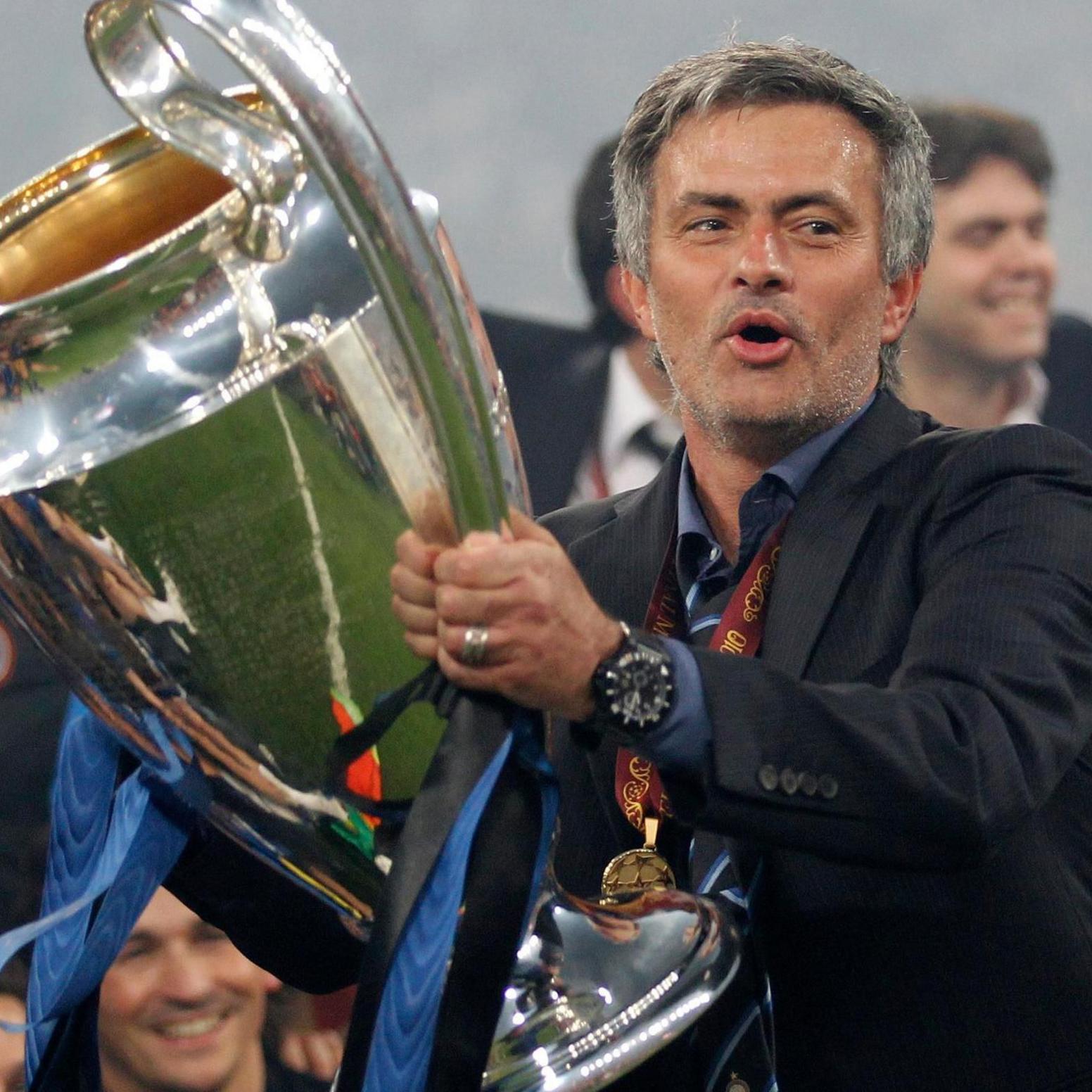
The summit was reached in 2010 under José Mourinho, who was appointed coach in 2008. The Portuguese coach built a perfectly balanced team around Wesley Sneijder, Diego Milito, Samuel Eto’o, Esteban Cambiasso and Lúcio. In the 2009-2010 season Inter won three major trophies: Serie A (fifth consecutive title), Coppa Italia, and especially the Champions League.
The May 22, 2010 final in Madrid against Bayern Munich (2-0, Diego Milito double) crowned this historic treble. Inter became the first (and still the only) Italian club to complete the Serie A, Coppa Italia, Champions League treble in the same season. Mourinho left right after, heading to Real Madrid, and Inter did not immediately return to that level.
Conte, Inzaghi and the modern revival
After the Mourinho era, Inter went through another decade of half-measures. It had to wait for Antonio Conte’s arrival in 2019 to see the club return to the top. Conte imposed his 3-5-2 and physical intensity, and wrested the 2020-2021 Scudetto from Juventus, the first Inter title in 11 years. But Conte left in the summer of 2021 after a budget disagreement with the hierarchy.
Simone Inzaghi took over and stabilized the team. Under his leadership, Inter won the Scudetto in 2024, reached the 2023 Champions League final (lost 1-0 to Manchester City in Istanbul), and the 2025 final. The squad relies on Lautaro Martínez, Marcus Thuram, Nicolò Barella, Hakan Çalhanoğlu (a move from Milan to Inter that is rare and controversial), and Dutchman Denzel Dumfries.
This modern revival has put Inter back at the top of Italian football again, with a strong tactical identity and a renewed backbone. Rivalries with neighboring AC Milan and Juventus remain the red lines of the Italian league.
Suning, Oaktree, owners of the globalized era
On the ownership side, Inter has gone through several cycles of owners. The Moratti family, with Massimo Moratti as president from 1995 to 2013, marks the post-Calciopoli era and the 2010 treble. Then the sale to Erick Thohir and his Indonesian group in 2013 was followed by the arrival of China’s Suning Holdings in 2016.
Suning’s financial difficulties, aggravated by the Covid crisis and Chinese rules on foreign investments, led to a transfer of control to American fund Oaktree Capital Management in May 2024, after a loan repayment default. This ownership change has raised questions about the future of the club’s business model, which remains a benchmark for smart recruitment and financial balance in Serie A.
To understand the rivalry with the big neighbor, we published a piece on the Derby della Madonnina, with more than 240 meetings. And for the continuation of Italian football, our piece on Juventus’ 125 years returns to Inter’s historic rival in the race for Scudetti.
What to remember
- Inter Milan was founded on March 9, 1908 by 44 dissidents from AC Milan who wanted to welcome foreign players.
- The name Internazionale and the nickname Nerazzurri reflect an open identity, in contrast to the parent club.
- Giuseppe Meazza, the club legend, holds the record with 284 goals in 408 matches and gave his name to San Siro Stadium.
- The Grande Inter of Helenio Herrera (1960-1968) won three Scudetti, two European Cups (1964, 1965), and imposed catenaccio.
- Historic treble in 2010 under José Mourinho: Serie A, Coppa Italia and Champions League, first Italian club to achieve this feat.
- Javier Zanetti remains the symbol of Inter loyalty: 858 matches in 19 seasons, 13 years of captaincy.
- Inter has 20 Scudetti and 3 Champions Leagues (1964, 1965, 2010), among the most decorated clubs in Italy.
- The club has changed owners several times: Moratti, Thohir, Suning since 2016, then Oaktree Capital since May 2024.
Explore Further
To explore other major teams in Italian football, read our pieces on AC Milan and its Sacchi-Berlusconi era, Juventus and the Agnelli empire, and Derby della Madonnina. Our top 10 of the best Serie A jerseys looks at iconic pieces of Italian calcio, including the Nerazzurri jersey worn by Zanetti and Milito.
Frequently Asked Questions
Why was Inter Milan created?
Inter Milan was founded on March 9, 1908 by 44 dissidents from Milan Foot-Ball and Cricket Club. They opposed the parent club’s refusal to welcome foreign players and founded a new club that affirmed international openness, which is why it was named Football Club Internazionale Milano.
What is the Grande Inter?
The term Grande Inter refers to the team coached by Argentine manager Helenio Herrera between 1960 and 1968. With players like Mazzola, Suárez and Facchetti, it won three Scudetti, two consecutive European Cups (1964 and 1965) and two Intercontinental Cups, imposing catenaccio as a tactical system.
What is Inter Milan’s European silverware?
Inter Milan has three European Cups or Champions Leagues: 1964 (3-1 vs Real Madrid in Vienna), 1965 (1-0 vs Benfica at San Siro) and 2010 (2-0 vs Bayern Munich in Madrid). The club has also won three UEFA Cups and three Intercontinental Cups.
What was the 2010 treble?
The treble refers to winning three major trophies in one season: Serie A, Coppa Italia and the Champions League. Inter Milan, under José Mourinho in the 2009-2010 season, became the first (and still the only) Italian club to achieve this historic feat.
Why is the stadium also called Giuseppe Meazza?
San Siro was officially renamed Giuseppe Meazza in 1980, two years after the club legend’s death. Meazza, captain of the Italy world champion team in 1934 and 1938, played for both Milan clubs, which makes him a unique figure in Milan derby history.
All Inter jerseys are here
Inter Milan home black-and-blue jerseys, away jerseys, third kit, player or fan versions, and retro jerseys that recall the Herrera era, Mourinho’s treble and the modern Scudetti are all in the collection at the store.