
19 novembre 2005, stade Santiago Bernabéu. Le FC Barcelone vient de l’emporter 3-0 face au Real Madrid lors d’un Clásico de Liga, avec un doublé de Ronaldinho et un but d’Eto’o. Quand le Brésilien sort à la 76e minute, une partie du public madrilène se lève et applaudit. Hommage extrêmement rare au Bernabéu, accordé seulement deux fois dans l’histoire à un joueur du Barça. Ce soir-là, Ronaldinho est au sommet absolu de son art.
L’aventure de Ronaldinho au FC Barcelone dure cinq saisons, de 2003 à 2008. Elle marque la renaissance d’un club en crise, le retour des trophées majeurs, et l’arrivée au sommet d’un footballeur qui a redéfini le plaisir de jouer. Cet article retrace son arrivée à Barcelone, ses saisons de gloire, son moment Bernabéu, et son départ progressif.
Un Barça en crise au début des années 2000
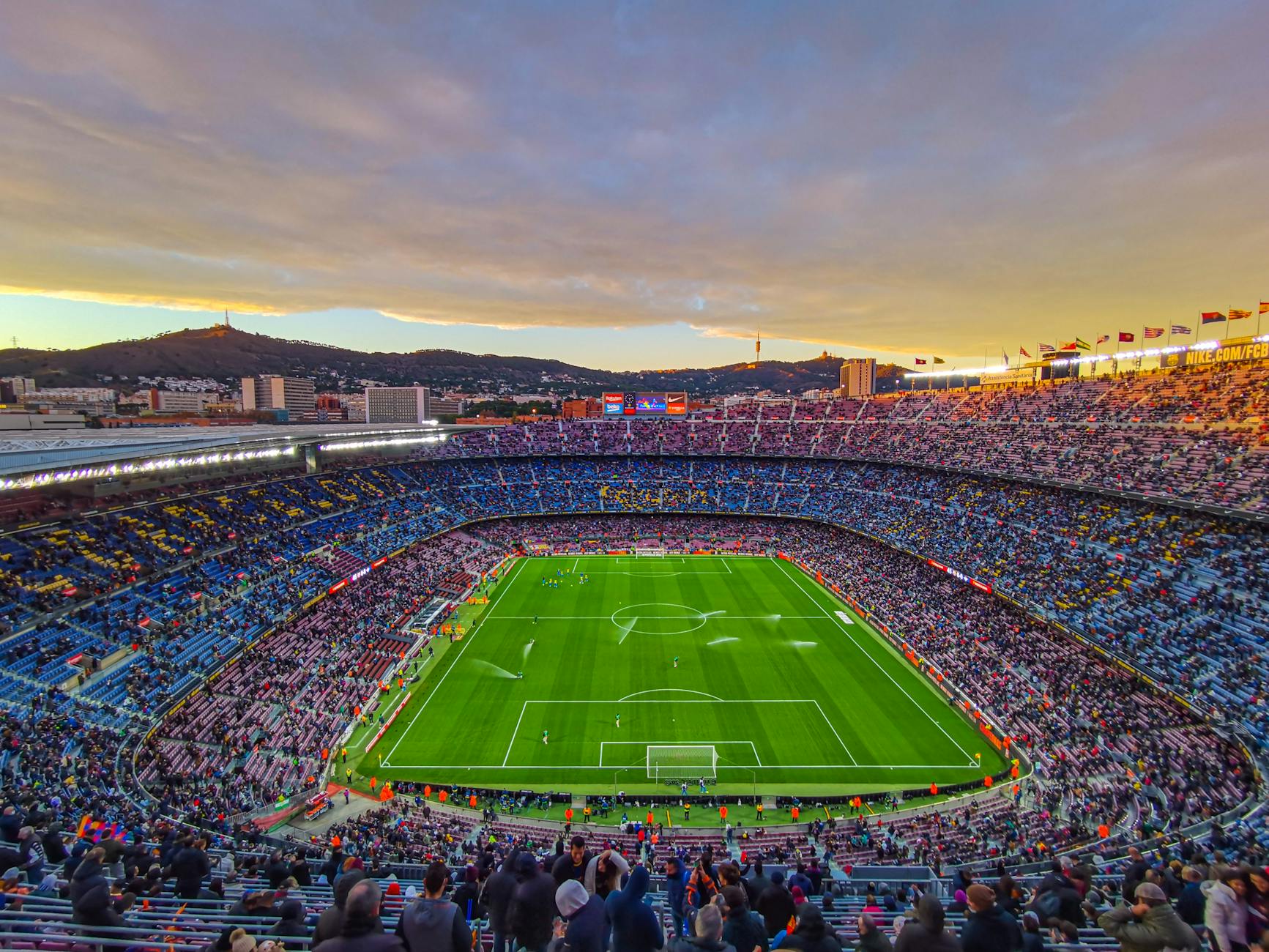
Au début des années 2000, le FC Barcelone traverse l’une des pires périodes sportives de son histoire récente. Le club n’a pas remporté la Liga depuis 1998-1999, le Real Madrid des Galactiques domine outrageusement le football espagnol, et la Ligue des Champions semble hors de portée. Les présidents Joan Gaspart puis Enric Reyna se succèdent sans parvenir à redresser la barre.
L’élection de Joan Laporta à la présidence en juin 2003 marque un tournant. Jeune avocat catalan, il propose un projet de rupture autour du recrutement d’une grande star pour relancer l’image et le sportif. Sa première option visée est David Beckham, alors à Manchester United. Le Real Madrid coiffe le Barça au poteau et signe l’Anglais. Laporta doit trouver un plan B en urgence.
Pour le contexte du club avant l’arrivée de Ronaldinho, voir notre article sur l’histoire du FC Barcelone. Le moment Ronaldinho s’inscrit dans cette logique de renaissance après plusieurs années compliquées.
L’arrivée en 2003, Laporta et le pari brésilien
Le plan B s’appelle Ronaldinho. Le Brésilien évolue alors au Paris Saint-Germain depuis 2001, après une saison décevante en Ligue 1 où il a parfois fait parler de lui pour ses sorties nocturnes plus que pour ses performances. À 23 ans, il a déjà été champion du monde 2002 avec le Brésil, mais reste à confirmer dans un grand club européen. Manchester United est aussi sur le coup.
Le transfert se conclut à l’été 2003 pour 30 millions d’euros, somme importante mais raisonnable pour un joueur de ce calibre. Laporta présente le Brésilien comme l’incarnation du nouveau Barça : audace, plaisir, retour à un football joueur. Le pari est risqué, car Ronaldinho n’a jamais évolué dans un grand club espagnol et personne ne sait s’il s’adaptera au championnat le plus tactique d’Europe.
Sa première saison 2003-2004 confirme rapidement le pari. Le Barça finit deuxième de Liga derrière le Valence de Rafael Benítez, mais Ronaldinho s’impose comme le joueur clé. Sa technique, ses dribbles, ses passes décisives transforment l’équipe. Le Camp Nou retrouve le sourire après plusieurs saisons grises.
La Liga 2004-2005, premier titre depuis six ans
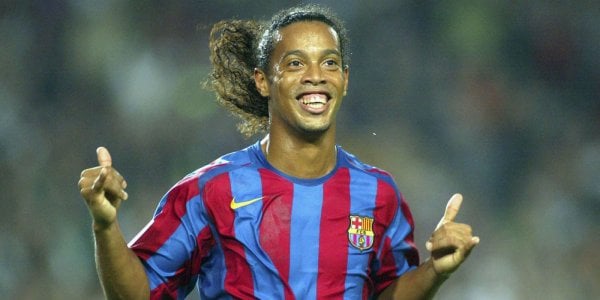
La saison 2004-2005 est celle de la consécration. Le FC Barcelone, entraîné par Frank Rijkaard et porté par Ronaldinho, remporte la Liga pour la première fois depuis 1998-1999. Le Brésilien marque 9 buts en championnat, en délivre une douzaine de passes décisives, et devient l’âme de l’équipe. À ses côtés, Samuel Eto’o, recruté la même année, est le buteur attitré.
Le titre est arraché au prix d’une fin de saison maîtrisée face au Real Madrid des Galactiques. La pelouse du Camp Nou voit défiler des soirées de très haut niveau : grand pont sur Sergio Ramos, sombrero sur un défenseur du Deportivo, passe extérieur du pied droit dans la course d’Eto’o. Ronaldinho rend joueurs et supporters heureux à chaque match.
Cette Liga est aussi un déclic mental. Le Barça réapprend à gagner, à ne plus craindre le Real, à jouer pour lui-même. Joan Laporta, qui avait promis le retour des trophées, peut afficher un premier succès institutionnel majeur. La crise des années précédentes appartient au passé.
Le Bernabéu debout, novembre 2005
La saison 2005-2006 commence en fanfare. Le 19 novembre 2005, le FC Barcelone se déplace au stade Santiago Bernabéu pour le premier Clásico de la saison. Sur le terrain, Ronaldinho est dans une forme exceptionnelle. Il marque deux buts de classe mondiale, le premier d’un grand pont suivi d’une frappe croisée, le second d’une frappe puissante après un slalom.
Le Barça l’emporte 3-0 (Eto’o à la 14e minute, Ronaldinho à la 58e et 77e). Quand le Brésilien sort du terrain, une partie significative du public madrilène se lève et applaudit. Le geste, exceptionnellement rare au Bernabéu pour un joueur adverse, n’a été accordé auparavant qu’à un seul autre Barcelonais selon plusieurs sources, Diego Maradona à l’époque.
Ce moment est immédiatement compris pour ce qu’il représente : une reconnaissance forcée du talent par les supporters du rival historique. Pour le contexte du Clásico vu côté madrilène, voir notre papier sur l’histoire du Real Madrid. Ronaldinho est alors au sommet absolu de son art.
La Ligue des Champions 2006 face à Arsenal
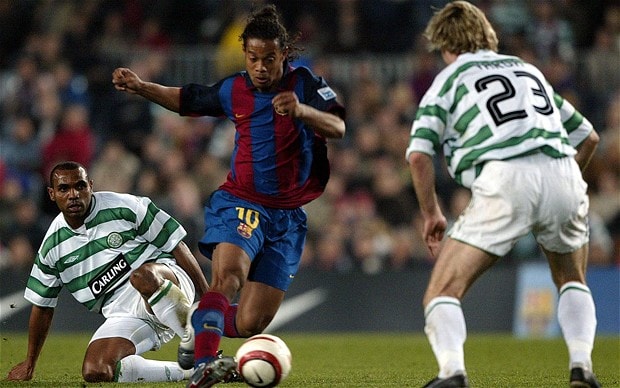
La saison 2005-2006 se termine en apothéose. Le 17 mai 2006, à Paris au Stade de France, le FC Barcelone affronte Arsenal en finale de la Ligue des Champions. Les Anglais ouvrent le score à la 37e minute par Sol Campbell, mais leur gardien Jens Lehmann a été expulsé dès la 18e minute. La supériorité numérique du Barça finit par payer.
Eto’o égalise à la 76e minute, et le remplaçant Juliano Belletti inscrit le but de la victoire à la 80e. 2-1, le Barça remporte sa deuxième Coupe d’Europe, quatorze ans après celle de Wembley sous Cruyff. Ronaldinho, sans marquer, a été l’un des artisans majeurs du parcours, notamment lors du quart de finale face au Benfica et de la demi-finale face au Milan AC.
Le doublé Liga-Ligue des Champions 2005-2006 marque le retour du Barça au sommet européen. Le Brésilien est désormais identifié comme le meilleur joueur du monde. Pour le contexte plus large des grandes finales européennes, notre article sur la Dream Team de Cruyff revient sur la première Coupe d’Europe du club en 1992.
Ballon d’Or 2005 et reconnaissance mondiale
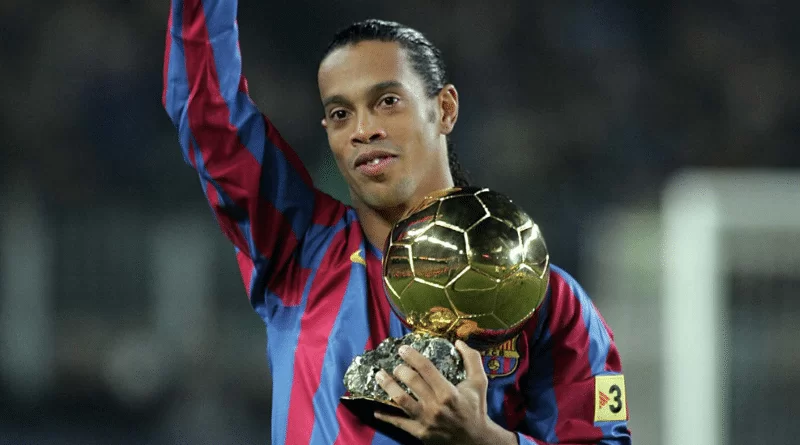
La reconnaissance individuelle accompagne les succès collectifs. Ronaldinho est élu FIFA World Player of the Year en 2004 et 2005, devenant l’un des très rares joueurs à enchaîner deux titres consécutifs. En 2005, il décroche également le Ballon d’Or, distinction journalistique de référence pour le meilleur joueur européen.
Cette année 2005 est sans doute la plus haute de sa carrière. Joueur du club champion d’Espagne, futur vainqueur de la Ligue des Champions, distingué par toutes les institutions du football mondial, applaudi par les supporters de son rival historique. Ronaldinho incarne alors l’idée même de génie footballistique : à la fois efficace, créatif et joyeux.
Cette reconnaissance contribue aussi à ramener le Barça au centre de l’attention médiatique mondiale. Les maillots floqués Ronaldinho 10 deviennent l’un des produits dérivés les plus vendus de la planète football. Le club, qui végétait commercialement quelques années plus tôt, devient une marque globale.
Le déclin et le départ en 2008
La suite est moins glorieuse. La saison 2006-2007 est marquée par une perte de constance physique et une vie nocturne plus médiatisée que les performances. Le Barça finit deuxième de Liga, sans titre majeur. La saison 2007-2008 confirme la chute. Ronaldinho enchaîne les blessures, sa condition physique se dégrade, et son rendement faiblit nettement.
À l’été 2008, le club décide de tourner la page. Pep Guardiola arrive sur le banc et veut construire une nouvelle équipe autour de jeunes formés à La Masia, dont Lionel Messi. Ronaldinho est vendu au Milan AC pour un montant nettement inférieur à son prix d’achat. Joan Laporta justifie publiquement la décision en disant que le Brésilien a besoin “d’un nouveau défi” pour relancer sa carrière. Pour la suite immédiate du club, voir notre article sur Pep Guardiola entraîneur.
Son bilan barcelonais reste impressionnant : 2 Liga (2005, 2006), 1 Ligue des Champions (2006), 2 Supercoupes d’Espagne, 1 Ballon d’Or, 2 FIFA World Player. Et surtout, un capital sympathie immense, qui fait que les supporters du Barça parlent encore de lui avec tendresse, dix-huit ans après son arrivée à Barcelone. Pour la suite de la dynamique sportive, voir aussi notre analyse du triplé de 2009, qui s’inscrit dans la continuité directe de l’ère Ronaldinho.
Ce qu’il faut retenir
- Ronaldinho signe au FC Barcelone à l’été 2003 pour 30 millions d’euros, en provenance du Paris Saint-Germain.
- Il porte le Barça au titre de Liga 2004-2005, premier sacre depuis six ans.
- Le 19 novembre 2005 au Bernabéu, il marque un doublé dans une victoire 3-0 et reçoit une standing ovation du public madrilène.
- Il remporte le FIFA World Player of the Year en 2004 et 2005, et le Ballon d’Or 2005.
- Le 17 mai 2006 à Paris, le Barça remporte la Ligue des Champions face à Arsenal (2-1), avec Ronaldinho comme joueur majeur du parcours.
- À l’été 2008, il est vendu au Milan AC après deux saisons en demi-teinte, alors que Pep Guardiola arrive sur le banc.
- Son bilan : 2 Liga, 1 Ligue des Champions, 2 Supercoupes d’Espagne, plus les distinctions individuelles majeures.
Pour aller plus loin
L’aventure Ronaldinho ouvre la grande décennie barcelonaise. Pour creuser, on vous recommande nos papiers sur l’histoire complète du FC Barcelone, sur Pep Guardiola, son successeur sur le banc, sur Lionel Messi, héritier du numéro 10, et sur le triplé historique de 2009 qui suit immédiatement son départ.
Questions fréquentes
Quand Ronaldinho a-t-il signé au Barça ?
Ronaldinho signe au FC Barcelone à l’été 2003, en provenance du Paris Saint-Germain, pour 30 millions d’euros. Il a 23 ans à son arrivée. Le club, alors en crise sportive, mise sur lui après avoir échoué à recruter David Beckham, parti finalement au Real Madrid.
Combien de trophées Ronaldinho a-t-il gagnés au Barça ?
Ronaldinho remporte 2 Liga (2004-2005 et 2005-2006), 1 Ligue des Champions (2006 face à Arsenal), 2 Supercoupes d’Espagne, ainsi que des distinctions individuelles majeures : Ballon d’Or 2005 et FIFA World Player of the Year en 2004 et 2005.
Que s’est-il passé au Bernabéu en novembre 2005 ?
Le 19 novembre 2005, le FC Barcelone l’emporte 3-0 face au Real Madrid au stade Santiago Bernabéu. Ronaldinho marque un doublé. Quand il sort à la 76e minute, une partie du public madrilène se lève pour l’applaudir, hommage rarissime accordé à un joueur du Barça.
Pourquoi Ronaldinho a-t-il quitté le Barça ?
Après deux saisons brillantes (2004-2005 et 2005-2006), Ronaldinho voit son rendement chuter à cause de blessures et d’une vie nocturne très médiatisée. À l’été 2008, le club décide de tourner la page avec l’arrivée de Pep Guardiola. Il est vendu au Milan AC pour un montant nettement inférieur à son prix d’achat.
Combien de Ballons d’Or Ronaldinho a-t-il gagnés ?
Ronaldinho a remporté un seul Ballon d’Or, en 2005. Il est en revanche le seul joueur à avoir remporté deux fois consécutivement le titre de FIFA World Player of the Year en 2004 et 2005, distinction de la Fédération Internationale de Football Association.
Cette histoire vous a donné envie de porter le maillot ?
La collection FC Barcelone est là, sur notre boutique : maillot domicile, extérieur, third, version joueur ou supporter, et les maillots rétro qui rappellent les années Ronaldinho.