
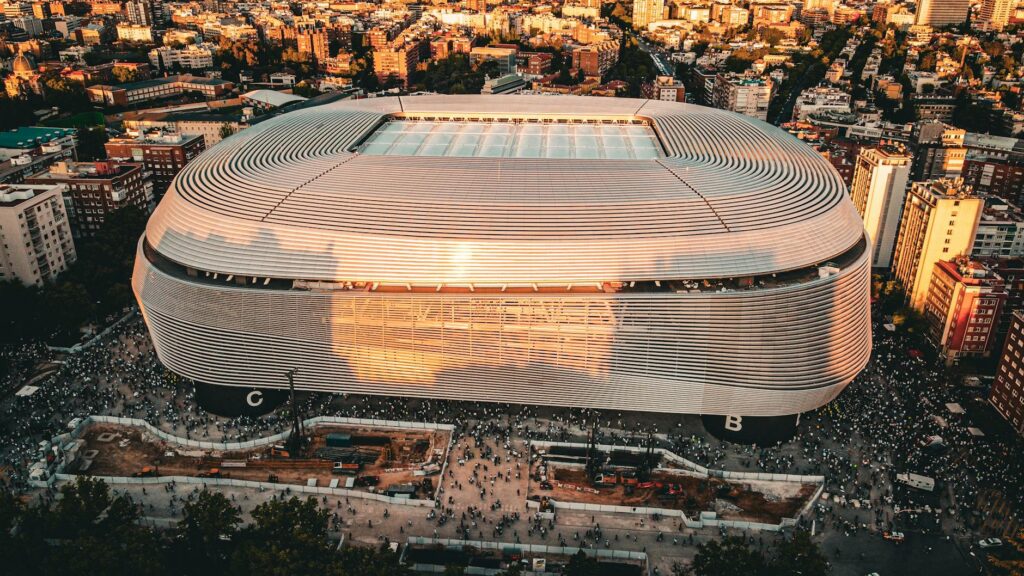
Le 6 mars 1902, une poignée d’étudiants madrilènes se réunissent dans une arrière-salle pour fonder le Madrid Football Club. Pas de stade, pas de sponsor, pas même de maillot officiel. Juste un ballon importé d’Angleterre, et l’envie de jouer. Personne, ce soir-là, n’imagine que ce petit club deviendra le plus titré de la planète football.
Cent vingt ans plus tard, le Real Madrid affiche 15 Ligues des Champions, 36 titres de Liga, et un palmarès que même ses rivaux ont fini par admettre. Ce n’est pas un hasard, ni de la chance. C’est une histoire de visionnaires, de transferts qui ont changé le foot, de remontées impossibles, et d’un blanc immaculé devenu un symbole. On vous raconte tout, dans l’ordre.
L’histoire du Real Madrid commence en 1902
L’histoire débute à la fin du XIXe siècle, quand des étudiants de l’Institución Libre de Enseñanza découvrent le football grâce à des professeurs britanniques installés à Madrid. En 1897, un premier club informel voit le jour, le Sky Football Club. Mais c’est le 6 mars 1902 que Julián Palacios dépose officiellement les statuts du Madrid Football Club.
Le premier président s’appelle Juan Padrós, et avec son frère Carlos, ils tiennent la boutique de mode “Al Capricho” à Madrid. Les Padrós sont parmi les premiers à structurer un club autour de la jeunesse universitaire et bourgeoise de la capitale. Les premiers matchs se jouent sur un terrain vague près de l’hippodrome, sans tribunes, sans vestiaires, parfois sans cages.
Trois ans seulement après sa fondation, en 1905, le club remporte sa première Copa del Rey en battant l’Athletic Bilbao en finale. Cette victoire pose les bases d’une culture du trophée qui ne quittera plus jamais le club. Dès ses premières années, le Madrid FC attire les meilleurs joueurs de la capitale et milite pour la professionnalisation du football espagnol, alors largement dominé par la corrida et le cyclisme.
Du Madrid FC au Real Madrid : le titre royal de 1920
Le 29 juin 1920, le roi Alfonso XIII accorde au club le titre de “Real” (Royal), avec le droit d’arborer la couronne sur son blason. Le Madrid Football Club devient officiellement le Real Madrid Club de Fútbol. Ce n’est pas qu’un changement de nom, c’est un adoubement qui ancre le club dans l’identité nationale espagnole.
Pendant les années 1920, le Real Madrid s’installe au stade Chamartín en 1924, une enceinte d’environ 16 000 places (extensible à 22 000 dans les années 30) qui marque un bond en avant considérable. Le club remporte plusieurs coupes régionales, structure son organisation, et commence à se constituer un vrai noyau de supporters.
La guerre civile espagnole (1936-1939) frappe le club de plein fouet. Le stade Chamartín est bombardé, les archives partiellement détruites, plusieurs joueurs s’exilent ou disparaissent. Le club survit, exsangue. C’est dans ces ruines qu’un homme va arriver, et tout changer : Santiago Bernabéu.
Santiago Bernabéu, l’homme qui a tout reconstruit
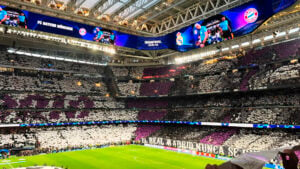
Bernabéu est élu président en 1943. Le club est à genoux. Sa première décision laisse tout le monde perplexe : construire un nouveau stade gigantesque, alors que l’Espagne sort de la guerre civile et que personne n’a un sou. En 1947, le Nuevo Estadio Chamartín ouvre ses portes avec 75 000 places. Pour financer cette folie, Bernabéu invente le crowdfunding avant l’heure : il émet des obligations auprès des socios, qui prêtent au club leur argent. Un modèle copié partout depuis.
Mais le stade n’est que le contenant. Bernabéu veut le contenu : les meilleurs joueurs du monde. Sa stratégie est révolutionnaire pour l’époque, acheter les stars internationales, les faire jouer devant 75 000 personnes, et réinvestir les recettes dans de nouveaux talents. Un cercle vertueux qui fonctionne encore aujourd’hui, 80 ans plus tard.
Le stade sera rebaptisé Estadio Santiago Bernabéu en 1955, du vivant de son bâtisseur, un honneur extrêmement rare dans le foot. Bernabéu restera président jusqu’à sa mort en 1978, soit 35 ans à la tête du club. Aucun président ne fera mieux.
Di Stéfano et les cinq premières Coupes d’Europe
1953. Le Real Madrid réalise le transfert le plus important de son histoire : Alfredo Di Stéfano, l’attaquant argentin du Millonarios de Bogota. Le transfert fait scandale. Le FC Barcelone avait un accord préalable avec le joueur, mais un imbroglio juridique orchestré en partie par la Fédération espagnole permet au Real de rafler la mise. Les Catalans ne pardonneront jamais.
Di Stéfano transforme tout. Ce n’est pas un buteur classique, c’est un joueur total avant l’heure, capable de défendre, créer, marquer, et organiser le jeu depuis n’importe quelle zone du terrain. En 11 saisons sous le maillot blanc, il inscrit 308 buts en 396 matchs et emmène le Real Madrid vers une domination jamais vue auparavant.
Entre 1956 et 1960, le Real Madrid remporte cinq Coupes d’Europe d’affilée. Cinq. Personne n’a jamais égalé cet exploit, et personne ne l’égalera probablement jamais. La finale de 1960, un 7-3 contre l’Eintracht Francfort à Hampden Park devant 127 000 spectateurs, est encore considérée par beaucoup comme le plus beau match de l’histoire du football. Di Stéfano y inscrit un triplé, Ferenc Puskás un quadruplé.
Cette équipe, c’est aussi Francisco Gento, le seul joueur de l’histoire à avoir gagné 6 Coupes d’Europe, Raymond Kopa (le Ballon d’Or français de 1958), et José Santamaría. Une constellation de talents réunis par la vision de Bernabéu et le génie de Di Stéfano. Pour mieux comprendre cette période fondatrice, on a écrit un papier dédié sur la première Coupe d’Europe de 1956.
La traversée du désert et la Quinta del Buitre
Après l’ère Di Stéfano, le Real Madrid domine la Liga mais peine en Europe. Une 6e Coupe d’Europe arrive en 1966, puis plus rien pendant 32 ans. Les années 70 sont marquées par la montée en puissance du rival barcelonais et l’émergence du football néerlandais de Cruyff.
Le décès de Bernabéu en 1978 laisse un vide immense. Le club enchaîne les présidents sans retrouver de vision à long terme. Les victoires en Liga continuent (cinq titres consécutifs entre 1986 et 1990), mais l’Europe semble maudite.
De cette période naît pourtant l’un des mouvements les plus romantiques du football espagnol : la Quinta del Buitre. Cinq joueurs formés au club, Emilio Butragueño, Míchel, Martín Vázquez, Sanchís et Pardeza, portent le Real Madrid avec un jeu spectaculaire et une connexion quasi télépathique. Le match contre le Borussia Mönchengladbach en 1985 (4-0 après avoir été menés 5-1 à l’aller) reste l’un des retournements les plus fous de la Coupe UEFA.
Butragueño, surnommé “El Buitre” (le vautour) pour son flair devant le but, incarne cette génération avec une élégance qui rappelle les grandes heures de Di Stéfano. La Quinta prouve une chose importante : le Real Madrid sait aussi former, pas seulement acheter.
Les Galactiques : Figo, Zidane, Ronaldo, Beckham
2000. Florentino Pérez est élu président avec une promesse folle : recruter Luis Figo, la star du FC Barcelone. Personne n’y croit. Il tient parole. Figo débarque au Bernabéu pour 60 millions d’euros, un record mondial. Le lendemain, au Camp Nou, les supporters du Barça pleurent. L’ère des Galactiques est lancée.
Chaque été, un nouveau crack arrive. Zinédine Zidane en 2001, pour 75 millions d’euros, soit le nouveau record mondial. Ronaldo (le Brésilien) en 2002. David Beckham en 2003. Le Real Madrid ne recrute pas des joueurs, il collectionne des légendes vivantes. Le marketing explose, les ventes de maillots du Real Madrid battent tous les records mondiaux. Le visionnage de la Liga en Asie décolle.
Sur le terrain, le bilan est contrasté. La Ligue des Champions 2002 est remportée grâce à une volée de légende de Zidane en finale contre le Bayer Leverkusen, l’un des plus beaux buts jamais inscrits dans une finale européenne. Mais les saisons suivantes déçoivent. Le déséquilibre entre stars offensives et rigueur défensive coûte cher : Claude Makélélé, le meilleur milieu défensif du monde à l’époque, est vendu à Chelsea pour faire de la place à Beckham. Erreur historique.
L’échec européen entre 2003 et 2014, surnommé “la maldición de la Décima” (la malédiction de la dixième), va hanter le club pendant plus d’une décennie. Si vous voulez creuser ce qu’a vraiment changé Florentino Pérez au club, c’est par ici.
L’ère Mourinho-Ancelotti et la fameuse Décima
2009. Florentino Pérez revient à la présidence et lance une deuxième vague de Galactiques : Cristiano Ronaldo (94 millions d’euros, encore un record), Kaká, Karim Benzema, Xabi Alonso. Puis il nomme José Mourinho entraîneur en 2010.
Mourinho électrise le vestiaire et le Bernabéu. La Liga 2012 est remportée avec 100 points et 121 buts marqués, deux records absolus. Mais le Portugais échoue en demi-finale de Ligue des Champions trois années consécutives, et son management conflictuel finit par fracturer le groupe.
C’est Carlo Ancelotti, avec sa sérénité italienne, qui décroche enfin la Décima le 24 mai 2014 au Stade de la Luz de Lisbonne. Le scénario est hollywoodien : mené 1-0 par l’Atlético Madrid jusqu’à la 93e minute, Sergio Ramos égalise de la tête sur corner. Le Real l’emporte 4-1 en prolongation. Douze ans de frustration s’évaporent en 30 minutes de football total.
Ce soir-là, Cristiano Ronaldo termine la saison avec 17 buts en Ligue des Champions, un record. Il est au sommet de son art, et le Real Madrid est de retour au sommet de l’Europe.
Le triplé Zidane : 2016, 2017, 2018
L’arrivée de Zinédine Zidane comme entraîneur en janvier 2016 inaugure la période la plus glorieuse du club depuis les années 50. En seulement deux ans et demi, Zidane remporte trois Ligues des Champions consécutives (2016, 2017, 2018), un exploit sans précédent dans l’ère moderne de la compétition.
La finale de 2017 contre la Juventus (4-1) est un récital. Celle de 2018 contre Liverpool reste marquée par le retourné acrobatique de Gareth Bale, l’un des plus beaux buts jamais inscrits en finale, tous niveaux confondus. Au-delà des individualités, c’est la solidité collective qui impressionne : Sergio Ramos en patron de la défense, Luka Modrić en chef d’orchestre, Toni Kroos en métronome, et Cristiano Ronaldo en finisseur impitoyable.
Modrić remporte le Ballon d’Or 2018, brisant dix ans de duopole Messi-Ronaldo. C’est la reconnaissance d’un joueur qui incarne l’intelligence tactique du Real de Zidane : pas de muscles spectaculaires, pas de vitesse brute, juste une vision du jeu et une technique qui font taire les stades.
Zidane démissionne en mai 2018, au sommet. Comme joueur, comme entraîneur, il part toujours quand il est au plus haut.
Le Real Madrid d’aujourd’hui : Bellingham, Mbappé et la suite
Après le départ de Cristiano Ronaldo à la Juventus en 2018, le Real Madrid traverse une période de transition. Karim Benzema sort de l’ombre de CR7 et explose : Ballon d’Or 2022, meilleur buteur de la Ligue des Champions, leader technique et émotionnel du vestiaire.
La 14e Ligue des Champions en 2022, remportée sous Ancelotti revenu aux affaires, est un chef-d’œuvre de résilience pure. Le Real élimine successivement le PSG, Chelsea et Manchester City grâce à des remontadas improbables, avant de battre Liverpool en finale (1-0) grâce à un Thibaut Courtois en état de grâce.
En 2024, Kylian Mbappé rejoint enfin le Real Madrid après des années de spéculation. Le Français, formé à l’AS Monaco et révélé au PSG, apporte sa vitesse supersonique et son instinct de buteur à un effectif déjà garni de Jude Bellingham et Vinícius Júnior. Le nouveau Bernabéu, rénové pour 1,8 milliard d’euros avec un toit rétractable et un terrain escamotable, est l’écrin d’un club qui refuse catégoriquement de vivre dans le passé.
Le maillot blanc dans l’histoire du Real Madrid
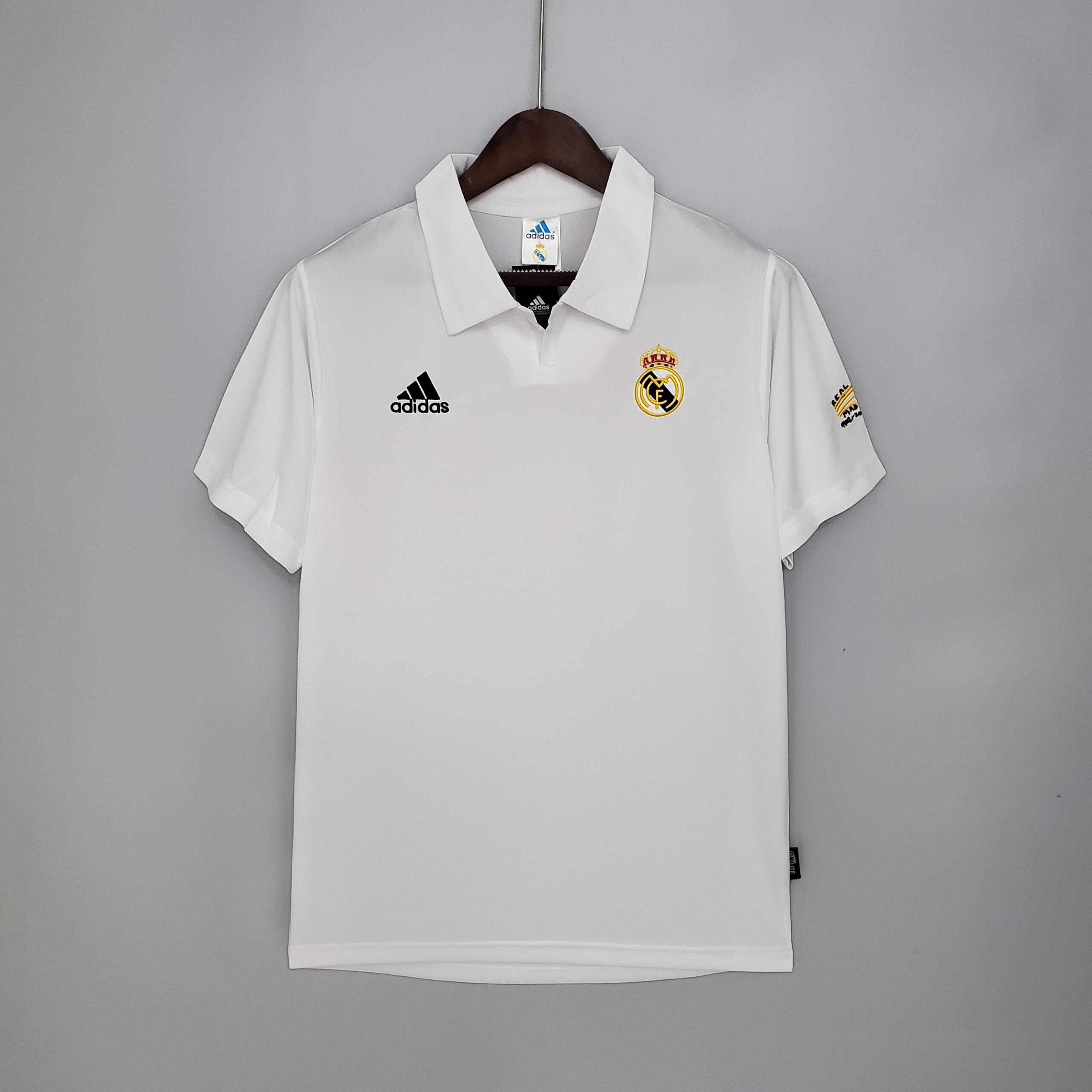
Le blanc immaculé du Real Madrid n’est pas un hasard. Dès 1902, le club adopte le blanc par admiration pour le Corinthian FC, club amateur anglais qui jouait en blanc pur. Au fil des décennies, cette couleur est devenue un symbole d’élégance et de prestige, à tel point que les joueurs adverses parlent souvent de “porter le maillot le plus lourd du monde” quand ils débarquent au club.
Le maillot a évolué avec les époques : le polo simple des années 50, le V-neck iconique de l’ère Di Stéfano, le design Hummel des années 80, puis l’arrivée d’Adidas en 1998 qui a modernisé la coupe tout en respectant la pureté de la tradition. Aujourd’hui, le maillot du Real Madrid est tout simplement le plus vendu au monde, devant Manchester United et le FC Barcelone. Si vous voulez creuser cette histoire-là, on a fait un papier complet sur l’histoire du maillot du Real Madrid.
Ce qu’il faut retenir
- Le Real Madrid a été fondé le 6 mars 1902 sous le nom de Madrid Football Club, et a obtenu le titre “Real” en 1920 du roi Alfonso XIII.
- Santiago Bernabéu est l’homme clé du club moderne : président de 1943 à 1978, il a construit le stade et la stratégie de recrutement international qui font encore le Real aujourd’hui.
- L’ère Di Stéfano (1953-1964) a apporté cinq Coupes d’Europe consécutives entre 1956 et 1960, un record absolu jamais égalé.
- Florentino Pérez a relancé le club en 2000 avec les Galactiques (Figo, Zidane, Ronaldo, Beckham), puis avec la deuxième vague des années 2010 (Cristiano Ronaldo, Modrić, Kroos).
- Le triplé européen de Zinédine Zidane (2016, 2017, 2018) est un exploit unique dans le football moderne.
- Le club affiche aujourd’hui 15 Ligues des Champions, un record absolu, et un effectif autour de Mbappé, Bellingham et Vinícius pour les années à venir.
- Le maillot blanc, inspiré du Corinthian FC en 1902, est devenu le maillot le plus vendu au monde.
Pour aller plus loin
L’histoire du Real Madrid est trop riche pour tenir dans un seul article. Pour aller plus loin sur les figures et les moments qui ont fait le club, on vous recommande nos papiers sur Santiago Bernabéu, le bâtisseur, sur la première ère des Galactiques, et sur l’arrivée de Kylian Mbappé en 2024. Pour une plongée dans le sommet de l’ère moderne, on a aussi un dossier complet sur le triplé européen 2016-2018, et un autre sur la Quinta del Buitre, ces enfants de la Castille qui ont remis le club sur ses rails après le départ de Bernabéu. Le palmarès intégral du club est par ailleurs consultable sur le site officiel du Real Madrid.
Questions fréquentes
Quand le Real Madrid a-t-il été fondé ?
Le Real Madrid a été fondé le 6 mars 1902 sous le nom de Madrid Football Club, par un groupe d’étudiants madrilènes amateurs de football. Le titre “Real” (Royal) a été accordé par le roi Alfonso XIII en 1920, avec le droit d’arborer la couronne sur le blason.
Combien de Ligues des Champions le Real Madrid a-t-il remportées ?
Le Real Madrid détient le record absolu avec 15 Ligues des Champions. Les cinq premières ont été gagnées consécutivement entre 1956 et 1960 sous l’impulsion d’Alfredo Di Stéfano, puis trois d’affilée entre 2016 et 2018 avec Zinédine Zidane comme entraîneur.
Pourquoi le Real Madrid joue-t-il en blanc ?
Le blanc a été adopté dès la fondation du club en 1902, en hommage au Corinthian FC, un club amateur anglais que les fondateurs admiraient. Cette couleur est restée le symbole du club depuis plus de 120 ans, et le maillot blanc du Real Madrid est aujourd’hui le plus vendu au monde.
Qui est le meilleur buteur de l’histoire du Real Madrid ?
Cristiano Ronaldo détient le record absolu avec 450 buts en 438 matchs entre 2009 et 2018. Il devance Karim Benzema (354 buts toutes compétitions), Raúl (323 buts) et Alfredo Di Stéfano (308 buts). À noter que Ronaldo affiche le ratio buts/match le plus impressionnant de l’histoire du club.
Quel est le plus grand rival du Real Madrid ?
Le FC Barcelone est le rival historique du Real Madrid. Leur confrontation, appelée El Clásico, est l’un des matchs les plus regardés au monde, avec une audience cumulée de plusieurs centaines de millions de téléspectateurs par édition. La rivalité dépasse largement le cadre sportif, avec une dimension culturelle et politique très forte entre Madrid et la Catalogne.
Envie de porter le maillot du Real Madrid ?
Tous les modèles sont disponibles dans notre boutique : domicile, extérieur, third, version joueur, version supporter, ainsi que les maillots rétro.