
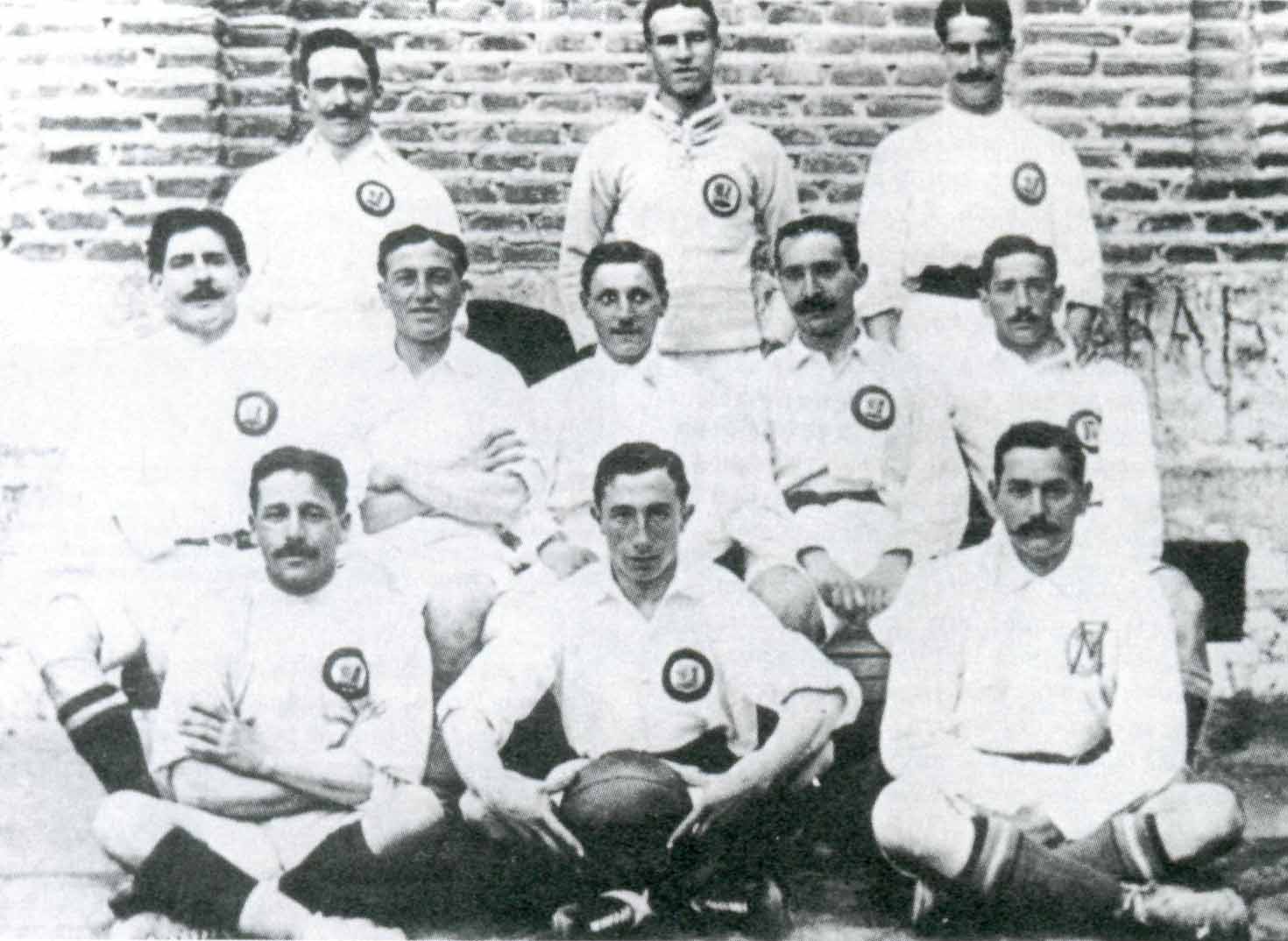
Le 6 mars 1902, le Madrid Football Club est officiellement fondé. Quelques semaines plus tard, ses fondateurs choisissent les couleurs du club : un maillot blanc inspiré du Corinthian FC, célèbre club amateur anglais que les frères Padrós avaient découvert lors de leurs voyages à Londres. Ce choix initial, en apparence anodin, va devenir l’un des marqueurs identitaires les plus puissants du football mondial. Cet article retrace l’histoire du maillot du Real Madrid, de cette inspiration anglaise de 1902 aux éditions Adidas contemporaines, soit plus de 120 ans d’évolution.
Le maillot du Real Madrid est aujourd’hui le plus vendu au monde sur certaines saisons, devant Manchester United, le PSG et Barcelone. Son design d’apparente simplicité (entièrement blanc, écusson sur la poitrine) cache une richesse historique méconnue : modifications de l’écusson, sponsors qui ont marqué leur époque, équipementiers historiques, déclinaisons extérieur et third de plus en plus audacieuses depuis les années 2000.
Les origines anglaises du maillot blanc
En 1902, quand les frères Juan et Carlos Padrós fondent officiellement le Madrid Football Club, ils sont confrontés à une question simple : quelles couleurs choisir pour identifier leur équipe ? La réponse vient de Londres. Juan Padrós avait été marqué lors de ses voyages en Angleterre par le Corinthian Football Club, club amateur fondé en 1882 dont les joueurs portaient un maillot entièrement blanc. Le choix du blanc s’impose donc, en hommage à cet idéal britannique du sport et du fair-play.
Le premier maillot du club est donc blanc uni, sans écusson distinctif visible, accompagné d’un short bleu marine puis bleu plus clair selon les saisons. Ce dépouillement est typique des premiers clubs européens du début du XXe siècle, où le maillot servait avant tout à identifier l’équipe sans recherche esthétique particulière.
Pour comprendre comment ce choix initial s’est imposé pendant 120 ans sans jamais être remis en cause, on a écrit un dossier dédié à l’origine du maillot blanc du Real Madrid, qui détaille les différentes hypothèses historiques sur le choix de cette couleur.
L’évolution de l’écusson, de 1902 à la couronne royale
L’écusson originel de 1902 était simple : un cercle avec les initiales MCF (Madrid Club de Fútbol) entrelacées en lettres anglaises, dans une typographie élégante. Cet écusson restera relativement stable pendant les premières années du club, avec des variations mineures dans le tracé des lettres ou la couleur du cercle.
En 1920, le roi Alphonse XIII accorde au club le titre honorifique de “Real” (royal). Cette distinction royale est marquée par l’ajout d’une couronne stylisée au-dessus de l’écusson, qui devient ainsi celui du Real Madrid Club de Fútbol. La couronne sera retirée temporairement en 1931, avec la proclamation de la Seconde République espagnole, qui supprime tous les symboles royaux du pays. Le club s’appelle alors simplement Madrid FC pendant cette période républicaine.
À la fin de la guerre civile espagnole, en 1939, le titre Real est restauré sous le régime de Franco, et la couronne réapparaît sur l’écusson. Une bande violette diagonale est ajoutée à cette époque sur l’écusson, qui restera l’élément graphique distinctif du club jusqu’à aujourd’hui (à l’exception d’une période où elle a été temporairement retirée pour certains marchés religieux sensibles).
L’ère Bernabéu et les premières Coupes d’Europe
À partir de 1943, sous la présidence de Santiago Bernabéu, le club entre dans une période de domination européenne historique. Le maillot blanc reste inchangé dans sa couleur principale, mais devient le symbole d’une équipe qui domine la Coupe d’Europe avec cinq titres consécutifs entre 1956 et 1960. Pour comprendre l’aventure complète de cette époque, notre dossier sur Santiago Bernabéu retrace les 35 ans de présidence du visionnaire qui a fait basculer le club dans l’ère moderne.
Pendant les années 1950 et 1960, le maillot ne porte ni sponsor ni logo d’équipementier visible (les contrats commerciaux n’existent pas sous cette forme). Les images iconiques d’Alfredo Di Stéfano, Ferenc Puskás ou Francisco Gento montrent un maillot blanc épuré, avec uniquement l’écusson sur la poitrine. Une simplicité qui, rétrospectivement, contribue à la beauté graphique des photographies d’époque.
C’est dans les années 1970 que le maillot évolue lentement vers une commercialisation plus marquée. Les équipementiers commencent à apposer leur logo, et l’idée d’un sponsor sur la poitrine fait son chemin dans le football européen. Le Real Madrid sera l’un des derniers grands clubs à céder sur cette question, par attachement à la pureté visuelle de son maillot historique.
Les sponsors qui ont marqué leur époque
Le premier sponsor maillot du Real Madrid apparaît en 1982 avec Zanussi, marque italienne d’électroménager. Les supporters historiques s’en souviennent avec un mélange de nostalgie et de regret, ce premier sponsor étant perçu comme la fin d’une ère de pureté visuelle. La saison suivante, c’est Reny Picot (laitages) qui prend le relais, puis Parmalat dans les années 1990, autre grande marque italienne d’agroalimentaire.
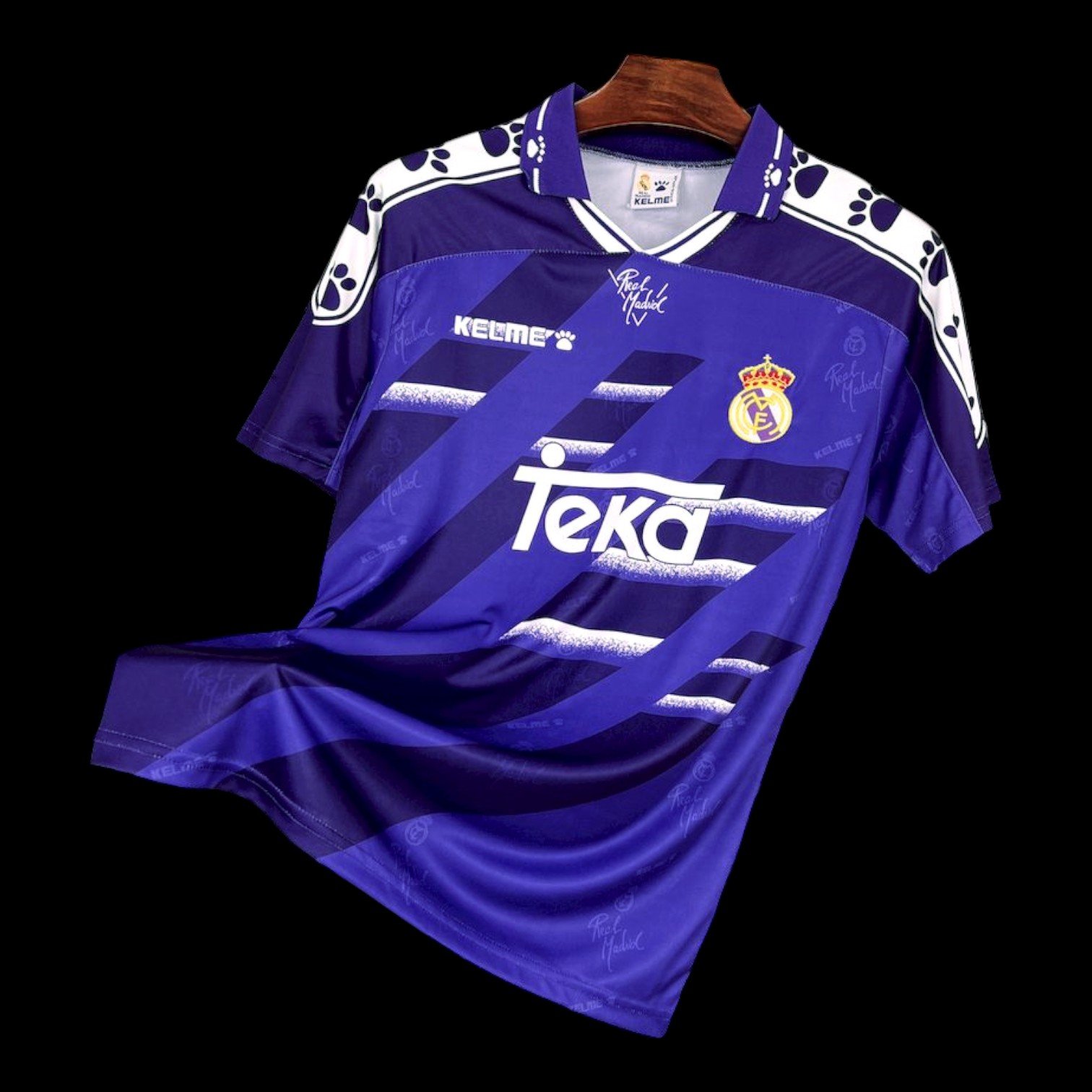
Les sponsors suivants : Otaysa, Teka (à partir de 1992 et pour plusieurs saisons), puis Realmadrid.com brièvement à la fin des années 1990, avant que Siemens Mobile n’arrive en 2002 lors de l’ère Galactiques. Une période où le maillot du Real Madrid devient l’un des supports publicitaires les plus précieux du football mondial. La marque allemande paye plusieurs millions d’euros par an pour figurer sur la poitrine des joueurs.
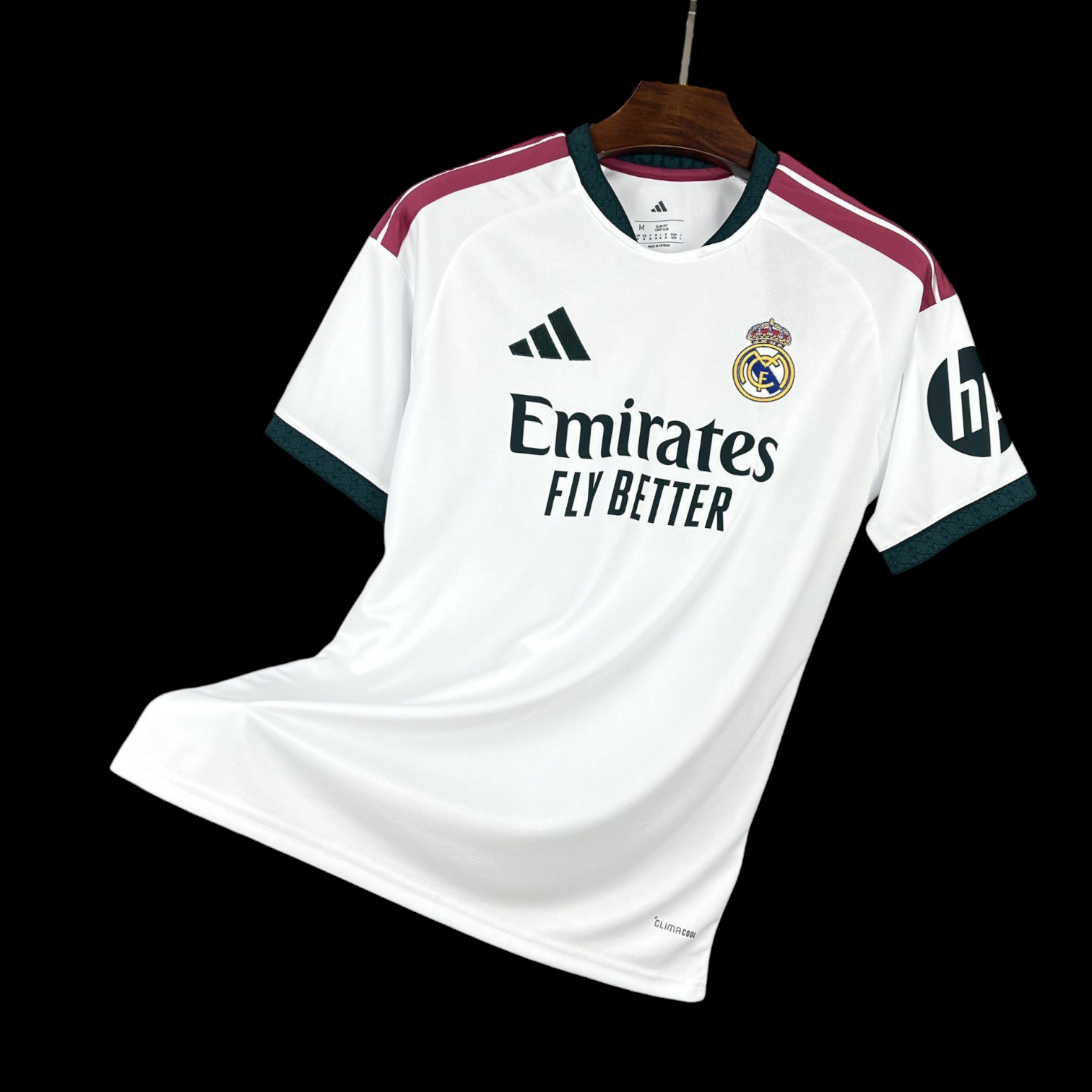
Après Siemens, le maillot porte BenQ Siemens (2006-2007), bwin (2007-2013), avant l’arrivée d’Emirates en 2013. La compagnie aérienne émiratie devient le sponsor maillot principal du club, avec un contrat plusieurs fois renouvelé qui continue aujourd’hui. Les montants des contrats successifs sont parmi les plus élevés du football mondial.
L’arrivée d’Adidas comme équipementier
Adidas devient l’équipementier officiel du Real Madrid en 1998, succédant à Kelme qui avait équipé le club pendant plusieurs saisons. Cette association entre la marque allemande aux trois bandes et le club madrilène est l’un des partenariats les plus stables et les plus emblématiques du football mondial. Plus de 25 ans plus tard, Adidas équipe toujours le club et a même prolongé son contrat à plusieurs reprises pour des durées de plus en plus longues.
Le design des maillots Adidas du Real Madrid répond à un cahier des charges précis : conserver le blanc dominant du domicile, intégrer les trois bandes signature de la marque (généralement sur les épaules, parfois sur les côtés), et proposer chaque saison une variation subtile pour les acheteurs. Les maillots extérieur et third bénéficient en revanche de plus de liberté graphique.
L’apport d’Adidas a aussi été technique. Tissus respirants Climalite puis Climacool, technologie de séchage rapide, coupes adaptées aux exigences des joueurs professionnels modernes. Ces innovations ont accompagné la transformation du maillot, à la fois objet sportif performant et produit commercial vendu à des millions d’exemplaires chaque saison à travers le monde.
Les maillots extérieur et third, de la sobriété aux audaces
Historiquement, le maillot extérieur du Real Madrid était le plus souvent bleu (foncé ou clair) ou gris, en contraste avec le blanc du domicile. Pendant longtemps, peu de variations spectaculaires sur ce design relativement classique. C’est à partir des années 2000, avec la généralisation du marketing sportif, que les maillots extérieur et third deviennent de véritables produits dérivés à part entière, avec des designs de plus en plus audacieux.
Le maillot noir devient une signature récurrente des saisons modernes, en particulier pour le third. Cette couleur, inhabituelle pour un club historiquement attaché au blanc, s’est imposée dans les éditions des années 2010-2020. Elle plaît particulièrement aux jeunes générations et permet à Adidas de proposer des designs plus contemporains, parfois ornés de touches dorées ou rose pâle selon les saisons.
Les maillots third intègrent également des références culturelles à Madrid (couleurs du drapeau de la ville, motifs inspirés de l’architecture locale) ou à l’identité madridista (étoiles évoquant les Coupes d’Europe). Chaque saison apporte sa nouveauté, ce qui en fait des objets de collection prisés par les supporters.
L’ère Galactiques et la mondialisation du maillot
L’arrivée des Galactiques à partir de 2000 (Figo, Zidane, Ronaldo Nazário, Beckham, Cristiano Ronaldo) coïncide avec la mondialisation du maillot du Real Madrid. Les ventes explosent à l’international, en particulier en Asie et en Amérique latine. Le maillot floqué Beckham 23 devient l’un des plus vendus au monde dès l’arrivée de l’Anglais en 2003. Pour comprendre la stratégie commerciale derrière cette mondialisation, notre dossier sur les Galactiques du Real Madrid détaille toute la mécanique.
Cristiano Ronaldo prend la suite avec son maillot floqué CR7 numéro 7, qui devient l’un des produits les plus vendus du sport mondial entre 2009 et 2018. Le club ouvre des boutiques officielles en Asie, signe des accords de distribution internationaux, et fait du maillot un véritable produit lifestyle au-delà du seul cercle des supporters historiques.
Les recettes générées par les ventes de maillots et autres produits dérivés deviennent un poste budgétaire majeur, contribuant directement à la capacité du club à recruter de nouvelles stars. Un cercle vertueux que les autres grands clubs européens cherchent à reproduire avec plus ou moins de succès.
Le maillot contemporain et les éditions modernes
Les maillots récents du Real Madrid s’inscrivent dans une logique de continuité visuelle (le blanc reste intouchable) tout en intégrant chaque saison des évolutions techniques et graphiques. Les éditions limitées, les rééditions de maillots historiques, les maillots commémoratifs (par exemple lors d’anniversaires de Coupes d’Europe) sont devenus des leviers commerciaux importants.
L’arrivée de stars comme Vinícius Júnior, Jude Bellingham et plus récemment Kylian Mbappé en 2024 entretient l’attractivité du maillot floqué pour les nouvelles générations. Les ventes de maillot floqués Mbappé 9 puis 10 (le numéro qu’il porte depuis la saison 2025-2026) sont parmi les plus importantes de l’histoire du club. Pour comprendre l’arrivée du Français au club, notre dossier sur Mbappé au Real Madrid retrace toute l’histoire.
Les versions joueur (édition tissus techniques portés par les pros) et version supporter (coupe plus large, tissus différents) coexistent désormais dans toutes les boutiques officielles, à des prix différents. Les maillots rétro des grandes saisons (1998 LDC, 2002 Centenaire, 2014 Décima, 2017-2018 triplé européen) constituent une offre distincte particulièrement appréciée des collectionneurs.
Ce qu’il faut retenir
- Le maillot du Real Madrid est blanc depuis 1902, choix initial inspiré du Corinthian FC anglais découvert par les frères Padrós lors de leurs voyages.
- L’écusson reçoit la couronne royale en 1920 quand le roi Alphonse XIII accorde le titre “Real” au club.
- La couronne est retirée pendant la Seconde République espagnole (1931-1939), puis restaurée sous Franco avec ajout d’une bande violette.
- Le premier sponsor maillot du club arrive en 1982 avec Zanussi, suivi de Reny Picot, Parmalat, Otaysa, Teka, Siemens Mobile, BenQ Siemens, bwin et Emirates depuis 2013.
- Adidas équipe le club depuis 1998, succédant à Kelme, dans l’un des partenariats équipementier les plus stables du football mondial.
- L’ère Galactiques (à partir de 2000) marque la mondialisation des ventes de maillots Real Madrid, qui figurent depuis dans le top mondial chaque saison.
- Les maillots extérieur et third (notamment en noir) sont devenus des produits commerciaux à part entière, avec des designs de plus en plus audacieux.
Pour aller plus loin
L’histoire du maillot s’inscrit dans la grande histoire du club. Pour explorer d’autres facettes, on vous recommande nos dossiers sur l’origine du maillot blanc, sur l’histoire complète du Real Madrid, sur Santiago Bernabéu qui a porté le maillot pendant 18 ans comme joueur, et sur Raúl, le numéro 7 emblématique de l’ère moderne.
Questions fréquentes
Pourquoi le maillot du Real Madrid est-il blanc ?
Le choix du blanc remonte à la fondation du club en 1902. Les frères Juan et Carlos Padrós, fondateurs, se sont inspirés du Corinthian FC, club amateur anglais qu’ils avaient découvert lors de leurs voyages à Londres et qui jouait en blanc intégral.
Depuis quand Adidas équipe-t-il le Real Madrid ?
Adidas équipe le Real Madrid depuis 1998, succédant à Kelme. Le partenariat dure depuis plus de 25 ans et a été prolongé à plusieurs reprises, ce qui en fait l’un des contrats équipementier les plus stables du football mondial.
Quel a été le premier sponsor maillot du Real Madrid ?
Le premier sponsor maillot du Real Madrid a été la marque italienne d’électroménager Zanussi, en 1982. Le club avait été l’un des derniers grands d’Europe à accepter un sponsor maillot, par attachement à la pureté visuelle de son maillot historique.
Pourquoi y a-t-il une bande violette sur l’écusson ?
La bande violette diagonale a été ajoutée sur l’écusson après 1939, lors de la restauration du titre “Real” sous le régime de Franco. Elle évoque historiquement la cape de Castille et reste l’élément graphique distinctif de l’écusson madridista.
Quel sponsor figure actuellement sur le maillot du Real Madrid ?
Emirates, la compagnie aérienne émiratie, est le sponsor maillot principal du Real Madrid depuis 2013. Le contrat a été plusieurs fois renouvelé et figure parmi les plus importants du football mondial en termes financiers.
Vous voulez le maillot du Real dans votre collection ?
Le maillot du Real Madrid, on l’a en boutique, dans toutes les versions : domicile, extérieur, third, version joueur, version supporter, et les maillots rétro qui retracent les grandes époques du club, de l’ère Bernabéu au triplé européen 2016-2018.