
En 1953, le FC Barcelone pense avoir verrouillé l’attaquant le plus convoité du football mondial. Alfredo Di Stéfano, Argentin de 27 ans, brille au Millonarios de Bogota et s’apprête à rejoindre la Catalogne. Quelques mois plus tard, le joueur débute pourtant sous le maillot blanc du Real Madrid. Entre les deux, un imbroglio juridique, deux clubs sud-américains rivaux, une fédération espagnole sous tension et un médiateur de la FIFA aux propositions étranges.
Cette histoire est l’une des plus disputées du football, et elle continue d’alimenter la rivalité entre les deux géants espagnols soixante-dix ans après les faits. Cet article retrace l’arrivée de Di Stéfano au Real Madrid, l’imbroglio de 1953 entre Barça, Real et fédération, et la manière dont ce transfert a redessiné les rapports de force du football européen.
Di Stéfano, prodige argentin de Buenos Aires à Bogota
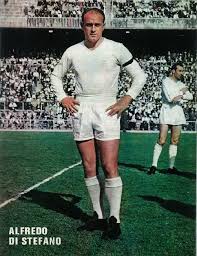
Alfredo Di Stéfano Laulhé est né le 4 juillet 1926 à Buenos Aires. Formé à River Plate, il s’impose très jeune comme un attaquant complet, capable d’évoluer à tous les postes offensifs. Il y inscrit ses premiers buts professionnels à la fin des années 1940 et participe à la conquête du championnat argentin de 1947, sélectionné dans la foulée par l’Albiceleste.
En 1949, une grève des joueurs argentins paralyse le championnat local. Di Stéfano profite de cette crise pour rejoindre le Millonarios de Bogota, en Colombie, où le championnat se développe en marge des règlements internationaux. Il y devient une star continentale, gagne plusieurs titres et fait du Millonarios un club mythique en Amérique du Sud. C’est dans ce contexte qu’il attire l’attention des grands clubs européens, dont le Real Madrid et le FC Barcelone.
Le souci, c’est que sa situation contractuelle est complexe. River Plate revendique encore ses droits sportifs en Argentine, tandis que Millonarios détient son contrat en Colombie. Tout transfert vers l’Europe devra donc satisfaire ces deux propriétaires, ce qui ouvre la porte à un imbroglio dont personne ne mesure encore l’ampleur.
L’origine du conflit : un joueur, deux clubs propriétaires
Au printemps 1953, le FC Barcelone négocie avec River Plate. Le club catalan obtient un accord avec le club argentin pour la somme de 150 millions de lires italiennes (la monnaie de référence pour les transferts internationaux de l’époque). Du côté barcelonais, on pense l’affaire pliée, et certains journalistes annoncent même l’arrivée du joueur en Catalogne pour la saison suivante.
Sauf que River Plate ne contrôle pas tout. Le contrat liant Di Stéfano à Millonarios est encore en vigueur, et le club colombien refuse de céder ses droits sans contrepartie financière. Le Real Madrid, de son côté, mène ses propres négociations en parallèle. Les dirigeants madrilènes préfèrent traiter directement avec Millonarios, quitte à ignorer l’accord conclu par les Catalans avec River Plate.
Cette situation crée une absurdité juridique : deux clubs européens revendiquent le même joueur, chacun s’appuyant sur un contrat valide signé avec un propriétaire différent. Personne ne sait alors lequel des deux clubs sud-américains a réellement la priorité sur le joueur, et la situation va vite déborder du strict cadre sportif.
Quand Barcelone et Real Madrid se disputent le même joueur
L’été 1953 voit l’affaire prendre une dimension publique. Les deux clubs espagnols affichent ouvertement leurs prétentions sur le joueur. Côté barcelonais, le président Enric Martí Carreto défend l’accord conclu avec River Plate. Côté madrilène, Santiago Bernabéu pousse le dossier Millonarios, persuadé que la transaction colombienne tiendra juridiquement.
La presse sportive espagnole s’enflamme. La rivalité entre les deux clubs, déjà vive depuis la guerre civile, atteint un niveau inédit. Chaque jour apporte sa rumeur, son démenti, sa nouvelle version. Di Stéfano lui-même se rend à Madrid pour des essais avec le Real, tandis que le Barça réclame qu’il rejoigne la Catalogne. La fédération espagnole se voit obligée d’intervenir pour trancher, faute de cadre clair.
La fédération espagnole, dirigée par Armando Muñoz Calero (par ailleurs représentant espagnol à la FIFA), prend la décision la plus étrange de cette saga. Elle propose un compromis qui restera dans les annales du sport.
La médiation surréaliste de la fédération espagnole
La proposition tombe à l’été 1953 : Di Stéfano alternera ses saisons entre les deux clubs espagnols. Il jouerait pour le Real Madrid en 1953-1954 et 1955-1956, et pour le FC Barcelone en 1954-1955 et 1956-1957. Une solution inédite dans l’histoire du football, qui n’a jamais été appliquée à aucun joueur avant ni depuis.
Cette médiation provoque un véritable séisme à Barcelone. Le président catalan Enric Martí Carreto démissionne dans la foulée, accusant la fédération de partialité au profit du Real. Les supporters catalans dénoncent une décision injuste, et beaucoup y voient encore aujourd’hui la preuve d’une connivence entre Madrid et les institutions sportives de l’époque, même si les faits réels sont plus complexes.
Pour le Real Madrid, c’est une demi-victoire qui ouvre une fenêtre. Le club a un demi-droit sur le joueur, ce qui est mieux que rien, et Bernabéu va savoir transformer ce demi-droit en pleine propriété grâce à une négociation supplémentaire avec les dirigeants catalans, désormais affaiblis par la démission de leur président.
Le dénouement : Barcelone renonce, le Real signe
Face à la situation devenue intenable, le FC Barcelone finit par céder sa moitié des droits au Real Madrid. La transaction se conclut à l’automne 1953, et le joueur est désormais entièrement la propriété du club madrilène. Le Real signe Di Stéfano sur un contrat de quatre ans, contre une somme estimée à 5,5 millions de pesetas espagnoles plus différents bonus. Une somme considérable pour l’époque, qui démontre l’ambition financière de Bernabéu.
Côté catalan, la déception est immense. Beaucoup à Barcelone considèrent que le club s’est fait spolier d’un joueur qu’il avait régulièrement acheté à River Plate. Cette conviction nourrit encore aujourd’hui le ressentiment historique, et explique pourquoi la figure de Di Stéfano reste si chargée émotionnellement dans la rivalité entre les deux clubs.
Côté madrilène, on considère au contraire que le Real a parfaitement joué le coup en se rapprochant de Millonarios plutôt que de River Plate. Une lecture alternative, mais qui repose sur des faits documentés : le contrat avec le club colombien était bien réel, et la propriété du joueur ne pouvait pas être tranchée à la seule lumière de l’accord catalan.
Les débuts en blanc : septembre 1953, naissance d’une légende
Di Stéfano débarque à Madrid le 22 septembre 1953. Cinq jours plus tard, le 27 septembre, il dispute son premier match officiel sous le maillot blanc, contre le Racing Santander. Il marque, le Real l’emporte 4-2, et la légende est lancée. En quelques semaines, l’Argentin s’impose comme le patron de l’équipe, capable de jouer partout sur le front de l’attaque, de descendre récupérer le ballon au milieu, de relancer, de servir ses partenaires et de finir les actions.
Sa polyvalence est rare pour l’époque. Là où le football européen pratique encore un jeu très positionné avec des avants-centres figés au pivot, Di Stéfano invente le rôle d’attaquant total. Il participe à toutes les phases de jeu, dicte le tempo, et ses statistiques montrent un joueur capable de marquer en quantité industrielle tout en faisant marquer ses partenaires.
Son influence dépasse largement le terrain. Il devient rapidement la voix du vestiaire, oriente les choix tactiques, conseille Bernabéu sur les recrutements à venir. Plusieurs grands transferts qui suivront (Kopa, Puskás, Santamaría) sont en partie le fruit de discussions entre l’Argentin et son président.
Onze saisons, huit Liga, cinq Coupes d’Europe
Le palmarès de Di Stéfano au Real Madrid donne le vertige. Entre 1953 et 1964, il dispute 282 matchs de Liga et inscrit 216 buts en championnat, auxquels s’ajoutent 49 buts en 59 matchs de Coupe d’Europe. Il remporte huit titres de champion d’Espagne (1953-54, 1954-55, 1956-57, 1957-58, 1960-61, 1961-62, 1962-63, 1963-64) et les cinq premières Coupes d’Europe consécutives entre 1956 et 1960.
Cette série de cinq Coupes d’Europe d’affilée n’a jamais été égalée. Di Stéfano marque dans chacune des cinq finales, un autre record qui résiste encore aujourd’hui. La finale de 1960 contre l’Eintracht Francfort à Glasgow (7-3) le voit signer un triplé, dans ce qui reste considéré comme l’un des plus beaux matchs de l’histoire du football.
Sur le plan individuel, l’Argentin obtient le Ballon d’Or en 1957 et 1959, et naturalisé espagnol en octobre 1956, dispute la Coupe du Monde 1962 sous le maillot de la Roja. Sa fidélité au Real est totale : malgré les sirènes des autres grands clubs européens, il reste blanc pendant onze saisons d’affilée, jusqu’à son départ pour Espanyol Barcelone en 1964.
L’héritage : un Clásico marqué pour toujours
Soixante-dix ans après les faits, l’affaire Di Stéfano reste l’un des points de cristallisation du Clásico. À chaque grande affiche entre Real et Barça, on rappelle que le joueur considéré comme le meilleur du monde dans les années 1950 a échappé aux Catalans dans des circonstances que beaucoup jugent encore aujourd’hui douteuses. Cette blessure historique nourrit l’identité antagoniste des deux clubs.
Côté madrilène, l’arrivée de Di Stéfano est célébrée comme l’acte fondateur du Real Madrid moderne. Sans son recrutement, les cinq Coupes d’Europe consécutives n’auraient sans doute pas eu lieu, et la stratégie d’importation des stars internationales que Bernabéu poursuivra avec Kopa et Puskás aurait été difficile à initier. Di Stéfano est donc à la fois un joueur et un symbole, celui d’un club qui se construit en allant chercher le meilleur où qu’il se trouve.
Le décès du joueur, le 7 juillet 2014 à Madrid à l’âge de 88 ans, a donné lieu à un hommage national. Le club a baptisé son stade d’entraînement à Valdebebas en son nom, et sa statue trône devant le Santiago Bernabéu. Un héritage à la hauteur de ce que représente, dans l’histoire blanche, le transfert le plus controversé du XXe siècle.
Ce qu’il faut retenir
- Alfredo Di Stéfano (1926-2014), né à Buenos Aires, est passé par River Plate puis le Millonarios de Bogota avant d’arriver en Espagne.
- En 1953, le FC Barcelone négocie avec River Plate, le Real Madrid traite avec Millonarios, ce qui crée un conflit de propriété sur le joueur.
- La fédération espagnole propose une alternance des saisons entre les deux clubs, solution unique dans l’histoire du football.
- Le président barcelonais Enric Martí Carreto démissionne, et le Barça finit par céder sa moitié des droits au Real Madrid.
- Di Stéfano fait ses débuts au Real Madrid le 27 septembre 1953 contre Racing Santander (4-2, un but).
- En onze saisons, il inscrit 216 buts en 282 matchs de Liga, gagne huit Liga et les cinq premières Coupes d’Europe consécutives.
- Il obtient le Ballon d’Or en 1957 et 1959, devient espagnol en 1956 et marque dans chacune des cinq finales européennes du Real.
Pour aller plus loin
L’arrivée de Di Stéfano s’inscrit dans une période fondatrice du club blanc. Pour comprendre le contexte, on vous recommande nos papiers sur Santiago Bernabéu, l’homme qui a inventé le Real Madrid moderne, sur la première Coupe d’Europe de 1956 remportée par cette équipe légendaire, et sur l’histoire complète du Real Madrid depuis sa fondation en 1902. Pour saisir l’enjeu vestimentaire, notre dossier sur l’origine du maillot blanc raconte comment cette tenue est devenue une identité.
Questions fréquentes
Pourquoi le transfert de Di Stéfano au Real Madrid est-il controversé ?
Parce que deux clubs sud-américains revendiquaient ses droits en 1953 : River Plate, qui avait conclu un accord avec le FC Barcelone, et Millonarios de Bogota, qui négociait avec le Real Madrid. La fédération espagnole a tranché par une médiation atypique, et le Barça a finalement cédé ses droits au Real, ce qui reste vécu comme une injustice par les Catalans.
Quand Di Stéfano a-t-il signé au Real Madrid ?
Le contrat est signé à l’automne 1953 après le retrait du FC Barcelone. Di Stéfano arrive à Madrid le 22 septembre 1953 et dispute son premier match officiel le 27 septembre 1953 contre le Racing Santander (victoire 4-2, un but inscrit).
Quel est le palmarès de Di Stéfano au Real Madrid ?
En onze saisons (1953-1964), il remporte huit titres de Liga, cinq Coupes d’Europe consécutives entre 1956 et 1960, deux Ballons d’Or (1957, 1959), et inscrit 216 buts en 282 matchs de championnat. Il marque dans chacune des cinq finales européennes du Real.
Combien le Real Madrid a-t-il payé pour Di Stéfano ?
La transaction finale s’est conclue autour de 5,5 millions de pesetas espagnoles plus différents bonus, après le rachat de la moitié des droits au FC Barcelone. Une somme considérable à l’époque, qui marque le début de la stratégie d’investissement massif du président Bernabéu sur les stars internationales.
Qu’est devenu Di Stéfano après le Real Madrid ?
Il a quitté le Real en 1964 pour rejoindre l’Espanyol Barcelone, où il a joué deux saisons avant de raccrocher. Il est ensuite devenu entraîneur, notamment du River Plate, du Boca Juniors, du Valence et du Real Madrid lui-même. Il est décédé le 7 juillet 2014 à Madrid à l’âge de 88 ans.
Cette histoire vous a donné envie du maillot blanc ?
Tous les maillots du Real Madrid sont disponibles dans notre boutique : domicile, extérieur, third, version joueur, version supporter, ainsi que les maillots rétro qui font écho à l’ère Di Stéfano.