
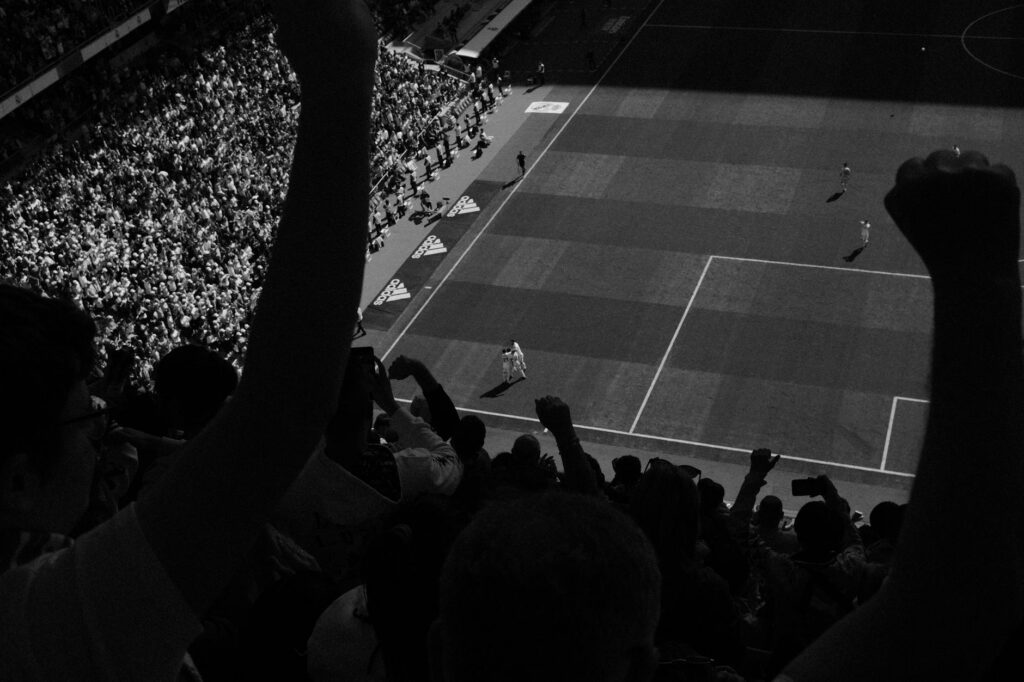
Le 13 juin 1956, à Paris, le Real Madrid bat le Stade de Reims 4-3 en finale de la toute première édition de la Coupe d’Europe des clubs champions. Personne, ce soir-là, ne peut imaginer que cette victoire est le début d’une domination européenne sans équivalent dans l’histoire du football. Cinq Coupes d’Europe consécutives entre 1956 et 1960, puis une sixième en 1966. Six trophées en dix ans, dont aucun club n’égalera jamais la série inaugurale.
Cette dynastie a non seulement façonné l’identité moderne du Real Madrid, elle a aussi inventé le modèle du grand club européen tel qu’on le connaît aujourd’hui : recrutement international, ambition continentale, culture de la victoire en C1. Cet article retrace les six premières Coupes d’Europe du Real Madrid, finale par finale.
Le contexte de la naissance de la Coupe d’Europe
L’idée d’une compétition réunissant les meilleurs clubs européens naît au début des années 1950, portée par le journaliste français Gabriel Hanot et son journal L’Équipe. Hanot constate que les rencontres amicales entre champions nationaux passionnent les foules, et qu’il manque une vraie compétition continentale pour les départager. La première édition est organisée pour la saison 1955-1956, avec 16 clubs invités.
Le Real Madrid, alors tout juste champion d’Espagne, est de la première édition. Santiago Bernabéu, président depuis 1943, voit immédiatement l’intérêt stratégique de cette compétition : elle permet de tester son équipe au plus haut niveau européen, d’attirer des recettes considérables, et d’asseoir l’image internationale du club. Le Real est l’un des plus enthousiastes soutiens du projet.
L’UEFA hérite de l’organisation et la compétition prend rapidement de l’ampleur. La finale, organisée chaque année dans une ville européenne différente, devient l’événement majeur du football continental. Pour le Real Madrid, c’est le terrain de jeu rêvé.
1956 : la première finale à Paris contre Reims
Le 13 juin 1956, le Parc des Princes accueille la première finale de la Coupe d’Europe. Le Real Madrid affronte le Stade de Reims, alors champion de France et porté par Raymond Kopa, considéré comme l’un des meilleurs joueurs du monde. Le match est haletant. Reims mène 2-0 après dix minutes, mais le Real revient et prend l’avantage 3-2 à la mi-temps. Reims égalise, puis Marquitos donne la victoire au Real à 4-3.
Cette victoire inaugurale est un déclic. Bernabéu en tire deux leçons immédiates : il faut continuer à investir dans cette compétition, et il faut récupérer le meilleur attaquant de l’adversaire. Raymond Kopa rejoint donc le Real dès l’été suivant. C’est la naissance d’une stratégie qui sera reproduite à chaque finale.
1957 : la confirmation à domicile contre la Fiorentina
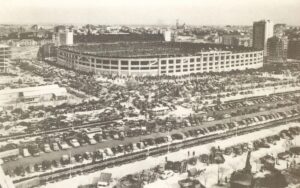
L’année suivante, la finale se joue au Santiago Bernabéu, le club hôte étant le tenant du titre. Le Real affronte la Fiorentina, champion d’Italie, devant 124 000 spectateurs. Le match reste fermé pendant 70 minutes, puis Alfredo Di Stéfano transforme un penalty et Francisco Gento marque le second but. Victoire 2-0 et deuxième Coupe d’Europe consécutive.
Cette victoire à domicile est symbolique. Le Real démontre qu’il est non seulement capable de gagner à l’extérieur, mais aussi de défendre son titre devant son public. Le Bernabéu devient officiellement la forteresse européenne du club, statut qu’il conservera pendant des décennies.
1958 : prolongation héroïque contre l’AC Milan
La troisième finale a lieu le 28 mai 1958 au stade Heysel de Bruxelles. L’adversaire est cette fois l’AC Milan, l’un des géants italiens. Le match va aux prolongations après un 2-2 dans le temps réglementaire. C’est Francisco Gento, l’ailier gauche du Real, qui inscrit le but de la victoire à la 107e minute. Score final : 3-2.
Cette finale de 1958 est l’une des plus dramatiques de la série. L’AC Milan était considéré comme légèrement favori, et le Real a dû puiser dans ses ressources mentales pour s’imposer. Bernabéu, présent dans les tribunes, voit dans cette victoire la confirmation que son équipe a non seulement le talent mais aussi la résistance physique et nerveuse pour durer au sommet.
1959 : revanche contre Reims à Stuttgart
Le 3 juin 1959, le Real Madrid retrouve son adversaire de la première finale, le Stade de Reims, au stade Neckar de Stuttgart. Cette fois, le match est plus déséquilibré. Les Madrilènes dominent largement et l’emportent 2-0, avec des buts d’Enrique Mateos et Alfredo Di Stéfano. Quatrième Coupe d’Europe consécutive.
Reims, qui pensait pouvoir prendre sa revanche de 1956, doit s’avouer définitivement vaincu. Le club français ne reverra plus jamais une finale européenne. Le Real, lui, démontre qu’il maîtrise désormais la compétition de bout en bout.
1960 : la finale légendaire de Glasgow (7-3)
Le 18 mai 1960, à Hampden Park de Glasgow, devant 127 621 spectateurs, le Real Madrid offre ce que beaucoup considèrent encore aujourd’hui comme le plus beau match de l’histoire du football. Face à l’Eintracht Francfort, qui avait écrasé les Glasgow Rangers en demi-finale, le Real déploie un récital offensif de 90 minutes. Score final : 7-3.
Alfredo Di Stéfano inscrit un triplé, Ferenc Puskás un quadruplé. Les deux hommes, à eux seuls, marquent les sept buts du Real. Les commentateurs anglais, traditionnellement réservés, parlent ouvertement de la “perfection” et du “football céleste”. L’enregistrement vidéo de cette finale est encore aujourd’hui étudié dans les écoles d’entraîneurs comme l’un des sommets historiques de l’art offensif.
Avec cette cinquième victoire consécutive, le Real Madrid entre dans la légende. L’UEFA décide de remettre au club un trophée original en propriété (l’usage normal voulait que le trophée soit remis en jeu chaque année). C’est la consécration absolue.
1966 : la 6e Coupe avec l’équipe yé-yé
Après cinq victoires consécutives, le Real Madrid traverse une période plus difficile entre 1961 et 1965. Di Stéfano vieillit, Puskás se rapproche de la retraite, et l’équipe doit se renouveler. C’est en 1966, contre toute attente, que le club décroche sa sixième Coupe d’Europe avec une équipe nouvelle, surnommée “yé-yé” en référence à la chanson populaire de l’époque (les joueurs étaient jeunes, les supporters chantaient “yé-yé”).
La finale a lieu le 11 mai 1966 au stade Heysel de Bruxelles, contre le Partizan Belgrade. Le Real l’emporte 2-1 grâce à des buts d’Amancio et Serena. Cette équipe yé-yé, composée principalement de joueurs formés au club ou recrutés en Espagne, prouve que le Real Madrid peut gagner sans miser uniquement sur les stars internationales. Une transition générationnelle réussie qui assure la continuité du club au sommet.
Un héritage qui structure encore le club
Six Coupes d’Europe en dix ans (1956-1966), c’est un palmarès qui définit l’identité du Real Madrid. Aucun autre club européen ne pourra jamais revendiquer une entame de compétition aussi dominante. Cet héritage explique pourquoi le club s’autoproclame “rey de Europa” (roi d’Europe) et pourquoi il a développé une obsession quasi rituelle pour la Ligue des Champions, qui a remplacé la Coupe d’Europe en 1992.
L’ère 1956-1966 a aussi inventé une grammaire du football espagnol moderne : recrutement international, attaque déployée, public massif au Bernabéu, finales européennes vécues comme des événements nationaux. Tout cela commence avec ces six premières Coupes d’Europe, qui forment l’ADN du club d’aujourd’hui.
Pour explorer la suite de l’aventure européenne du Real, on a écrit un papier sur le triplé européen de Zinédine Zidane (2016-2018). Et pour comprendre l’homme derrière cette dynastie, notre portrait de Santiago Bernabéu remonte aux origines de cette stratégie.
Ce qu’il faut retenir
- Le Real Madrid a remporté la première édition de la Coupe d’Europe le 13 juin 1956 à Paris, contre le Stade de Reims (4-3).
- Le club a enchaîné quatre autres victoires consécutives en 1957, 1958, 1959 et 1960, exploit jamais égalé depuis.
- La finale de 1960 à Glasgow (7-3 contre l’Eintracht Francfort, triplé Di Stéfano, quadruplé Puskás) est considérée comme l’une des plus belles de l’histoire du football.
- L’UEFA a remis au Real Madrid le trophée original de la compétition, en reconnaissance de ses cinq victoires consécutives.
- Une sixième Coupe d’Europe est arrivée en 1966 avec l’équipe yé-yé, une nouvelle génération principalement formée en Espagne.
- Cette dynastie a façonné l’identité européenne du Real Madrid et structure encore son obsession actuelle pour la Ligue des Champions.
Pour aller plus loin
Cette première dynastie européenne s’inscrit dans une histoire plus large. Pour explorer le club sous d’autres angles, on vous recommande nos papiers sur l’histoire complète du Real Madrid, sur Santiago Bernabéu, le président bâtisseur, sur Alfredo Di Stéfano et le transfert qui a tout changé, et sur le triplé européen de Zidane entre 2016 et 2018.
Questions fréquentes
Quand le Real Madrid a-t-il remporté sa première Coupe d’Europe ?
Le 13 juin 1956 au Parc des Princes de Paris, en battant le Stade de Reims 4-3 lors d’une finale haletante. C’était la toute première finale de l’histoire de la compétition.
Combien de Coupes d’Europe consécutives le Real Madrid a-t-il gagnées ?
Cinq Coupes d’Europe consécutives entre 1956 et 1960, exploit jamais égalé. Le club a ajouté une sixième victoire en 1966 avec l’équipe yé-yé.
Quelle est la finale de Coupe d’Europe la plus célèbre du Real Madrid ?
La finale du 18 mai 1960 à Hampden Park de Glasgow, où le Real Madrid a battu l’Eintracht Francfort 7-3 devant 127 621 spectateurs. Triplé Di Stéfano, quadruplé Puskás. Beaucoup la considèrent comme la plus belle finale de l’histoire du football.
Pourquoi appelle-t-on l’équipe de 1966 “yé-yé” ?
Référence à la chanson populaire éponyme de l’époque (“yeah yeah yeah” des Beatles). Les joueurs étaient jeunes, principalement formés en Espagne.
Pourquoi l’UEFA a-t-elle donné le trophée original au Real Madrid ?
Après la cinquième victoire consécutive du Real Madrid en 1960, l’UEFA a remis au club le trophée original en propriété définitive, en reconnaissance de cet exploit historique. Le trophée mis en jeu chaque année depuis est une copie.
Portez les couleurs du roi d’Europe
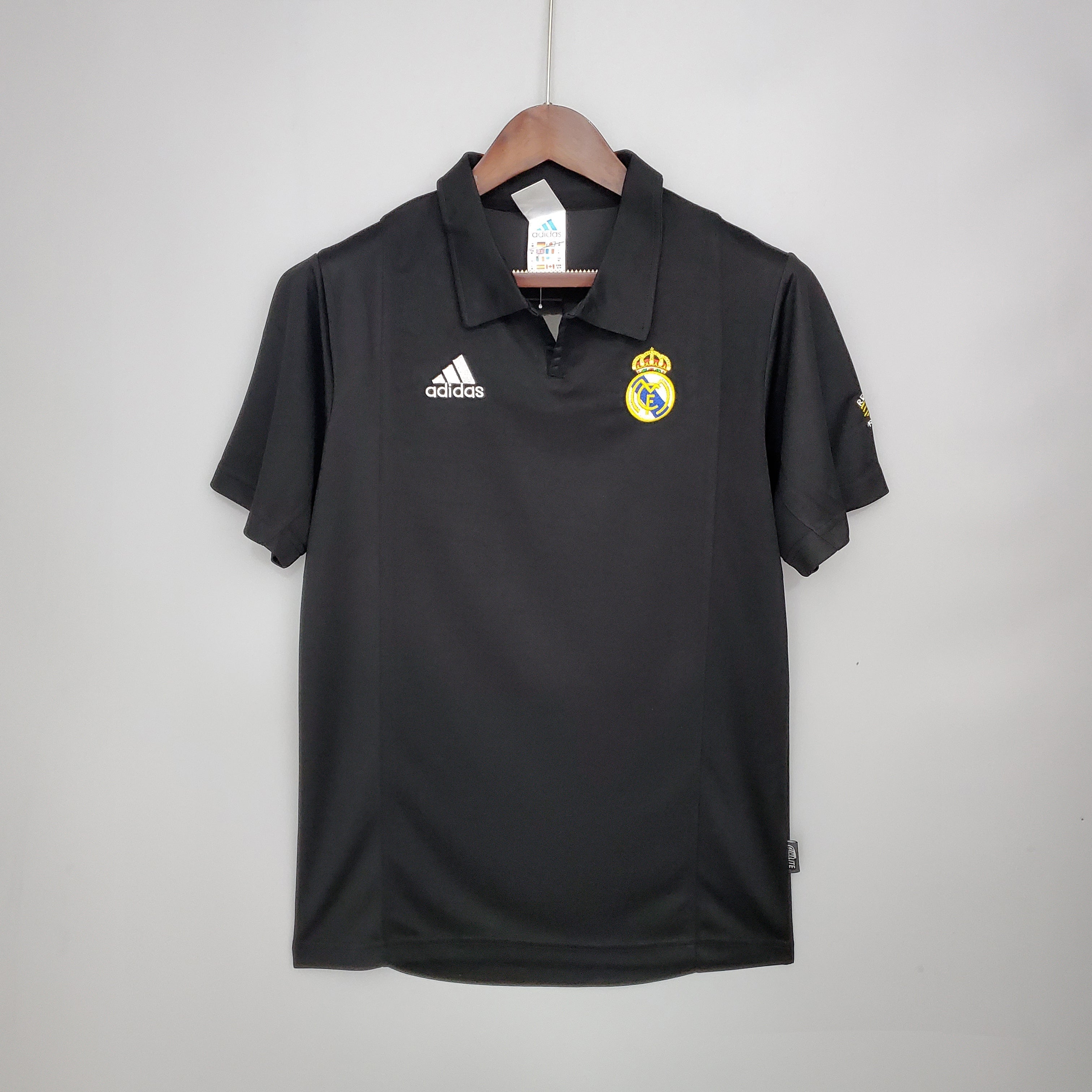
Tous les maillots du Real Madrid sont disponibles dans notre boutique : domicile, extérieur, third, version joueur, version supporter, ainsi que les maillots rétro qui rappellent les grandes heures européennes du club.