
17 février 1974, stade Santiago Bernabéu. Le FC Barcelone écrase le Real Madrid 5-0 dans son antre. Au cœur de la démonstration, un Néerlandais de 26 ans aux cheveux longs et au numéro 9 dans le dos : Johan Cruyff. Sept mois plus tôt, il signait au Barça pour 6 millions de florins, record mondial à l’époque. Quelques semaines après ce match, le club catalan remportait sa première Liga depuis quatorze ans. Cruyff venait de tout changer.
Le passage de Johan Cruyff au FC Barcelone se résume à deux périodes : joueur de 1973 à 1978, puis entraîneur de 1988 à 1996. Entre les deux, une influence qui n’a jamais cessé. Cet article retrace l’arrivée du Néerlandais en Catalogne, son impact sur le terrain, et la trace qu’il laisse encore aujourd’hui sur le club.
Avant Barcelone : le génie de l’Ajax
Johan Cruyff naît le 25 avril 1947 à Amsterdam. Issu d’un milieu modeste, il grandit à proximité du stade de l’Ajax où sa mère travaillera plus tard comme femme de ménage. Il intègre le centre de formation du club à dix ans, signe son premier contrat professionnel en 1964, et explose au plus haut niveau dès la fin des années 1960. Son entraîneur, Rinus Michels, théorise alors le football total : un système où chaque joueur peut occuper n’importe quelle position, dans un mouvement permanent.
Avec l’Ajax, Cruyff remporte trois Coupes d’Europe consécutives entre 1971 et 1973, devenant la figure planétaire de cette nouvelle façon de jouer. Il décroche le Ballon d’Or en 1971 et 1973. Quand le FC Barcelone se manifeste, en 1973, il est déjà reconnu comme l’un des meilleurs joueurs du monde. Le transfert ne sera donc pas une découverte mais une consécration.
L’affinité entre Cruyff et la Catalogne précède son arrivée. Il refuse plusieurs propositions du Real Madrid, expliquant publiquement qu’il ne pourrait pas jouer pour un club historiquement associé au régime franquiste. Ce choix politique fait de lui une figure adoptée par les supporters catalans avant même qu’il ait joué un seul match avec le Barça.
Le transfert record de 1973
Le transfert se conclut à l’été 1973, pour 6 millions de florins (environ 2 millions de dollars de l’époque), un record mondial. Le président du Barça, Agustí Montal, et son directeur sportif misent gros sur la venue du Néerlandais. Le club n’a plus remporté la Liga depuis quatorze saisons, depuis 1959-1960 exactement. La pression est immense. Pour le contexte plus large du club à cette période, voir notre article sur l’histoire du FC Barcelone.
Cruyff arrive en cours de saison, en octobre 1973, le championnat espagnol ayant ouvert ses portes aux étrangers seulement quelques mois plus tôt après plusieurs années de fermeture. Sa première apparition sous le maillot blaugrana, le 28 octobre 1973 face à Granada, se solde par une victoire 4-0 et un but du nouveau joueur. Le ton est donné.
Très vite, le Néerlandais s’impose comme le métronome de l’équipe. Pas un buteur exclusif, mais un attaquant total, capable de décrocher au milieu, de créer des espaces, de marquer, de servir. Son intelligence tactique transforme le jeu d’une équipe qui, jusque-là, manquait de structure offensive cohérente.
Le 5-0 au Bernabéu, février 1974
Le 17 février 1974, le Barça se déplace au stade Santiago Bernabéu pour un Clásico crucial. Le résultat est sans appel : 5-0 pour Barcelone, dans l’antre du rival historique. Cruyff inscrit un but, en délivre plusieurs autres, et domine le match du début à la fin. La performance entre immédiatement dans la légende du club.
Au-delà du score, c’est la dimension symbolique qui marque les esprits. L’Espagne est encore franquiste. Le Real Madrid, club identifié au pouvoir central, vient de subir une humiliation à domicile devant son public. Pour la Catalogne, c’est une victoire qui dépasse largement le cadre sportif. Pour replacer ce match dans la grande histoire du Real, voir notre papier sur l’histoire du Real Madrid.
Ce 5-0 reste l’un des résultats les plus cités du Clásico. Aucun autre score équivalent au Bernabéu n’a été obtenu depuis par le Barça en championnat. La date du 17 février 1974 est entrée dans la mémoire collective barcelonaise comme un moment de fierté et de revanche.
La Liga 1973-1974, fin d’une attente
Quelques semaines après ce match, le FC Barcelone décroche la Liga 1973-1974. C’est le premier titre de champion d’Espagne du club depuis 1959-1960, soit quatorze ans d’attente. Cruyff aura disputé une demi-saison en championnat, mais son apport est décisif. Il termine meilleur passeur, marque des buts importants, et porte une équipe qui n’avait plus dominé le football espagnol depuis longtemps.
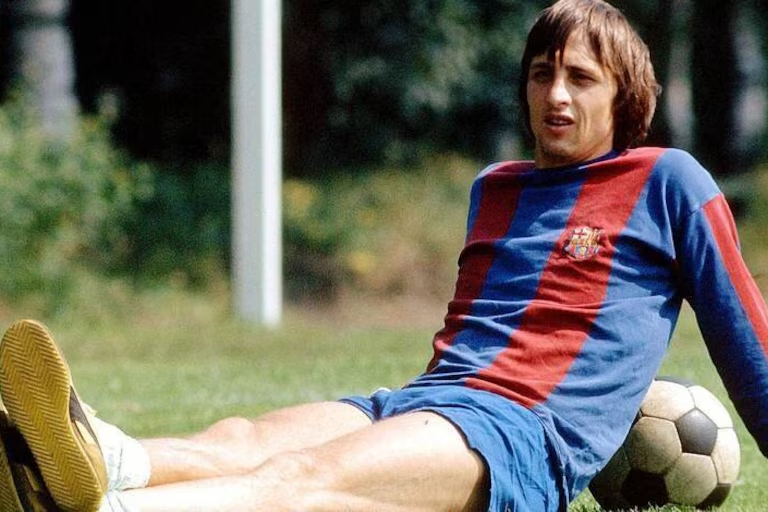
La même année, Cruyff remporte le Ballon d’Or 1974, le troisième de sa carrière. Il devient ainsi le premier joueur à remporter trois Ballons d’Or, performance qui ne sera égalée que des décennies plus tard par Michel Platini et Marco van Basten avant l’ère Messi-Ronaldo. Cette reconnaissance individuelle, obtenue sous le maillot du Barça, ancre encore davantage son statut catalan.
Le Néerlandais joue ensuite quatre saisons supplémentaires en Catalogne, sans toujours retrouver le niveau de cette première année. La Liga 1973-1974 restera son seul championnat d’Espagne en tant que joueur, mais elle suffit à imprimer son nom dans les livres d’histoire du club.
Jordi, le geste politique d’un père
En février 1974, alors que sa femme Danny accouche à Barcelone, Cruyff insiste pour que leur fils soit prénommé Jordi, en référence à saint Jordi, patron de la Catalogne. Sous Franco, les prénoms catalans sont interdits sur les registres d’état civil. La famille obtient finalement l’autorisation après de longues démarches administratives.
Ce choix de prénom, pour un joueur étranger qui aurait pu se contenter de jouer au football sans s’engager culturellement, est perçu en Catalogne comme un acte fort. Cruyff ne se contente pas de représenter le Barça sur le terrain : il prend position, à sa manière, dans un contexte politique tendu. Le geste contribue à expliquer pourquoi il sera toujours considéré comme un Catalan d’adoption, et non comme un simple expatrié de passage.
Jordi Cruyff jouera lui aussi au FC Barcelone dans les années 1990, sous les ordres de son père devenu entraîneur. Cette continuité familiale renforce le lien indéfectible entre la famille Cruyff et le club catalan.
Le départ en 1978 et le retour comme entraîneur
Cruyff quitte le Barça en 1978 pour les Los Angeles Aztecs, dans un championnat nord-américain alors en plein boom. Il joue ensuite au Washington Diplomats, retourne brièvement en Europe (Levante, Ajax, Feyenoord), puis met fin à sa carrière de joueur en 1984. Sa première période à Barcelone se solde par une Liga (1973-1974) et une Coupe d’Espagne (1978).
En 1988, Cruyff revient à Barcelone, cette fois sur le banc d’entraîneur. Il y restera huit saisons, plus longue présence d’un coach à la tête de l’équipe première. Il bâtit la Dream Team, remporte quatre Liga consécutives entre 1990-1991 et 1993-1994, et offre au club sa première Coupe d’Europe le 20 mai 1992 à Wembley face à la Sampdoria (1-0, but de Koeman). Pour cette période fondatrice, voir notre article dédié à la Dream Team.
Il quitte le banc en 1996 après plusieurs saisons sans titre majeur, mais son influence sur le jeu et la formation des joueurs est déjà inscrite dans l’ADN du club. Il décède le 24 mars 2016 à Barcelone, à 68 ans, des suites d’un cancer du poumon.
L’héritage Cruyff dans le Barça moderne
L’héritage de Cruyff au FC Barcelone va bien au-delà des trophées. Il a posé les bases d’une philosophie qui structure encore le club aujourd’hui : possession du ballon, jeu en triangles, formation des jeunes, polyvalence des postes. Cette philosophie a été reprise par Pep Guardiola, formé à La Masia sous Cruyff, et qui en a tiré le tiki-taka des années 2008-2012. Voir notre analyse de l’ère Guardiola pour mesurer cette filiation directe.
La Masia elle-même, devenue centre de formation référence dans le monde, doit beaucoup aux principes posés par Cruyff dans les années 1980 et 1990. Messi, Xavi, Iniesta, Busquets, tous formés à La Masia, ont grandi dans un club qui leur enseignait les principes hérités du Néerlandais. Notre papier sur La Masia détaille cette filiation institutionnelle.
Quand Cruyff disait “le football est un jeu simple, mais il est très difficile de jouer simple”, il résumait la philosophie qu’il a transmise au club. Cette phrase est devenue un mantra interne, repris de génération en génération d’entraîneurs et de joueurs barcelonais. L’homme est mort, l’idée reste.
Ce qu’il faut retenir
- Johan Cruyff (1947-2016) signe au FC Barcelone en 1973 pour 6 millions de florins, record mondial à l’époque.
- Le 17 février 1974, il participe au 5-0 historique du Barça au stade Santiago Bernabéu.
- Il offre au club sa première Liga depuis quatorze ans en 1973-1974 et remporte le Ballon d’Or la même année.
- Il prénomme son fils Jordi en référence au saint patron de la Catalogne, geste fort sous le franquisme.
- Cruyff revient à Barcelone comme entraîneur entre 1988 et 1996, plus longue présence sur le banc du club.
- Il bâtit la Dream Team, remporte quatre Liga consécutives et la première Coupe d’Europe du Barça en 1992 à Wembley.
- Sa philosophie de jeu structure encore le club aujourd’hui, transmise notamment à Pep Guardiola et à La Masia.
Pour aller plus loin
L’aventure Cruyff au Barça se prolonge dans plusieurs récits qu’on a documentés ailleurs. On vous recommande nos papiers sur la Dream Team de Cruyff entraîneur, sur La Masia, l’école qu’il a aidé à façonner, sur Pep Guardiola, son disciple devenu maître, et sur l’histoire complète du FC Barcelone.
Questions fréquentes
En quelle année Cruyff a-t-il signé au FC Barcelone ?
Johan Cruyff signe au FC Barcelone à l’été 1973, pour un transfert de 6 millions de florins, record mondial à l’époque. Il dispute son premier match officiel sous le maillot blaugrana le 28 octobre 1973 face à Granada (victoire 4-0).
Quel est le score du fameux Clásico de Cruyff au Bernabéu ?
Le 17 février 1974, le FC Barcelone s’impose 5-0 face au Real Madrid au stade Santiago Bernabéu. Cruyff y inscrit un but et délivre plusieurs passes décisives. Ce score reste l’un des plus emblématiques du Clásico vu côté catalan.
Combien de temps Cruyff est-il resté à Barcelone comme joueur ?
Cruyff joue au FC Barcelone de 1973 à 1978, soit cinq saisons. Il y remporte une Liga (1973-1974) et une Coupe d’Espagne (1978). Il quitte ensuite le club pour les Los Angeles Aztecs, dans le championnat nord-américain alors en plein essor.
Pourquoi Cruyff a-t-il appelé son fils Jordi ?
Sous Franco, les prénoms catalans étaient interdits sur les registres d’état civil. En 1974, à la naissance de son fils à Barcelone, Cruyff insiste pour le prénommer Jordi, en référence au saint patron de la Catalogne. Ce geste politique fait de lui un Catalan d’adoption aux yeux des supporters.
Cruyff a-t-il aussi été entraîneur du Barça ?
Oui, Cruyff revient sur le banc du FC Barcelone de 1988 à 1996. Il bâtit la Dream Team, remporte quatre Liga consécutives entre 1990-1991 et 1993-1994, et offre au club sa première Coupe d’Europe le 20 mai 1992 à Wembley face à la Sampdoria (1-0).
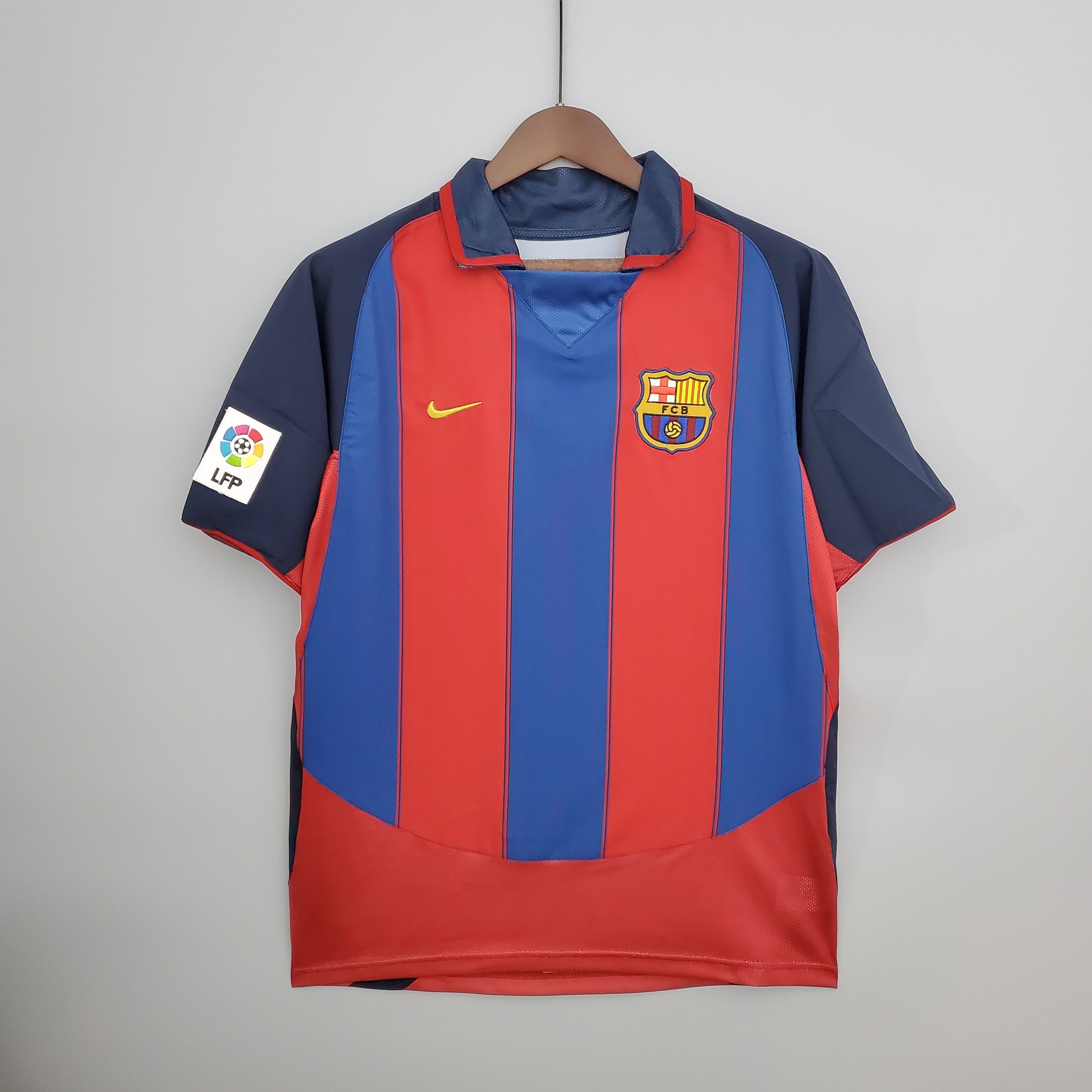
Vous voulez le maillot du Barça dans votre collection ?
La boutique Maxi Kits propose tous les maillots du FC Barcelone, du modèle officiel au maillot rétro qui ravive les grandes saisons des années Cruyff et au-delà.