
On December 14, 1947, Real Madrid opened a new 75,145-seat stadium in the Chamartín neighborhood of Madrid. Seventy-five years later, that same stadium reopens its doors following a renovation costing over one billion euros, featuring a retractable roof, a 360-degree LED facade, and a retractable playing field. In between, there have been World Cups, European Cup finals, legendary concerts, and the constant evolution of a building that has kept pace with the transformations of soccer.
This article traces the complete history of the Bernabéu Stadium, from Santiago Bernabéu’s decision in 1944 to the futuristic renovation project led by Florentino Pérez. This timeline sheds light on the philosophy of a club that has always viewed its stadium as a symbol of power as much as a soccer field.
Before 1947: From Old Chamartín to the Bernabéu Project
Before 1947, Real Madrid played at the old Estadio Chamartín, which opened in 1924. This modest stadium, located in the northern part of Madrid, had a capacity of no more than 25,000. It sustained heavy damage during the Spanish Civil War (1936–1939) and quickly proved inadequate after the war, just as Spanish soccer was beginning its reconstruction.
When Santiago Bernabéu became president of Real Madrid in 1943, he quickly decided to build a new stadium rather than renovate the old one. It was a bold decision for the time: Spain was emerging from the Civil War, the economy was in shambles, and no one believed the club had the means to undertake such an ambitious project. Bernabéu nevertheless launched the project in 1944, on a site located slightly north of the old stadium.
To finance this extraordinary project, he devised an innovative scheme: issuing bonds subscribed to by the club’s members, who lent their money in exchange for the promise of repayment with modest interest. Several thousand Madridistas answered the call, won over by their president’s vision. This was the precursor to crowdfunding in postwar Spain.
The inauguration on December 14, 1947
The new stadium opened its doors on December 14, 1947, under the official name Estadio Real Madrid Club de Fútbol, but was quickly nicknamed the Nuevo Chamartín by the fans. Its initial capacity was 75,145, making it one of the largest stadiums in Spain and one of the most impressive in Western Europe at the time.
The opening match was against the Portuguese club Os Belenenses. Madrid forward Sabino Barinaga scored the first goal in the stadium’s history in the 15th minute. Real Madrid won, but the result was not the main point: it was the architectural ambition that made a lasting impression, signaling that the club was entering a new era.
The neighborhood surrounding the stadium will undergo a transformation over the next few decades. The Paseo de la Castellana, Madrid’s major north-south thoroughfare, began to develop in the 1950s, establishing the Bernabéu as a strategic urban hub. Today, the stadium is located in the heart of the AZCA business district, in a much denser environment than it was in 1947.
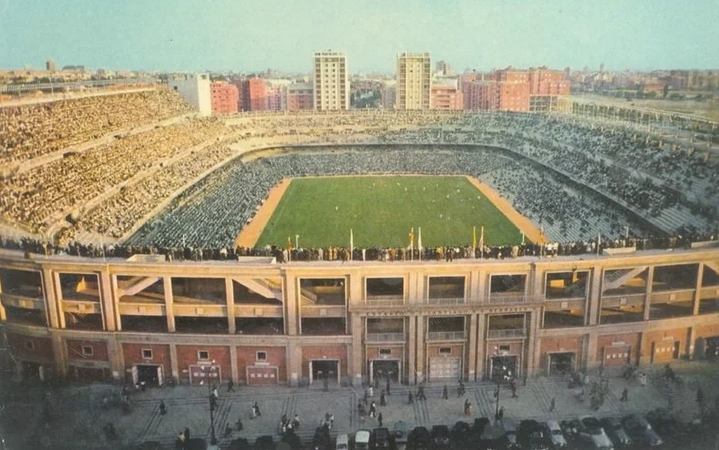
1955: The stadium was renamed Santiago Bernabéu
On January 4, 1955, the club officially decided to rename the stadium Estadio Santiago Bernabéu, in honor of its founding president, then 59 years old. This is an extremely rare honor in world soccer: very few stadiums are named after a sitting club president who is still alive. Bernabéu was thus recognized, during his lifetime, for the decisive role he played in building the modern club.
This decision is no small matter. It has cemented the club’s identity into the very fabric of the stadium, forever linking the name Bernabéu with that of Real Madrid. Even today, people don’t refer to “Real Madrid’s stadium”; they say “the Bernabéu,” just as they say “Old Trafford” for Manchester United or “Camp Nou” for FC Barcelona. An urban landmark that has become a global brand.
Bernabéu served as the club’s president until his death on July 2, 1978. During those 35 years, he continued to watch over his stadium, keeping track of every architectural change and every major match played there. His tenure is a record of institutional longevity that has never been matched in the club’s history.
The successive expansions of the 1950s
Real Madrid’s success in the 1950s (five consecutive European Cups between 1956 and 1960) generated considerable demand for tickets. The stadium was quickly expanded between 1953 and 1955 to increase its capacity to approximately 125,000, one of the largest figures in the world at the time. The stands rose in several tiers, and the stadium took on the silhouette that would remain iconic for many years to come.
This massive capacity allows the Bernabéu to draw record crowds for major European matches. Matches against Reims, AC Milan, Eintracht Frankfurt, and Benfica in the 1950s and 1960s often drew more than 100,000 spectators, in an atmosphere that early television broadcasts transmitted across Europe. The stadium became a key element of Madrid’s soft power.
The stadium’s appearance has also evolved over the decades: new coats of paint, lighting towers, and interior renovations. But its visual identity—the white facade, vertical lines, and massive structure—remains recognizable, right up until the modern renovation that would radically transform its appearance.
The 1982 World Cup and the Modernization of the 1980s and 1990s
Spain hosted the 1982 World Cup, and the Bernabéu was chosen to host the final. The stadium was partially modernized for the occasion, with the installation of additional seating. Capacity was consequently reduced to approximately 90,000 seats, in line with the international trend favoring comfort over sheer capacity. The final on July 11, 1982, saw Italy defeat West Germany 3-1 in front of a packed Bernabéu.
In the 1990s, the stadium continued to evolve to meet new UEFA standards. Standing-room-only sections were permanently eliminated in accordance with post-Hillsborough recommendations, reducing capacity to approximately 74,000 by the end of the decade. Several upgrades (VIP boxes, hospitality suites, access) gradually improved spectator comfort and increased revenue generated on match days.
This period also saw the launch of the Bernabéu Tour, a guided tour of the stadium and its facilities, which has become a major tourist attraction in Madrid. Several million visitors pay each year to explore the field, the historic locker room, the trophy museum, and the presidents’ gallery. It is a significant source of revenue and a permanent showcase for the club.
Major European finals hosted at the Bernabéu
The Santiago Bernabéu Stadium has hosted four European Cup and Champions League finals: in 1957, 1969, 1980, and 2010. No other Spanish stadium has hosted as many finals of Europe’s premier club competition. Added to this are the 1964 European Nations Championship final (the predecessor to the Euro), won by Spain over the USSR (2-1), and, of course, the 1982 World Cup final.
The 2010 final remains etched in everyone’s memory: José Mourinho’s Inter Milan defeated Bayern Munich (2–0) thanks to a brace by Diego Milito in front of a packed Bernabéu. It was the last European final hosted by the stadium to date, and it took place before the eyes of Madrid’s fans, which adds to the event’s historical significance.
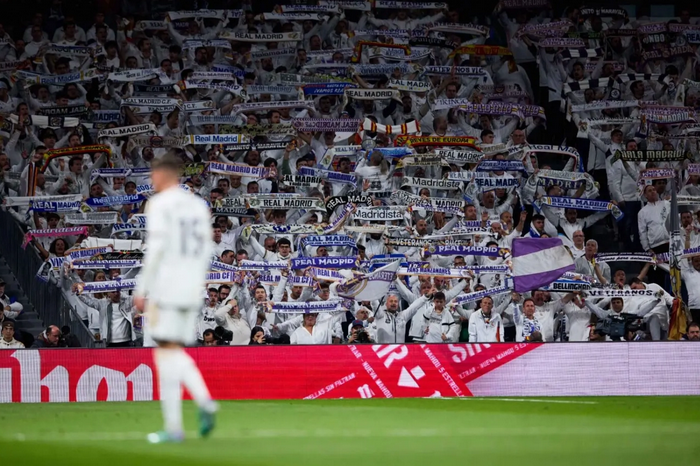
Beyond the finals, the Bernabéu has hosted hundreds of Real Madrid European Cup and Champions League matches, including several epic comebacks (notably against Manchester City in 2022) that turned the tide of the competition. It is in these moments of extreme tension that the atmosphere at the Bernabéu truly comes into its own, sometimes described as one of the most impressive in world soccer.
The 2019–2024 Renovation: A New Bernabéu
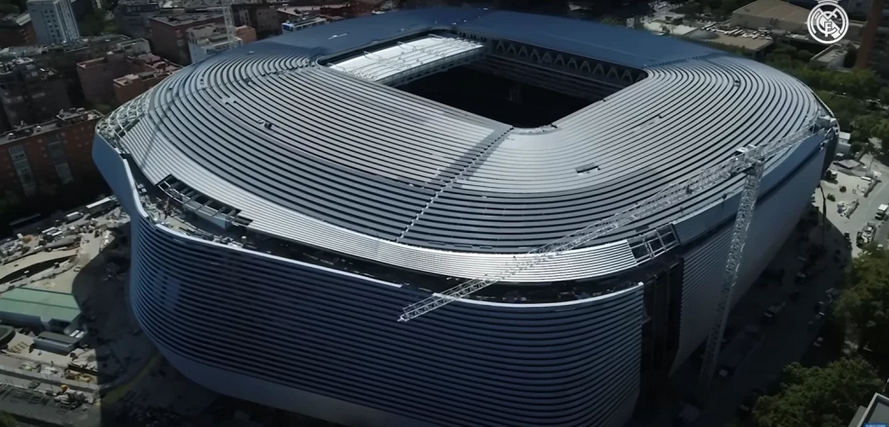
Announced in 2019, the stadium’s complete renovation is one of the most ambitious projects in the world of sports. The initial cost was estimated at around 525 million euros, but it ultimately far exceeded that amount: according to sources, between 1.17 and 1.76 billion euros once all work is completed. A budget that reflects the technical complexity of a project carried out without major disruption to the club’s matches.
The new Bernabéu features several major innovations: a retractable roof that fully covers the field in case of inclement weather, a 360-degree illuminated facade with programmable LED lighting, and a retractable field that can be stored beneath the stadium to free up space during non-sporting events. The current capacity is 83,186 seats, slightly higher than the pre-renovation version.
This renovation aims to transform the Bernabéu into a venue that can be used 365 days a year, capable of hosting soccer matches, international concerts, NFL and NBA games, tennis tournaments, and corporate events. The financial goal is clear: to generate substantial annual revenue to recoup the investment and fund the club’s future transfers.
The Bernabéu Today: Identity and Symbols
Beyond the statistics and the facilities, the Bernabéu remains, above all, a place of identity for Madrid fans. Its atmosphere during those big European nights—the comebacks against PSG, Manchester City, and Chelsea—has become the stuff of football legend. Fans speak of the “miedo escénico,” or stage fright, which is said to paralyze visiting teams under the pressure of the home crowd.
The stadium is also a major tourist attraction. The Bernabéu Tour remains one of Madrid’s most visited attractions, with a tour route now enhanced by immersive experiences, exhibitions on the renovation, and a completely redesigned official store. The stadium thus continues to generate revenue on non-match days, contributing to the club’s business model.
To understand the connection between the club’s original founder and its contemporary renovator, two complementary articles have been written: one on Santiago Bernabéu, the president who shaped modern Real Madrid, and the other on Florentino Pérez, the 21st-century president and builder. To situate the stadium within the club’s long history, the article on Real Madrid’s 120th anniversary covers the entire timeline since 1902.
Key Takeaways
- The stadium was inaugurated on December 14, 1947, under the name Estadio Real Madrid Club de Fútbol, with an initial capacity of 75,145.
- The opening match pitted Real against Os Belenenses (Portugal), with Sabino Barinaga scoring the first goal in the 15th minute.
- On January 4, 1955, the stadium was renamed Santiago Bernabéu in honor of the club president who had overseen its construction, who was still in office at the time.
- Expanded to 125,000 seats in the 1950s, reduced to approximately 90,000 for the 1982 World Cup, and then to 74,000 in the late 1990s.
- The stadium has hosted four European Cup and Champions League finals (1957, 1969, 1980, 2010), as well as the 1982 World Cup final.
- Complete renovation between 2019 and 2024, with a final cost ranging from 1.17 to 1.76 billion euros, featuring a retractable roof and a retractable field.
- Current capacity: 83,186 seats, in a stadium designed to operate 365 days a year, not just for Real Madrid matches.
Learn more
The Santiago Bernabéu Stadium is inextricably linked to the club’s history. To understand the men behind the stadium, we recommend our articles on Santiago Bernabéu, the original builder; on Florentino Pérez, the architect of the renovation; and on the complete history of Real Madrid. For the great seasons played at this stadium, the article on the Galácticos era and the one on the Quinta del Buitre cover two defining generations of the Bernabéu.
Frequently Asked Questions
When was the Bernabéu Stadium built?
Construction began in 1944 under the leadership of President Santiago Bernabéu, and the stadium opened its doors on December 14, 1947, under the name Estadio Real Madrid Club de Fútbol. Its initial capacity was 75,145 seats, making it one of the largest stadiums in Europe at the time.
Why is the stadium called Santiago Bernabéu?
On January 4, 1955, the club decided to rename the stadium Estadio Santiago Bernabéu in honor of its founding president, who was still in office at the time. This was an extremely rare honor, bestowed during his lifetime, in recognition of his decisive role in building the modern Real Madrid.
What is the current capacity of the Bernabéu Stadium?
The current capacity, following the 2019–2024 renovation, is 83,186 seats. It has varied significantly over time: 75,145 at opening, approximately 125,000 at its peak in the 1950s, reduced to 90,000 for the 1982 World Cup, and then to 74,000 in the late 1990s with the elimination of standing room.
How much did the renovation of the Bernabéu Stadium cost?
Depending on the sources and the scope of the project, the total cost of the work between 2019 and 2024 ranges from €1.17 billion to €1.76 billion, whereas the initial budget announced in 2019 was €525 million. The renovation includes, among other features, a retractable roof, a 360-degree LED facade, and a retractable playing surface.
Which major finals have been held at the Bernabéu?
Four European Cup and Champions League finals (1957, 1969, 1980, and 2010, most recently Inter Milan vs. Bayern Munich 2–0), the 1964 European Nations Championship final (Spain vs. USSR 2–1), and the 1982 World Cup final (Italy vs. West Germany 3–1).
The Real Madrid collection is waiting for you
All Real Madrid jerseys are available in the store: home, away, third, player edition, fan edition, and retro jerseys that trace the seasons played at the Bernabéu since the club’s founding.