
In the mid-1980s, Real Madrid was emerging from a lackluster decade. The glory days of Di Stéfano and Puskás were long gone; the club hadn’t won the European Cup since 1966, and the first team was overshadowed by Europe’s top clubs. It was against this backdrop that a group of homegrown young players emerged, restoring Real’s attacking identity and winning five consecutive La Liga titles between 1986 and 1990.
This generation has gone down in history as the "Quinta del Buitre," a nickname given to its leader, Emilio Butragueño. This article traces the journey of this group of young players trained at La Fabrica, the trophies they won, and the lasting impact they had on modern Real Madrid. It stands as proof, in the club’s history, that success can also be achieved with homegrown talent.
The origin of the name: a newspaper article that became a legend
The term "Quinta del Buitre" first appeared in the Spanish press in 1983, in an article by journalist Julio César Iglesias in the daily newspaper El País. The article described a group of young players coming of age at Real Madrid, centered around the rising star Emilio Butragueño, nicknamed "El Buitre" (The Vulture) for his goal-scoring instinct in the box.
In Spanish, the term "quinta" refers to a cohort of conscripts in military service—that is, a generation of people in the same age group. The "Quinta del Buitre" thus refers to the cohort to which "El Buitre" belongs—that is, the young players who came up through the club’s youth system and made it to the first team at roughly the same time.
The phrase immediately resonated widely. It echoed a deep-seated debate in Madrid at the time, torn between the strategy of signing international stars (a legacy of the Bernabéu era) and placing trust in the young players from the academy. La Quinta del Buitre would come to symbolize this second path—that of a Real Madrid team that wins with its homegrown talent.
The five members: Butragueño, Sanchís, Martín Vázquez, Michel, Pardeza
The team consists of five players, all products of La Fabrica, the club’s youth academy. Emilio Butragueño, a center forward, is the team’s star player. Manolo Sanchís Hontiyuelo, a center back, becomes an indispensable pillar of the team and its iconic captain. Rafael Martín Vázquez, a creative midfielder, brings technical skill to the heart of the game. José Miguel González Martín del Campo, known as Michel, a right winger and later an attacking midfielder, brings speed and precise crossing. Miguel Pardeza, a fast forward, rounds out the quintet.
All five of them have come up through Real Madrid’s youth system, from the youngest age group all the way up to Castilla, the reserve team. They train together, know each other’s playing styles, and share the same club culture. When they join the first team, they don’t need any time to adjust: they already know how to play together.
Such consistency is rare in modern soccer. Very few major European clubs have produced five world-class players at the same time—all homegrown and capable of carrying the first team without significant outside reinforcements. La Quinta del Buitre stands as one of the finest youth development classes in the history of Spanish soccer.
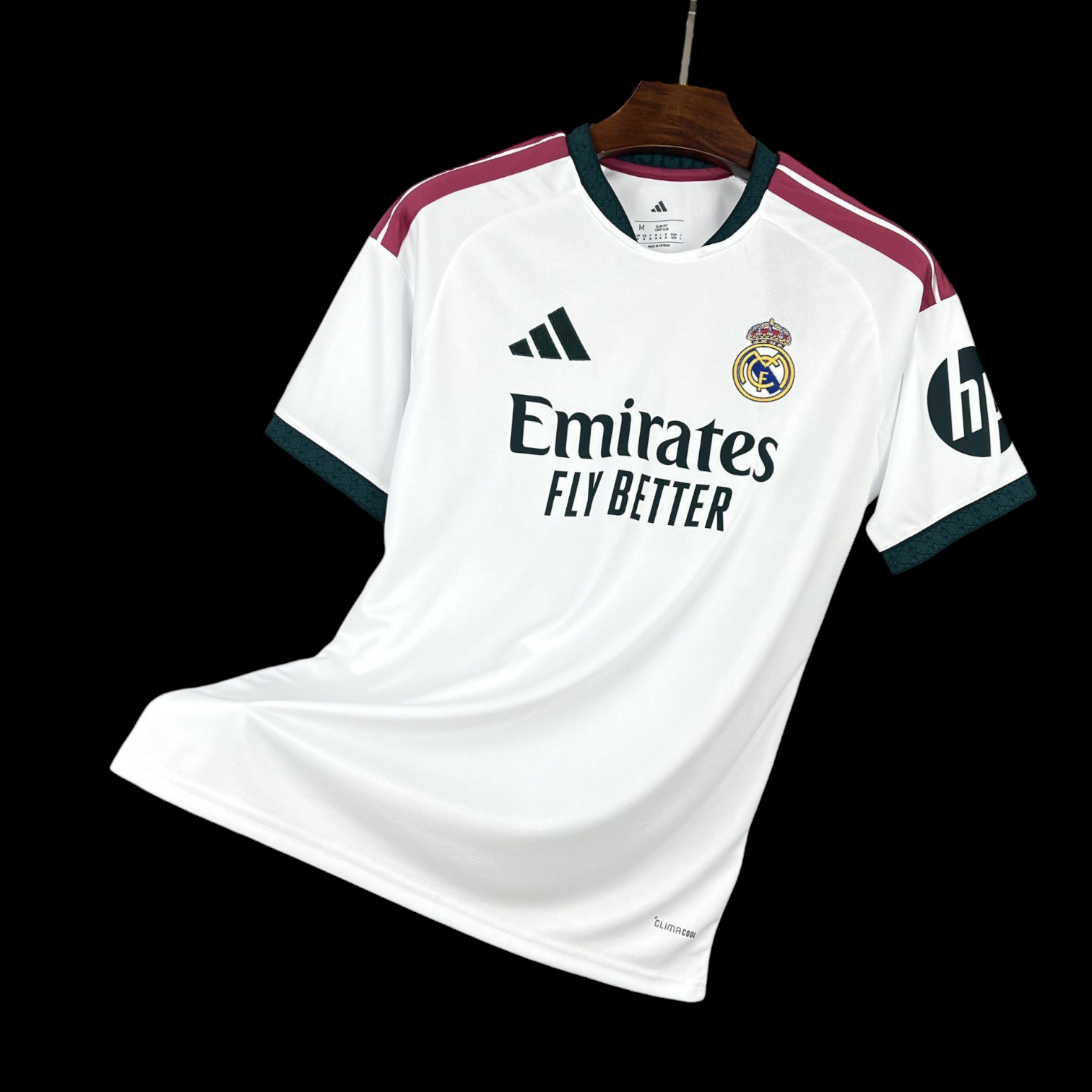
The Breakthrough: December 1983, First Steps with the First Team
Sanchís and Martín Vázquez made their first-team debuts on December 4, 1983. Butragueño followed on February 5, 1984, in a match that would go down in history: he came off the bench and scored two goals, immediately making a lasting impression. The Madrid press went wild, and fans discovered a striker who was both technically gifted and a force to be reckoned with in the box.
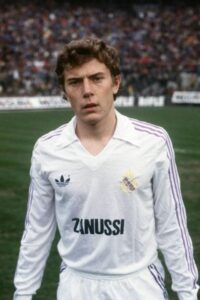
Pardeza and Michel joined the first team in the months that followed. Within two seasons, all five players had become key members of the squad. Real Madrid was led by veterans (José Antonio Camacho, Juanito) who instilled the club’s spirit, but it was the younger generation that gradually took over the team’s leadership.
The arrival of Dutch coach Leo Beenhakker in 1986 would bring lasting stability to the team and kick off a run of five consecutive La Liga titles. Beenhakker put his faith in young players, provided them with a demanding tactical framework, and instilled the belief that this team could win anything in Spain.
Five consecutive La Liga titles between 1986 and 1990
The Quinta del Buitre’s greatest achievement was winning five consecutive Spanish league titles between 1986 and 1990. An exceptional streak that hadn’t been seen in La Liga for a long time. The team dominated the competition with its attacking style, its ability to score plenty of goals (scoring over 100 league goals on several occasions during that period), and the quality of its complementary signings (Mexican striker Hugo Sánchez, a true partner for Butragueño, who joined in 1985).
Hugo Sánchez and Butragueño form one of the most prolific attacking duos in the club’s history. The Mexican, known for his acrobatic bicycle kicks and instinctive goals, perfectly complements the Vulture’s more technical style. Behind them, Michel orchestrates the play, Martín Vázquez links the lines, and Sanchís anchors the defense.
The 1989–1990 title, won under coach John Toshack, saw Real Madrid score 107 league goals—a record at the time. Hugo Sánchez finished as the pichichi (top scorer) with 38 goals, all scored with a single touch—another record of elegance that will go down in La Liga history.
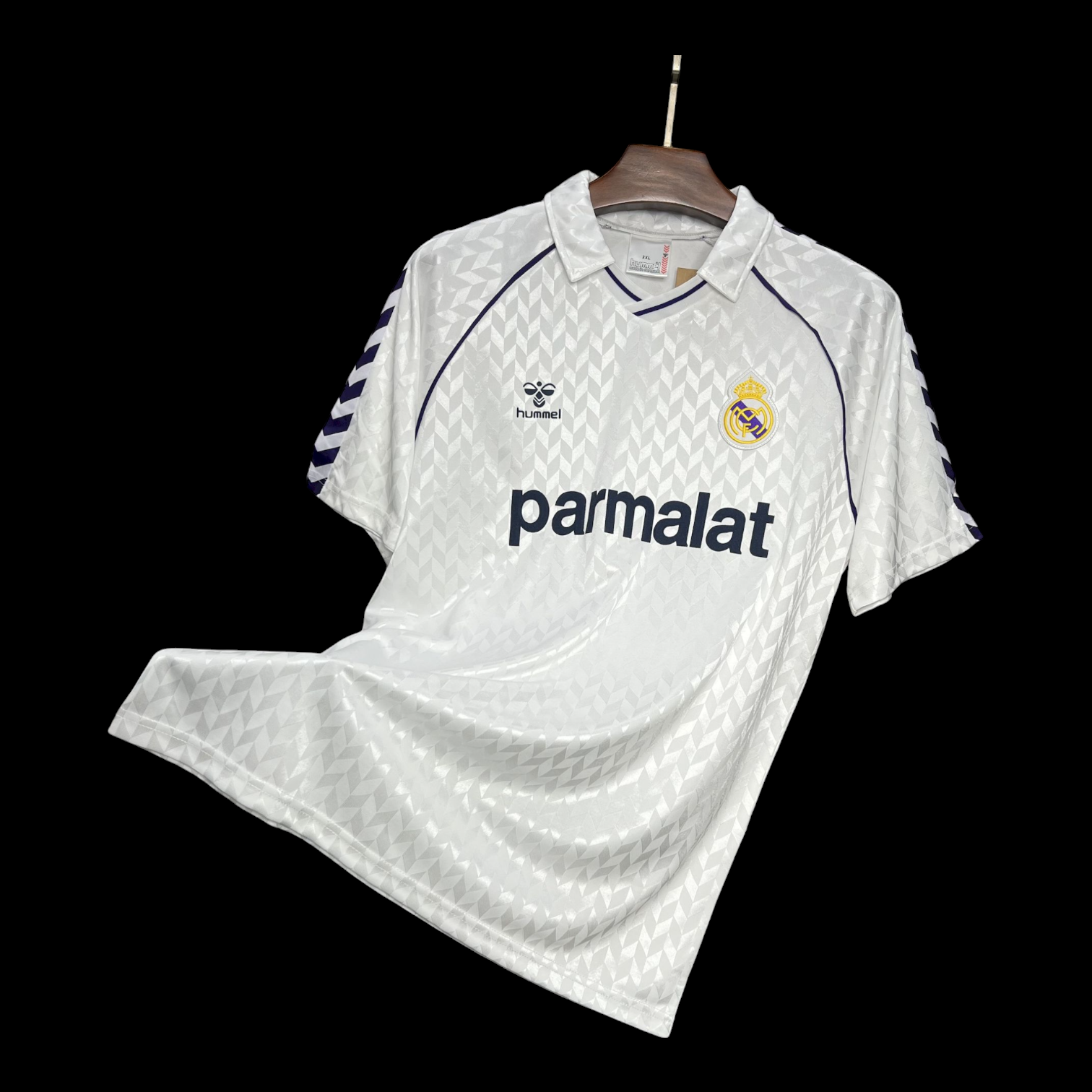
The two UEFA Cups and the European hurdle
On the European stage, the Quinta del Buitre won two consecutive UEFA Cups in 1985 and 1986, defeating Hungary’s Videoton and then Cologne. It was a respectable continental record, but one that left a sense of unfulfilled potential. Real Madrid failed to win the European Cup (the predecessor of the Champions League), despite it being the club’s historic top priority.
This period was marked by several heartbreaking eliminations. Bayern Munich, Sacchi’s AC Milan, and PSV Eindhoven stood in Real’s way at critical moments. The team failed to win the European Cup, which remains its greatest source of frustration. Many observers believed this team had the talent to win the European Cup, but it faced exceptional rivals at the same time.
This absence from European competition would cast a shadow over how this generation is remembered. When Real Madrid clinched their fifth consecutive La Liga title in 1990, critics were already pointing to their failure on the continental stage, without always taking into account the strength of the European competition at the time (AC Milan, Steaua Bucharest, Red Star Belgrade, AC Milan).
The Quinta style: verticality, pressing, intensity
Beyond its trophy haul, the Quinta del Buitre made history with its style of play. The Real Madrid team of the 1980s developed a high-intensity, direct style of soccer based on quick transitions and pressing in the opponent’s half. It was an approach ahead of its time, one that continues to inspire coaches to this day.
Butragueño embodies this style all on his own: capable of dropping deep to win the ball back, linking up with his midfielders, and then accelerating into the box to finish the play. His first touch is remarkable, his short dribbles down the middle leave defenders bewildered, and his goal-scoring instinct is on par with that of the great Spanish strikers.
Michel brings diagonal runs, set-piece play, and technical skill to the right wing. Martín Vázquez elegantly links up play and sets the tempo. Sanchís anchors the back line and organizes the defense. The quintet functions like a well-oiled machine, capable of dictating the pace against the best teams in La Liga.
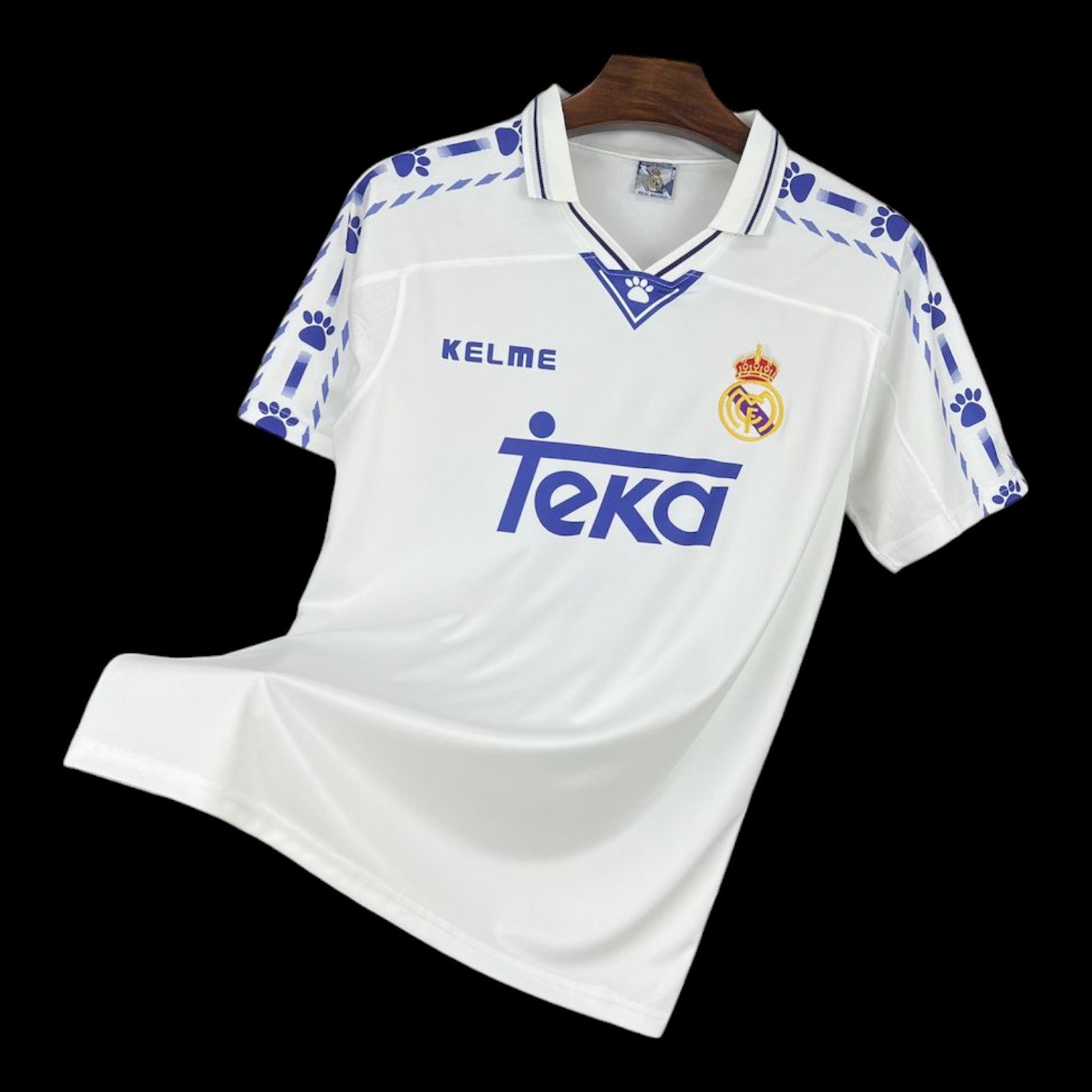
The End of a Generation and the Legacy at La Fabrica
Pardeza left the club in 1986 to join Zaragoza, after seeing little playing time with the first team. Butragueño and Michel departed in the mid-1990s, one to Atlético Celaya in Mexico, the other to Rayo Vallecano toward the end of his career. Martín Vázquez also went abroad, notably to Torino in Italy. Only Sanchís remained loyal to Real Madrid until the end, retiring in 2001 after winning several Champions League titles during the Galácticos era.
The legacy of La Quinta del Buitre is immense. It has proven that a great club can succeed by developing its own young players, without relying solely on signing international stars. This philosophy continues to inspire the work at La Fabrica, which keeps producing top-level players who go on to play for the first team (Raúl, Casillas, Carvajal, and more recently Vinícius, Tobias, and other promising young players).
To understand the rest of the club’s history, we’ve written an article on the Santiago Bernabéu era that preceded the Quinta, and another on Real Madrid’s 120-year history, which places this generation within the club’s long timeline. The connection is clear: the Quinta del Buitre laid the groundwork for the culture that would make the great Galácticos era of the early 2000s possible.
Key Takeaways
- La Quinta del Buitre refers to five players who came up through La Fabrica: Butragueño, Sanchís, Martín Vázquez, Michel, and Pardeza.
- The name comes from an article by journalist Julio César Iglesias in *El País* in 1983, which discussed the nickname *El Buitre* given to Butragueño.
- The group made their first-team debuts between 1983 and 1984 (Sanchís and Martín Vázquez first, followed by Butragueño in February 1984).
- Real Madrid won five consecutive La Liga titles between 1986 and 1990, a rare feat in the history of the Spanish league.
- It also won two UEFA Cups in 1985 and 1986, but never managed to win the European Cup.
- Mexican forward Hugo Sánchez, signed in 1985, rounded out the attack and was the La Liga top scorer several times.
- Sanchís remained with the club until 2001, winning several Champions League titles during that period.
Learn more
La Quinta del Buitre is part of Real Madrid’s long tradition of player development. To understand this legacy, we recommend our articles on the complete history of Real Madrid since its founding, on Santiago Bernabéu—the visionary president whose strategy paved the way for La Quinta—and on Alfredo Di Stéfano, the all-around forward of the 1950s whom Butragueño looked up to.
Frequently Asked Questions
Who are the players on the Quinta del Buitre team?
La Quinta del Buitre consists of five players who came up through Real Madrid’s youth academy: Emilio Butragueño (forward), Manolo Sanchís (center back), Rafael Martín Vázquez (attacking midfielder), Míchel (winger and later attacking midfielder), and Miguel Pardeza (forward). All of them are products of La Fabrica.
Why is this band called Quinta del Buitre?
The expression comes from an article by journalist Julio César Iglesias published in 1983 in the newspaper El País. In Spanish, “quinta” refers to a age group or a graduating class. “Buitre” (vulture) is the nickname of Emilio Butragueño, due to his knack for scoring goals in the box.
What is Quinta del Buitre's track record?
Five consecutive La Liga titles between 1986 and 1990, two UEFA Cups in 1985 and 1986, and several Copa del Rey and Spanish Super Cup titles. However, this generation never won the European Cup (Champions League), often falling short in the semifinals.
Who was the coach of Quinta del Buitre?
Several coaches took the helm over the years. Dutchman Leo Beenhakker built the team’s foundation during its first consecutive La Liga titles starting in 1986, followed notably by Welshman John Toshack, who won the 1989–1990 title with a record-breaking 107 league goals scored.
What has become of the players from Quinta del Buitre?
Pardeza moved to Zaragoza in 1986. Butragueño ended his career in Mexico in the mid-1990s. Michel finished his career at Rayo Vallecano. Martín Vázquez played abroad, notably for Torino. Only Manolo Sanchís remained at Real Madrid until 2001, winning several Champions League titles during the following era.
Does the Real Madrid jersey catch your eye?
The complete Real Madrid collection is now available in-store: home, away, and third jerseys, as well as player and fan editions, and retro jerseys that evoke the era of La Quinta del Buitre.