
December 2010, the Ballon d’Or ceremony in Zurich. For the first time in the award’s history, all three finalists came from the same youth academy: Lionel Messi, Andrés Iniesta, and Xavi Hernández. All were trained at La Masia, FC Barcelona’s youth academy. No other soccer academy in the world has ever achieved this feat. That night, La Masia entered a new realm: that of global legend.
Built from an old 18th-century Catalan farmhouse and converted into a training center for young players in 1979, La Masia embodies a particular vision of soccer: technical, intelligent, and team-oriented. This article traces the history of the center, its playing philosophy, its most famous alumni, and how it continues to produce the talents that make up today’s Barça.
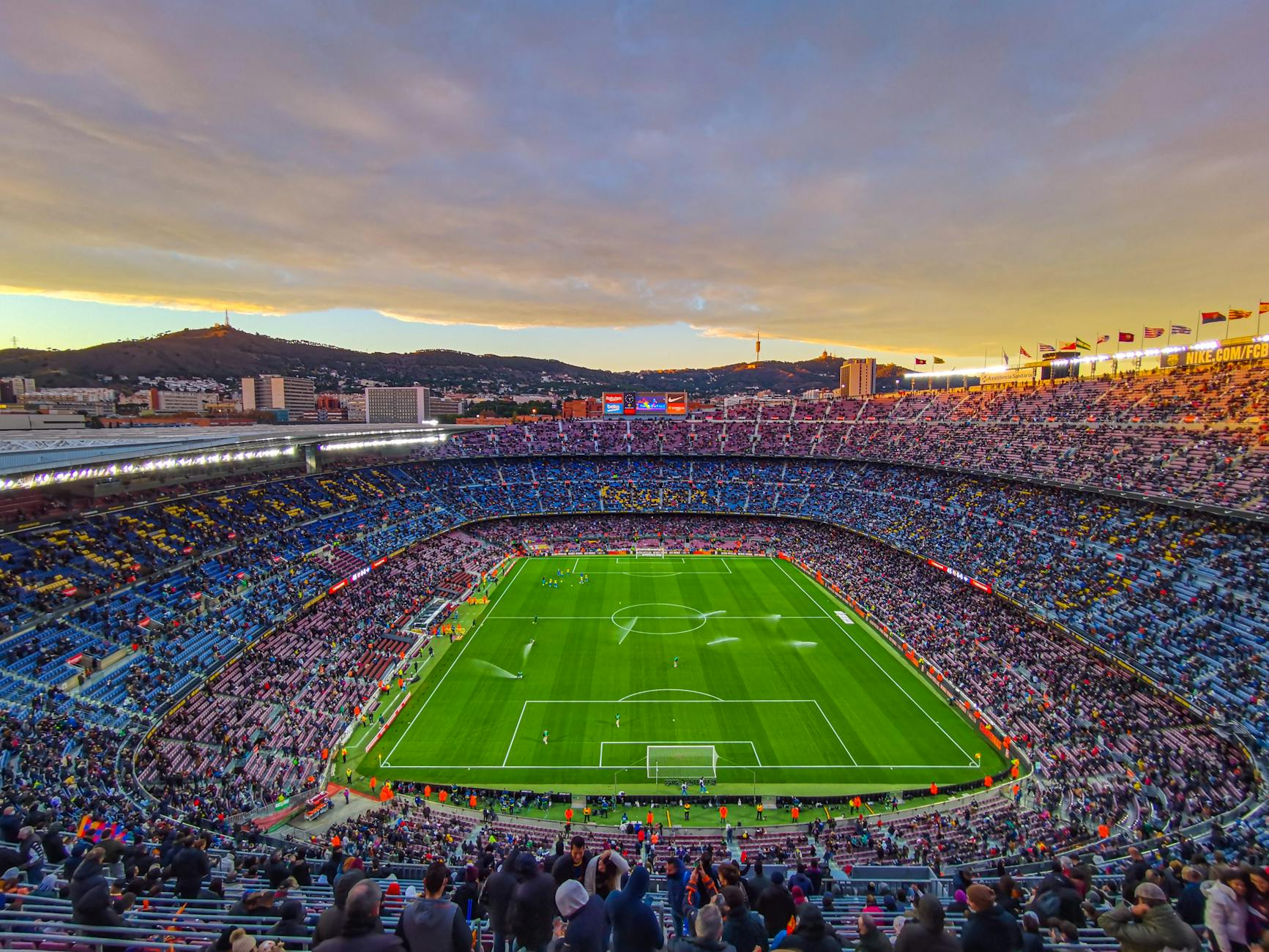
A Catalan farm that has become a global benchmark
The original building, La Masia de Can Planes, dates back to 1702. It is a traditional Catalan farmhouse located in the immediate vicinity of Camp Nou. In 1966, the club purchased it to serve as its headquarters and used it as an administrative office until the late 1970s. In 1979, at the suggestion of President Josep Lluís Núñez, the farmhouse was converted into a residence for young players from outside Barcelona.
The idea was simple: to enable families living far away to entrust their children to Barça’s training center, providing them with housing, an education, and a supportive environment. The first residents arrived that very year. At the time, La Masia was just another historic building, with no particular aura of its own. No one could have imagined then that it would become one of the most famous names in world soccer.
For a general overview of the club and its influence, see our article on the history of FC Barcelona. The youth academy is part of a long Catalan tradition of focusing on the younger generations.
Cruyff’s Influence on Philosophy
Although La Masia has existed as a residential academy since 1979, it was Johan Cruyff’s arrival as head coach in 1988 that cemented its footballing identity. Cruyff imposed a consistent philosophy from the top down: ball possession, triangular passing, positional versatility, and intelligence over physical strength. He insisted that this philosophy be taught at every level of the youth academy, from the youngest players to the reserve teams.
This methodological continuity was one of the major innovations of the time. Many clubs already had youth academies, but few had such a strong connection between the first team and the youth ranks. La Masia thus became a natural pipeline to Barça A, with no break in the training philosophy. For more on this connection, see our profile of Cruyff at Barça.
Cruyff was also the one who actively promoted young players from the academy to the first team. Pep Guardiola, a product of La Masia, became a starter at age 19 in 1990. This clear confidence in the club’s youth system sent a strong message to all subsequent generations.
The La Masia Method
The coaching method is based on a few simple but rigorously applied principles. First, individual technique is the top priority in the early years (up to age 12–13). Next, players learn the principles of team play: positioning, off-the-ball movement, and support runs. Finally, players are exposed to real-game tactical situations in the final years before moving up to the reserve team.
One of the center’s distinctive features is its focus on the human aspect. The young players live together, attend regular school, share meals, and train together. The goal is to develop well-rounded players, not just athletes. Many testimonials from former students highlight this almost family-like atmosphere in their daily lives.
Physical attributes are deliberately downplayed in the selection process. Messi, who was recruited at age 13 with a hormonal deficiency that was treated by the club, is the most well-known example of this. But dozens of other small, slender, technically skilled players have found an environment at La Masia that values their footballing intelligence over their height. This approach remains one of the academy’s hallmarks.
The center's most distinguished graduates
The list of players produced by La Masia reads like a who’s who of world soccer. Pep Guardiola, who trained there in the 1980s before becoming Barça’s captain and coach. Carles Puyol, the iconic defender of the 2000s. Xavi Hernández, who joined at age 11 in 1991 and was a standout midfielder for two decades. Andrés Iniesta, who joined at age 12 in 1996. Sergio Busquets, trained between 2005 and 2008.
Lionel Messi joined La Masia in 2000, at the age of 13, after the club covered the cost of his hormone treatment. He made his first-team debut on October 16, 2004, at the age of 17. For more on his career, see our profile on Messi at Barça.
Other talents trained at La Masia have excelled elsewhere: Cesc Fàbregas, who left for Arsenal before returning; Gerard Piqué, who spent time at Manchester United; and Pedro Rodríguez, a member of the 2010 World Cup-winning team. More recently, Eric García, Riqui Puig, Ansu Fati, and the entire new generation that now forms the backbone of the first team.
2010: Three Ballon d'Or Finalists
On January 10, 2011, during the 2010 Ballon d’Or ceremony, the event took place. The three finalists announced were Lionel Messi, Andrés Iniesta, and Xavi Hernández. All three were trained at La Masia, and all three still play together for FC Barcelona. This was the first time in the history of the Ballon d’Or that all three spots on the podium went to players from the same youth academy.
Lionel Messi won the trophy, his second consecutive Ballon d’Or. But the real winner that night was La Masia. The global media turned its spotlight on the Catalan academy. Dozens of clubs sent scouts to study its methods. Academies around the world tried to copy it, with varying degrees of success.
This event symbolically marks a decade of Barcelona’s dominance in world soccer. The team is largely made up of homegrown players, which sets it apart from sports programs built solely on external signings. For more on the sporting context of this period, see our analysis of the 2009 treble.
The new Joan Gamper Center, opened in 2011
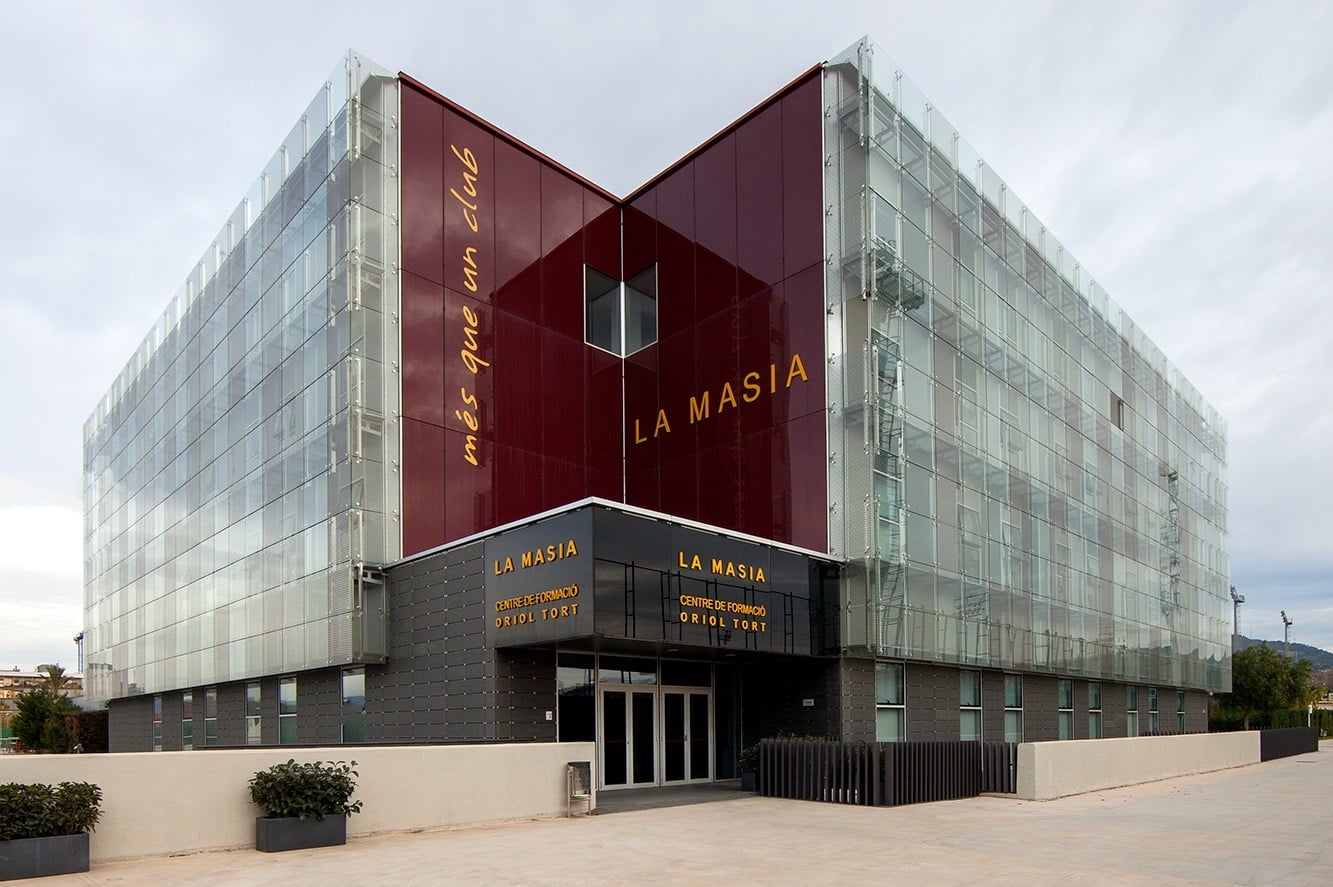
On June 30, 2011, the historic La Masia officially ceased to house young players. The club moved the residence to the Ciutat Esportiva Joan Gamper, a modern sports complex located in Sant Joan Despí, in the suburbs of Barcelona. The new building, named the Oriol Tort Training Center in honor of an iconic scout, can accommodate more than 80 players in facilities that meet contemporary standards.
The move was driven by several factors: the dilapidated condition of the historic building, the need to bring all categories together in one location, and the desire to improve residents’ living conditions. The original Can Planes building, however, remains the club’s property and now houses the president’s office and several administrative departments.
The name La Masia is still used to refer to the youth academy as a whole. The brand has become too strong and too closely associated with the club to disappear along with the building. Even today, people still use the term “La Masia” to refer to Barcelona’s youth development program, whether it takes place physically at Can Planes or in Sant Joan Despí.
The new generation: Yamal, Cubarsí, Pedri
The current generation of La Masia products includes several names that are already making headlines across Europe. Lamine Yamal, born in 2007, made his first-team debut in April 2023 at the age of 15. Pau Cubarsí, a center back also born in 2007, established himself as a starter as early as the 2023–2024 season. Pedri, a midfielder from the Canary Islands who joined Barça at age 17 in 2020, has become an indispensable key player. For a profile of the most talked-about player, see our article dedicated to Lamine Yamal.
Other names are emerging: Marc Casadó, Fermín López, Marc Bernal. La Masia continues to produce players ready for the highest level, following in the footsteps of their predecessors. Barça’s financial and sporting crisis since 2020 has, paradoxically, strengthened the academy’s role, as the club can no longer afford to sign players from abroad on a large scale.
This new wave demonstrates the model’s enduring success. Forty-five years after La Masia opened as a residential academy, the center continues to fulfill its mission: to transform technically gifted children into professional players capable of wearing the Blaugrana jersey at the highest level in Europe.
Key Takeaways
- La Masia is a Catalan farmhouse dating back to 1702, purchased by Barça in 1966 and converted into a residence for young players in 1979.
- Johan Cruyff’s arrival as head coach in 1988 established the playing philosophy that was passed on to all age groups at the academy.
- The method emphasizes individual technique, tactical awareness, and the human aspect rather than physical criteria.
- In 2010, all three Ballon d’Or finalists came from La Masia: Messi, Iniesta, and Xavi.
- On June 30, 2011, the residence moved to the Ciutat Esportiva Joan Gamper in Sant Joan Despí.
- Among the most notable alumni: Guardiola, Puyol, Xavi, Iniesta, Busquets, Messi, Piqué, Pedro, and Cesc Fàbregas.
- The new generation is led by Lamine Yamal, Pau Cubarsí, Pedri, and other talented players who are ready to compete at the highest level.
Learn more
The story of La Masia is that of a school that transcends its boundaries. To learn more, we recommend our articles on Johan Cruyff and his philosophical influence, on Lionel Messi, the most famous graduate, on the Xavi-Iniesta midfield duo, and on Lamine Yamal and the new generation.
Frequently Asked Questions
What is La Masia?
La Masia is FC Barcelona’s youth academy, named after an old Catalan farmhouse built in 1702. The historic building housed the club’s young players from 1979 to 2011, before they moved to the Ciutat Esportiva Joan Gamper. Today, La Masia refers to the entire Barcelona youth academy.
Which top players have come out of La Masia?
The list is long: Pep Guardiola, Carles Puyol, Xavi Hernández, Andrés Iniesta, Sergio Busquets, Lionel Messi, Gerard Piqué, Cesc Fàbregas, Pedro Rodríguez, Ansu Fati, Pedri, Lamine Yamal, Pau Cubarsí. La Masia is one of the most prolific youth academies in the history of soccer.
When was La Masia founded?
The historic building dates back to 1702. The club purchased it in 1966 to serve as its administrative headquarters. In 1979, following a decision by President Josep Lluís Núñez, it became a residence for young players from outside Barcelona. The residence officially closed on June 30, 2011, and operations were transferred to the Ciutat Esportiva Joan Gamper.
What is the philosophy behind La Masia?
The philosophy emphasizes individual technique from a young age, alignment with the first team’s playing style, and tactical intelligence over physical strength. This approach, established by Johan Cruyff in the 1990s, values small, technically skilled players whom other academies often overlook.
What did La Masia do in 2010?
On January 10, 2011, at the 2010 Ballon d’Or ceremony, the three finalists announced had all come through La Masia: Lionel Messi (winner), Andrés Iniesta, and Xavi Hernández. This was the first time in the history of the Ballon d’Or that all three finalists had come from the same youth academy.
Show the colors of La Masia graduates
The FC Barcelona collection is available in its entirety on Maxi Kits: home, away, and alternate jerseys, as well as player and fan versions, and retro jerseys that pay tribute to the club’s golden generations.