
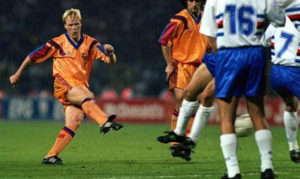
20 mai 1992, stade de Wembley, Londres. Prolongation, 111e minute. Ronald Koeman s’avance pour tirer un coup franc. Sa frappe sèche fuse dans la lucarne du gardien italien Gianluca Pagliuca. 1-0 pour le FC Barcelone face à la Sampdoria de Gênes. Quelques minutes plus tard, le club catalan soulève sa première Coupe d’Europe, 33 ans après l’avoir perdue en finale en 1961. Sur le banc, un homme savoure : Johan Cruyff, l’architecte de la Dream Team.
Cette équipe, formée entre 1988 et 1996, reste l’une des plus marquantes de l’histoire du Barça. Quatre Liga consécutives, une Coupe d’Europe, une révolution tactique. Cet article retrace la naissance de la Dream Team, ses joueurs phares, ses victoires majeures, et son influence durable sur le club.
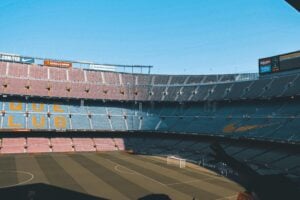
Cruyff entraîneur, retour au Barça en 1988
Après une carrière de joueur achevée en 1984, Johan Cruyff entame une carrière d’entraîneur à l’Ajax, où il remporte la Coupe des Coupes en 1987. À l’été 1988, il signe au FC Barcelone comme entraîneur principal. Le club traverse une période compliquée : pas de titre majeur récent, instabilité institutionnelle, mécontentement des supporters. Le président José Luis Núñez parie sur le Néerlandais, déjà légendaire en Catalogne pour son passage de joueur entre 1973 et 1978.
Cruyff arrive avec une idée précise : rebâtir une équipe autour du jeu de possession et du mouvement permanent, principes qu’il a hérités de Rinus Michels à l’Ajax. Il impose immédiatement une rupture culturelle. Les entraînements changent, les principes tactiques s’imposent, les jeunes du centre de formation prennent une place inédite. Pour le contexte de son arrivée, voir notre portrait de Cruyff au Barça.
Les premiers résultats ne sont pas immédiats. La saison 1988-1989 se solde par une Coupe des Coupes face à Sampdoria (2-0 à Berne, déjà), mais sans titre national. C’est l’année suivante que la machine commence vraiment à tourner.
La construction d’une équipe pas comme les autres
Cruyff construit son équipe par couches successives. Il s’appuie sur des joueurs déjà présents (José Mari Bakero, Txiki Begiristain), promeut des jeunes du centre de formation (Pep Guardiola en 1990), et recrute des stars internationales triées sur le volet. Le profil recherché n’est pas seulement technique : il doit accepter de jouer pour le collectif, dans un système exigeant.
Les recrues majeures arrivent en plusieurs vagues. Ronald Koeman, défenseur central néerlandais venu du PSV Eindhoven en 1989. Hristo Stoichkov, attaquant bulgare imprévisible, signé en 1990. Michael Laudrup, élégant numéro 10 danois. Plus tard, Romário, attaquant brésilien, en 1993. Chacun apporte une dimension supplémentaire, sans jamais déstabiliser l’équilibre voulu par Cruyff.
L’innovation principale de Cruyff est de promouvoir un défenseur central qui sait construire le jeu (Koeman), d’utiliser un milieu de terrain organisateur sortant du centre de formation (Guardiola), et de positionner deux attaquants complémentaires (Stoichkov et Romário après 1993). Le système, en 3-4-3 ou en 4-3-3, mise sur la largeur, la profondeur, et la circulation rapide du ballon.
Koeman, Stoichkov, Romário, Laudrup, Guardiola
Ronald Koeman incarne la Dream Team par sa polyvalence. Défenseur de formation, il monte régulièrement, frappe les coups francs avec une puissance rare, marque des buts décisifs en championnat comme en Coupe d’Europe. Sa frappe en finale de Wembley en 1992 entre directement dans la mythologie du club.
Hristo Stoichkov, Ballon d’Or 1994, apporte la fougue, le caractère, et un sens du but qui manquait à l’équipe. Sa relation avec Cruyff est explosive mais productive. Romário, recruté en 1993, illustre une autre facette : la finition glaciale, le mouvement instinctif, le caractère imprévisible. Sa première saison, 1993-1994, est éblouissante.
Michael Laudrup, lui, est le maître de l’élégance. Son jeu de passe et sa lecture du jeu en font le métronome offensif. Pep Guardiola, formé à La Masia et titulaire dès 1990, organise le milieu de terrain. À 19 ans, il devient déjà l’orchestrateur silencieux d’une équipe où chaque joueur a son rôle. Pour la suite de sa carrière, voir notre papier sur Pep Guardiola entraîneur.
Quatre Liga consécutives entre 1991 et 1994
Le palmarès en championnat est impressionnant. Le Barça remporte la Liga 1990-1991, sa première depuis six ans. Suivent les titres 1991-1992, 1992-1993 et 1993-1994. Quatre Liga consécutives, performance jamais réalisée par le club auparavant. Cruyff devient le premier entraîneur à offrir une telle série au Barça.
Les saisons 1991-1992 et 1992-1993 se jouent sur le fil, parfois sur la dernière journée, avec un Real Madrid qui tient longtemps tête à la Dream Team. Le titre 1993-1994 est arraché grâce à une fin de saison étourdissante, portée par Romário et ses 30 buts en championnat. Cette saison reste l’une des plus brillantes statistiquement de l’histoire moderne du Barça.
En parallèle, le club décroche également deux Coupes du Roi (1990 et 1991) et plusieurs Supercoupes d’Espagne. La domination est nationale, mais c’est sur la scène européenne que la Dream Team va inscrire son nom dans la grande histoire.
La finale de Wembley, 20 mai 1992
Le parcours européen 1991-1992 mène le Barça en finale de la Coupe des Clubs Champions, dernière édition avant le passage à la Ligue des Champions actuelle. Le 20 mai 1992, les Catalans affrontent la Sampdoria de Gênes au stade de Wembley. Le club n’a jamais remporté la C1, malgré une finale perdue en 1961 face à Benfica.
Le match est tendu, fermé, peu spectaculaire pendant les 90 minutes. La prolongation est nécessaire. À la 111e minute, le Barça obtient un coup franc à 25 mètres. Ronald Koeman s’élance, frappe sec et puissant : la balle finit au fond. 1-0. Quelques minutes plus tard, l’arbitre siffle la fin du match. Le Barça soulève sa première Coupe d’Europe.
L’équipe alignée par Cruyff ce soir-là entre dans la mémoire collective : Zubizarreta, Nando, Ferrer, Koeman, Juan Carlos, Bakero, Guardiola, Eusebio, Stoichkov, Salinas (puis Goikoetxea), Laudrup. Cette finale reste la fondation symbolique de l’identité européenne moderne du club. Pour replacer ce sacre dans l’histoire complète du Barça, voir notre article sur l’histoire du FC Barcelone.
Athènes 1994, l’autre face de la Dream Team
Deux ans plus tard, en 1994, le Barça atteint à nouveau la finale, devenue celle de la Ligue des Champions au format actuel. Le rendez-vous est fixé au stade olympique d’Athènes, le 18 mai 1994, face au Milan AC de Fabio Capello. Le contexte est très différent : Romário cartonne, Stoichkov est en pleine confiance, l’équipe semble lancée pour un nouveau sacre.
Le résultat est sans appel : 4-0 pour le Milan, avec un doublé de Daniele Massaro et des buts de Dejan Savićević et Marcel Desailly. C’est l’une des défaites les plus marquantes de l’ère Cruyff, et elle marque le début du déclin progressif de la Dream Team. Le club ne remportera plus de titre majeur national avant le Brésilien Bobby Robson en 1996-1997.
Cruyff quitte le banc à l’été 1996, après huit saisons. Son palmarès : 4 Liga, 1 Coupe d’Europe, 1 Coupe du Roi, 3 Supercoupes d’Espagne, 1 Coupe des Coupes, 1 Supercoupe d’Europe. Aucun entraîneur n’avait jamais autant gagné avec le Barça avant lui.
L’héritage tactique et institutionnel
Au-delà des trophées, la Dream Team laisse une trace durable. Cruyff a posé les fondations du jeu barcelonais moderne : possession, jeu en triangles, joueurs polyvalents, formation des jeunes. Cette philosophie sera reprise et amplifiée par Pep Guardiola en 2008, douze ans après le départ de Cruyff. Le tiki-taka des années 2008-2012 est en grande partie l’aboutissement des principes posés par la Dream Team. Pour cette filiation, voir notre article sur le triplé de 2009.
L’autre héritage majeur, c’est la place donnée aux jeunes du centre de formation. Guardiola titulaire à 19 ans, Sergi Barjuan, Carles Busquets, Albert Ferrer, Tito Vilanova : tous formés à La Masia, tous intégrés par Cruyff dans son groupe. Cette confiance dans la formation interne deviendra une marque de fabrique du club. Voir notre analyse de La Masia pour comprendre comment ce modèle s’est ensuite consolidé.
La Dream Team est ainsi à la fois un succès sportif et un manifeste tactique. Elle prouve qu’on peut gagner durablement avec une identité de jeu forte, plutôt qu’avec une simple addition de stars. Cette idée structure encore le projet sportif barcelonais, plus de trente ans après le sacre de Wembley.
Ce qu’il faut retenir
- Johan Cruyff revient au Barça comme entraîneur en 1988 et y reste huit saisons jusqu’en 1996.
- La Dream Team aligne Koeman, Stoichkov, Romário, Laudrup, Guardiola et bien d’autres talents triés sur le volet.
- Quatre Liga consécutives entre 1990-1991 et 1993-1994, performance jamais réalisée auparavant par le club.
- Le 20 mai 1992 à Wembley, but de Koeman en prolongation : le Barça remporte sa première Coupe d’Europe face à la Sampdoria.
- L’autre finale, en 1994 à Athènes face au Milan AC, se solde par une défaite 4-0 qui marque le début du déclin.
- Cruyff quitte le banc avec 11 trophées au compteur, total inégalé jusqu’à Pep Guardiola.
- L’héritage tactique de la Dream Team structure encore le jeu barcelonais moderne, du tiki-taka de Guardiola aux choix actuels.
Pour aller plus loin
La Dream Team est l’un des sommets de l’histoire blaugrana. Pour creuser, on vous recommande nos papiers sur Johan Cruyff joueur et entraîneur, sur Pep Guardiola, l’héritier tactique, sur La Masia et la formation des jeunes, et sur le triplé historique de 2009 qui prolonge l’œuvre de Cruyff.
Questions fréquentes
Qu’est-ce que la Dream Team du Barça ?
La Dream Team désigne le FC Barcelone entraîné par Johan Cruyff entre 1988 et 1996. L’équipe alignait Koeman, Stoichkov, Romário, Laudrup, Guardiola et d’autres joueurs majeurs. Elle remporte quatre Liga consécutives et la première Coupe d’Europe du club en 1992.
Quand le Barça a-t-il remporté sa première Coupe d’Europe ?
Le FC Barcelone remporte sa première Coupe d’Europe le 20 mai 1992 au stade de Wembley, face à la Sampdoria de Gênes. Le score est de 1-0 après prolongation, sur un coup franc de Ronald Koeman à la 111e minute.
Combien de Liga la Dream Team a-t-elle remportées ?
La Dream Team de Cruyff remporte quatre Liga consécutives entre 1990-1991 et 1993-1994. C’est la première fois que le club enchaîne quatre titres de champion d’Espagne d’affilée, performance qui sera ensuite égalée par Pep Guardiola dans les années 2010.
Pourquoi appelle-t-on cette équipe la Dream Team ?
Le surnom est apparu dans la presse espagnole au début des années 1990, en référence à la Dream Team de basketball américaine des Jeux Olympiques de 1992. Il qualifiait l’addition de stars internationales (Koeman, Stoichkov, Romário, Laudrup) capables de rivaliser avec n’importe quel adversaire.
Pourquoi la Dream Team a-t-elle perdu en finale en 1994 ?
Le 18 mai 1994 à Athènes, le Barça s’incline 4-0 face au Milan AC de Fabio Capello, en finale de la Ligue des Champions. Doublé de Daniele Massaro, buts de Savićević et Desailly. Cette défaite marque le début du déclin progressif de la Dream Team.
Prolongez l’esprit Dream Team
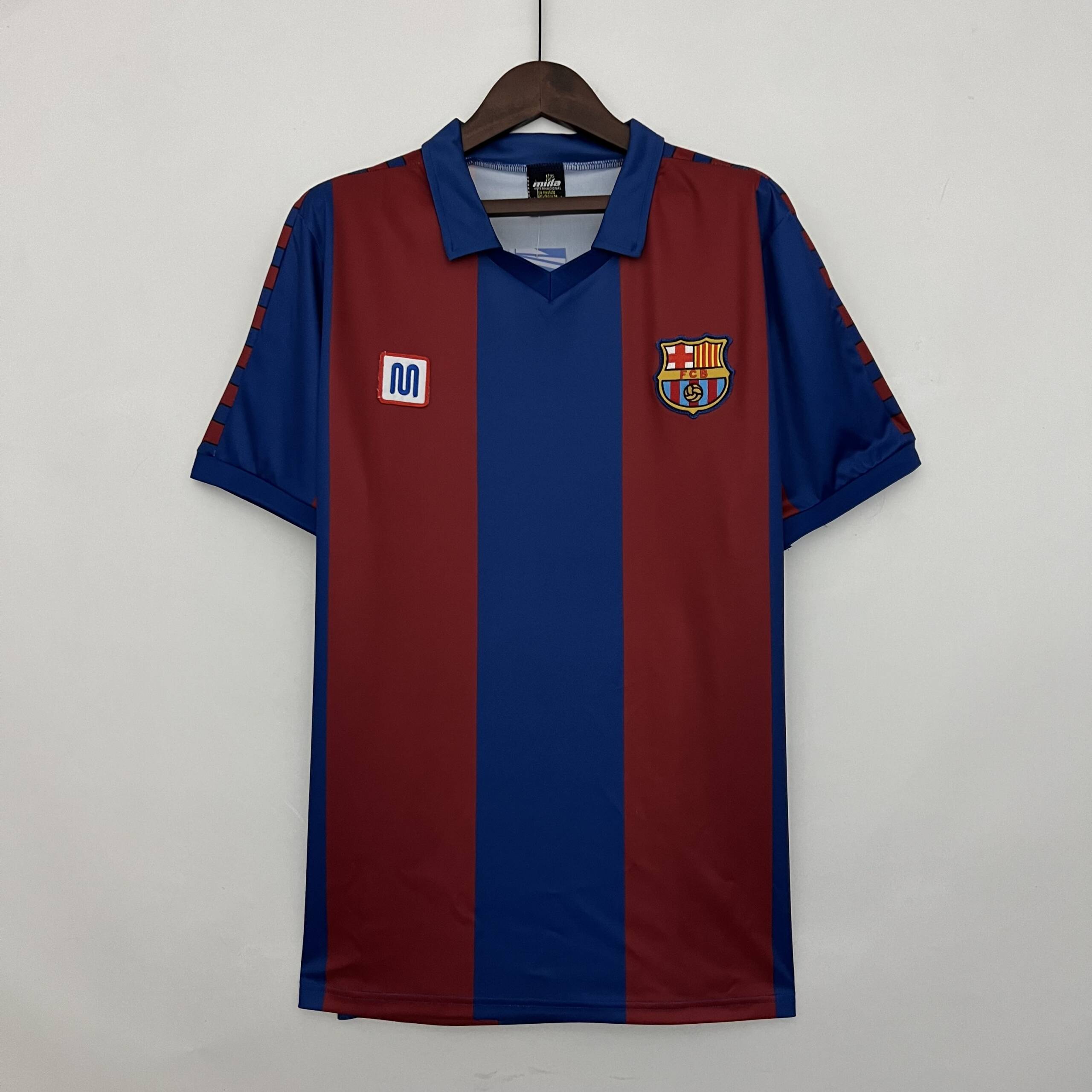
La collection FC Barcelone vous attend en boutique : maillots actuels, versions joueur et supporter, et une belle gamme de maillots rétro qui ravivent les saisons signées Cruyff entraîneur.