
April 1965, Marcel-Saupin. FC Nantes, which had been promoted to the top division two years earlier, had just clinched its first French league title. The Canaries played a style of soccer characterized by teamwork, mobility, and technical skill—a style that stood out in the French soccer landscape. This style would come to be known as “the Nantes style.” Sixty years later, the phrase still sends shivers down the spines of the team’s yellow-clad fans.
From that first title to the last, won in 2001, FC Nantes’ history is marked by eight league titles, four French Cups, and a European semifinal appearance. But above all, it is defined by a playing philosophy that has influenced generations of French coaches. This article traces the major milestones in the Canaries’ history, from the club’s founding in 1943 to today’s Beaujoire stadium.
1943: The club was founded through the merger of five clubs
FC Nantes was founded on April 21, 1943, in the midst of the Occupation, through the merger of five local clubs. The founders’ goal was simple: to give Nantes, a major port city on the Atlantic coast, a team capable of competing with France’s established powerhouses. The club adopted yellow and green as its colors, which would become inextricably linked to its identity.
The early years were tough. Nantes bounced back and forth between the regional leagues and the second division, unable to establish itself for the long term. The organization was young, the youth academy was just getting started, and financial resources were limited. It would take twenty years—and the arrival of one man—for the club’s fortunes to turn around.
That man is José Arribas. A Spanish-born coach who came up through the club’s youth system, he took the reins of the first team in the early 1960s. Under his leadership, Nantes earned promotion to the top division in 1963. At the time, no one could have imagined that the Canaries would dominate French soccer for two decades.
The José Arribas Era and the First Titles
The team’s promotion to the top flight coincided with a tactical revolution. While most French teams still played a style of soccer based on individual skill, Arribas instilled a team-oriented approach characterized by constant movement, short passes, and coordinated pressing. It was a modern approach—almost ahead of its time—that drew inspiration from the great Central European teams of the 1950s.
Success came quickly. FC Nantes won the French championship in 1965, during its second season in the top flight. The club cemented its status the following season by winning a second consecutive title in 1966. No team had achieved this back-to-back feat in a long time, and no one had expected it from a newly promoted side. Fans saw the yellow-and-green colors reach the pinnacle of French soccer.
This was followed by titles in 1973 and 1977, then another double in 1980 and 1983. In total, FC Nantes won eight league titles between 1965 and 2001, making it one of the most consistent teams in the French league during that period. This consistency is due as much to the successive coaches as to the playing philosophy instilled from the very beginning.
The Nantes Style of Play According to Jean-Claude Suaudeau
Jean-Claude Suaudeau, a former player for the club, took over from Arribas as head coach in the early 1980s. He expanded upon and radicalized his mentor’s philosophy, eventually giving it its own name: the “Nantes style.” This style is based on three principles: a very high defensive line, lightning-fast ball movement, and collective pressing as soon as possession is lost.
On paper, it resembles what Pep Guardiola would do thirty years later with Barcelona. In fact, tactical analysts frequently point out the similarities. Suaudeau didn’t theorize his approach to that extent, but he built it through daily rigor at the youth academy, teaching players to understand the spaces on the field, anticipate movements, and play for the team rather than for themselves.
Under Suaudeau, FC Nantes won the 1983 title and remained a top contender in the league throughout the decade. The club became a benchmark for French youth development. Marcel Desailly, Didier Deschamps, and Christian Karembeu—future 1998 World Cup champions—all wore the yellow-and-green jersey before moving on to other clubs. The Nantes youth academy was then considered one of the best in Europe.
La Beaujoire: A New Stadium for 1984
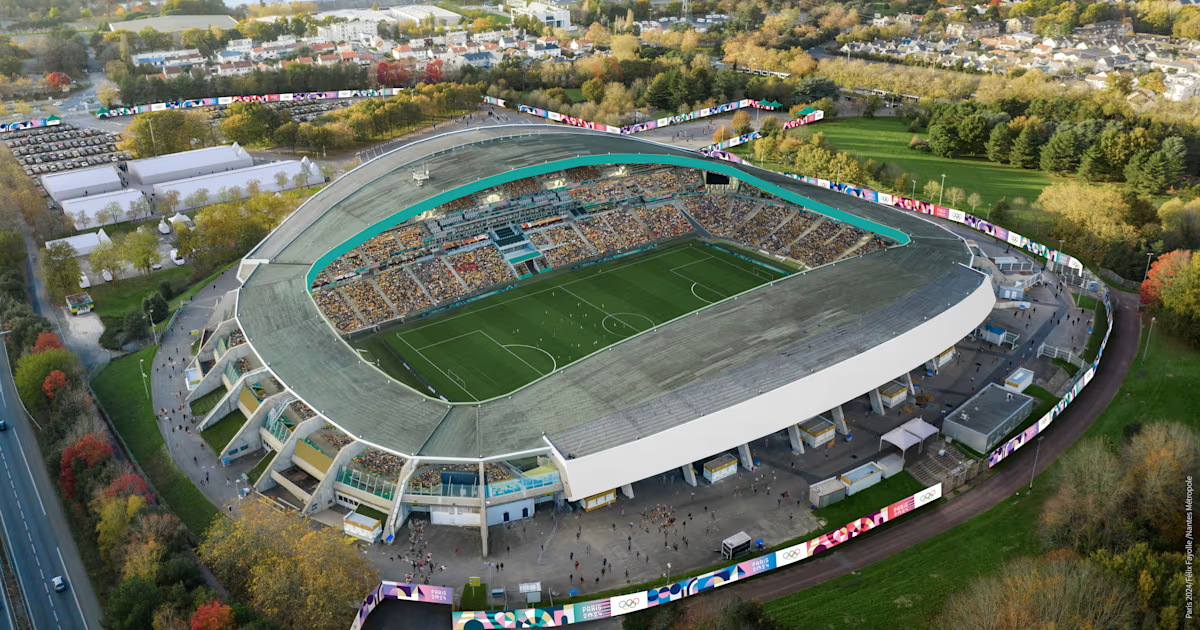
To keep pace with its growing success, FC Nantes moved to a new stadium in the mid-1980s. Marcel-Saupin, where the club had played since its founding, had become too small to host major matches. The city launched the construction of a new stadium in the northeast of the city, in the Beaujoire neighborhood.
The Stade de la Beaujoire, later renamed Stade de la Beaujoire-Louis Fonteneau in honor of the club’s legendary president, opened its doors in 1984. Designed for the 1984 European Championship held in France, it quickly began hosting international matches and provided the Canaries with a 35,322-seat stadium. This capacity ranks the club among the top ticket sellers in the league.
The inauguration coincides with a golden age for the team. The Canaries are holding their own in Ligue 1, battling it out with Bordeaux, Marseille, and Paris for the top spots. La Beaujoire has become a feared fortress where visiting teams struggle to secure a win, spurred on by a knowledgeable and demanding crowd.
The 1995 Championship and the European Semifinal
The 1994–95 season remains one of the finest in the club’s history. Under the guidance of Jean-Claude Suaudeau, who had returned to the bench, the team played a flamboyant brand of soccer. With Patrice Loko up front, Reynald Pedros as playmaker, Claude Makelele as defensive midfielder, and Christian Karembeu as center back, Nantes’ young generation shone at the highest level.
FC Nantes clinched its seventh title with a limited number of losses throughout the season. The league title earned the club a spot in the Champions League, where it performed well the following season. In 1995–96, the Canaries reached the semifinals of the Champions League, where they were eliminated by Juventus, the eventual champions. To date, this remains their best performance in European competition.
This European run, which can be compared to other feats such as that of Saint-Étienne’s “Les Verts” in the 1976 final, proves that a French club from a lower-tier league can hold its own against the continental giants when it has a distinct playing style and a strong youth system.
The eighth track, "2001" by Raynald Denoueix
The eighth and final league title came in 2001, under the leadership of Raynald Denoueix, Suaudeau’s former assistant and the direct heir to the club’s philosophy. FC Nantes continued to play the “Nantes style,” with players such as Mickaël Landreau in goal, Mario Yepes in defense, Eric Carrière in midfield, and Viorel Moldovan up front.
That season, Nantes finished ahead of Lyon (which would go on to start its own winning streak) and reaffirmed its status as one of the league’s powerhouses. But that eighth title also marked the end of an era. Financial difficulties, changes in ownership, and increased competition from clubs with larger budgets would gradually cause the Canaries to slip down the national rankings.
To understand how other historic clubs navigated this same period of transition, our article on the history of Olympique Lyonnais recounts the club’s run of seven consecutive titles, which began right after that victory in Nantes.
Players who have worn the yellow jersey
When you talk about FC Nantes, it’s like flipping through an impressive hall of fame. Henri Michel, an international midfielder, spent fifteen seasons wearing the yellow jersey before becoming the coach of the French national team. Maxime Bossis, an elegant defender and a regular on the French national team for a decade, is one of the greatest French fullbacks in history.
The attack featured Vahid Halilhodžić, a Bosnian striker who would go on to break several records, followed by Jorge Burruchaga, a 1986 World Cup champion with Argentina. In terms of youth development, the club saw the emergence of Marcel Desailly and Didier Deschamps, future 1998 World Cup champions, as well as Christian Karembeu and later Mickaël Landreau, an international goalkeeper who began his career at age 17 in the top division with Nantes.
This ability to develop world-class players while building competitive teams has been what has set FC Nantes apart for decades. The youth academy, the cornerstone of the Suaudeau-Denoueix model, remains a benchmark in French soccer.

FC Nantes Today
Since 2001, the club has experienced a series of mixed seasons. Several relegations to Ligue 2 have been followed by quick promotions. Waldemar Kita, the owner since 2007, has stabilized the club in the top flight but has not been able to lead it back to the top of the national standings.
The 2021–22 season did, however, offer fans a breath of fresh air with the victory in the Coupe de France under Antoine Kombouaré. A fourth star serves as a reminder that FC Nantes is still capable of lifting a major trophy, even in an era when the financial hierarchy is more rigid than it was during the Canaries’ golden age.
La Beaujoire, its loyal fan base, its history, and its yellow-and-green colors make FC Nantes a key player in French soccer. The club continues to aim for a return to the top of Ligue 1, staying true to a philosophy that has never completely faded.
Key Takeaways
- FC Nantes was founded on April 21, 1943, through the merger of five local clubs, and adopted yellow and green as its colors.
- Nicknamed the Canaries, Nantes won eight French league titles between 1965 and 2001.
- Coach José Arribas, followed by Jean-Claude Suaudeau, developed the Nantes style of play, characterized by movement, pressing, and quick ball movement.
- The Marcel-Saupin Stadium was replaced in 1984 by the Beaujoire Stadium, which has a capacity of 35,322.
- The Canaries reached the Champions League semifinals in 1995–96, their best-ever run in European competition.
- The youth academy has produced players such as Marcel Desailly, Didier Deschamps, Christian Karembeu, and Mickaël Landreau.
- Four French Cups round out the club's trophy case: 1979, 1999, 2000, and 2022.
Learn more
FC Nantes is part of a generation of French clubs that have shaped modern Ligue 1. To explore this ecosystem, we recommend our articles on the history of Les Verts de Saint-Étienne, on Olympique Lyonnais and its seven consecutive titles, and on Stade Rennais, another major institution in western France.
Frequently Asked Questions
In what year was FC Nantes founded?
FC Nantes was founded on April 21, 1943, through the merger of five local Nantes clubs. The club immediately adopted the yellow and green colors that still identify it today.
How many French league titles has FC Nantes won?
FC Nantes has won eight French league titles: 1965, 1966, 1973, 1977, 1980, 1983, 1995, and 2001. This record makes it one of the most successful clubs in the history of the league.
Why do we talk about the "Nantes style" of play?
The "Nantes style" refers to the collective, attacking style of soccer developed by José Arribas and later refined by Jean-Claude Suaudeau. It is based on quick ball movement, a high defensive line, and coordinated pressing as soon as possession is lost.
What is the home stadium of FC Nantes?
Since 1984, the club has played its home games at the Stade de la Beaujoire-Louis Fonteneau, which has a capacity of 35,322. Before that, the Canaries played at the Stade Marcel-Saupin, in downtown Nantes.
What is FC Nantes' best performance in European competition?
The Canaries reached the semifinals of the Champions League during the 1995–96 season, where they were eliminated by Juventus, the eventual champions. This remains the club’s best performance in European competition to date.
Does the FC Nantes yellow jersey catch your eye?
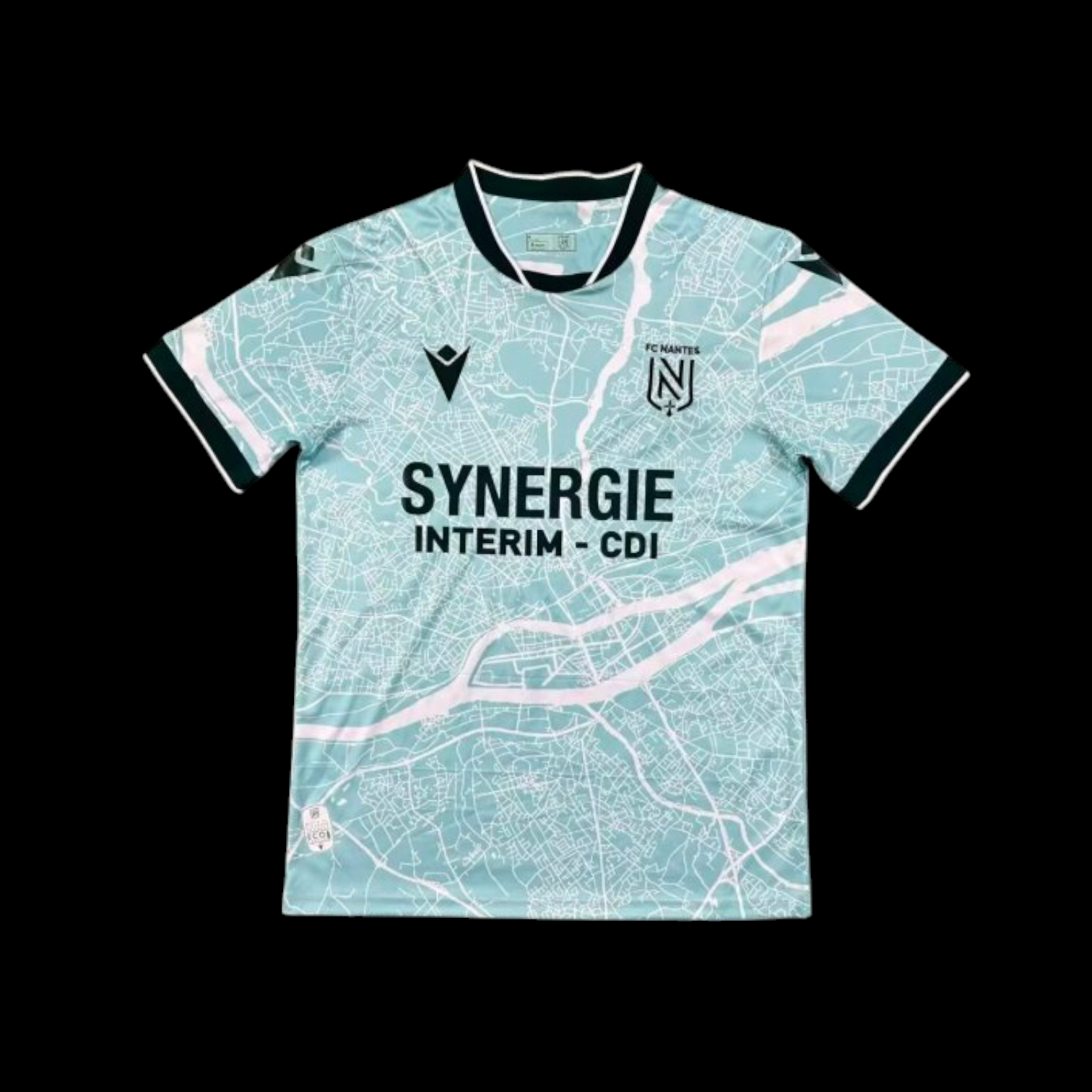
The FC Nantes collection is waiting for you, in all its variations: the yellow home kit, away kit, third kit, and retro jerseys that marked the Canaries’ greatest seasons.