
June 2008. FC Barcelona had just finished a season without a major title. President Joan Laporta entrusted the first team to a complete outsider: Pep Guardiola, 37, the club’s former captain who had become the reserve team coach. Four years later, upon his departure in May 2012, Guardiola left behind 14 trophies, two Champions League titles, and a tactical revolution that transformed the world of soccer. This era remains one of the absolute pinnacles in Barça’s history.
Born in Santpedor in 1971, trained at La Masia, and a key player on Cruyff’s Dream Team, Guardiola embodies the very essence of Catalan continuity. This article traces his career, his philosophy, his major victories, and the legacy he leaves behind for the club and modern soccer.
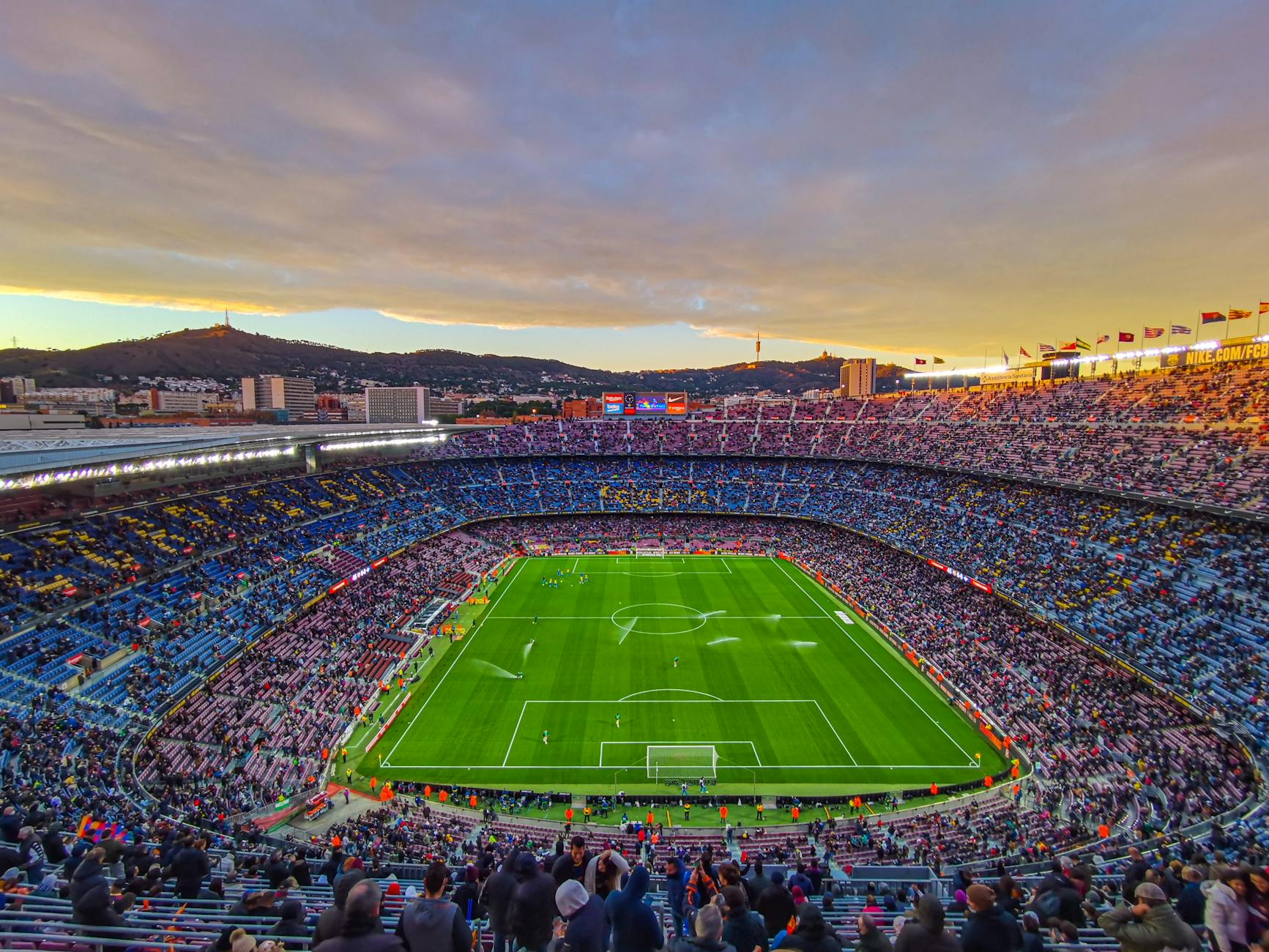
Pep Guardiola as a player: 11 years at Barça
Josep Guardiola Sala was born on January 18, 1971, in Santpedor, a small town in the province of Barcelona. He joined La Masia at the age of 13 in 1984. He progressed steadily through the youth ranks at FC Barcelona. A defensive midfielder by trade, rather slight of build and technically gifted, he made his first-team debut in December 1990, at age 19, under the guidance of Johan Cruyff.
Cruyff saw him as the ideal playmaker for his system. Guardiola became a starter almost immediately and remained one of the team’s key players throughout the decade. He played 11 seasons at Barça, appeared in over 380 matches, won 6 La Liga titles, 1 European Cup (at Wembley in 1992 against Sampdoria), and several Copa del Rey titles. He became the club’s captain in 1997.
His playing career is inextricably linked to Cruyff’s Dream Team. For more on this formative period, see our article on the Dream Team. Guardiola is a direct product of that era, and it is this connection that would immediately lend his coaching vision credibility in the eyes of fans and club officials.
The surprise appointment in June 2008
In 2007, after retiring as a player (having played for Brescia, Roma, Al-Ahli, and Dorados), Guardiola returned to Barcelona as a coach. He was first appointed head coach of Barça B, the reserve team competing in the third division. His first season was a resounding success: he led the team to promotion to the second division, implementing a possession-based style of play that was already making waves.
In the summer of 2008, following Frank Rijkaard’s disappointing season, Joan Laporta was torn between several high-profile candidates to take over the first team: José Mourinho, in particular, was on the shortlist. The president ultimately chose Guardiola, to the surprise of many. Catalan continuity and his knowledge of the club made the difference over more impressive résumés.
The pressure is immense. At 37, with no first-team experience, Guardiola took over a club with over €300 million in revenue, featuring players like Henry, Eto’o, Messi, Xavi, and Iniesta. His first decision: to part ways with Ronaldinho and Deco, who were seen as obstacles to the team’s collective project. For context, see our article on Ronaldinho at Barça.
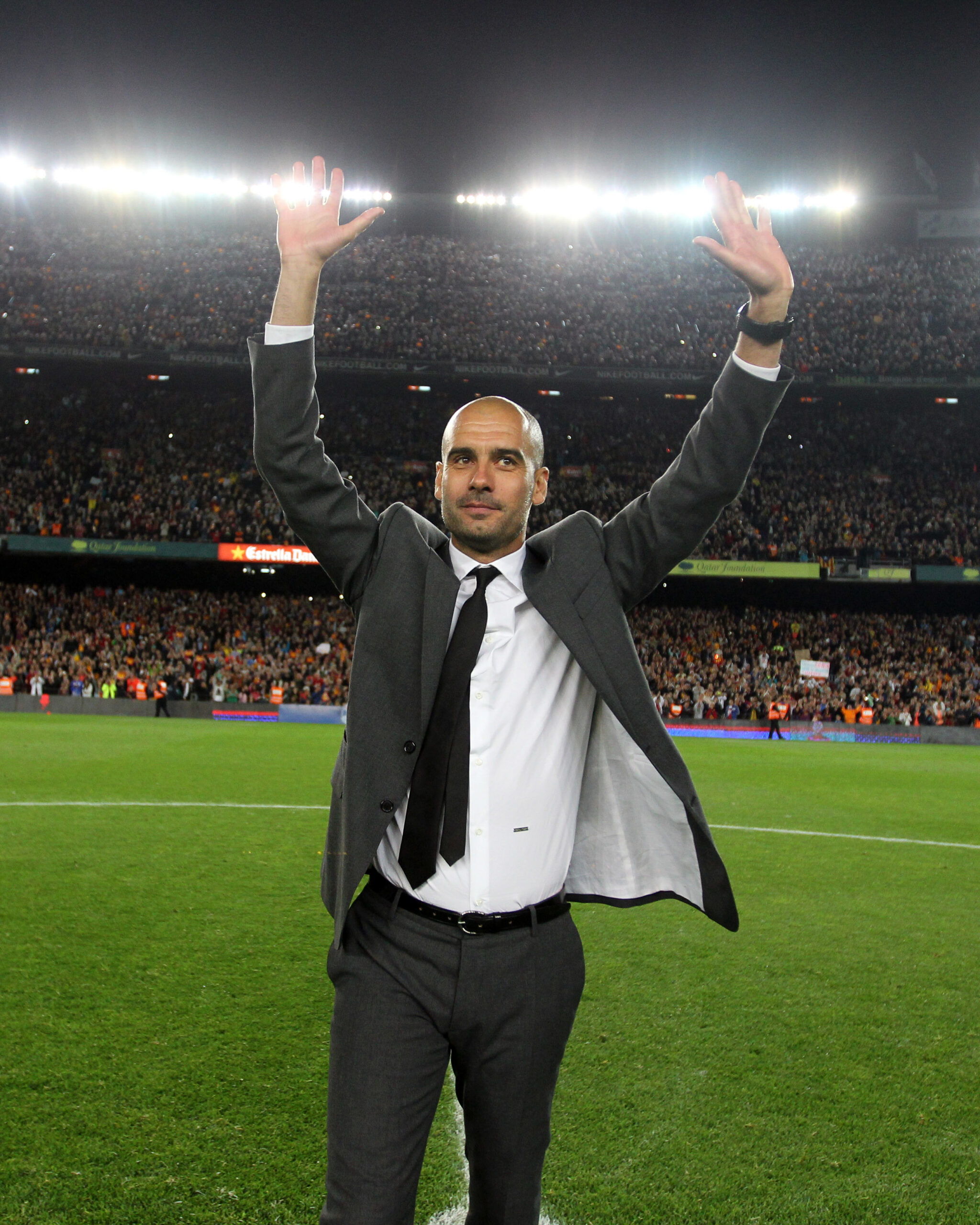
The invention of tiki-taka
Guardiola’s system is based on a few simple principles that are applied with unwavering discipline. First, constant possession of the ball: the team must maintain possession for 60 to 70 percent of the match, or even more. Second, immediate pressure when the ball is lost: the team does not drop back; instead, it regains possession as quickly as possible. Third, playing in triangles: every player in possession must always have at least two passing options.
The term “tiki-taka” first appeared in the Spanish press to describe this style of play. Guardiola himself later distanced himself from the term, stating that it was simplistic and that he was not opposed to “passing for the sake of passing.” The real driving force behind his system, according to him, is not the pass but the occupation of space and collective pressure on the opponent.
This philosophy is a direct legacy of Cruyff, but Guardiola takes it to a higher level of precision. For more on the tactical lineage, see our article on Cruyff. There is complete consistency with La Masia: all players trained at the club have been familiar with these principles since childhood, which makes it easier to implement them with the first team.
The 2009 treble and the historic six-peat
His first season, 2008–2009, was quite simply the greatest in the club’s history. A La Liga–Copa del Rey–Champions League treble—the first in the history of Spanish soccer. The La Liga title was clinched with 87 points, nine ahead of Real Madrid. The Copa del Rey was won 4-1 against Athletic Bilbao on May 13. The Champions League final was won 2-0 against Manchester United in Rome on May 27.
The 2009 calendar year saw the club win six trophies: La Liga, the Copa del Rey, the Champions League, the Spanish and European Super Cups, and the Club World Cup. No European club had ever achieved such a sextuple in a single calendar year. For more details on this perfect season, see our article on the 2009 treble.
This success is due to a core group of players trained at La Masia: Valdés, Puyol, Piqué, Busquets, Xavi, Iniesta, and Messi. Plus a few key signings like Daniel Alves and Yaya Touré. For more on the training program, see our article on La Masia.
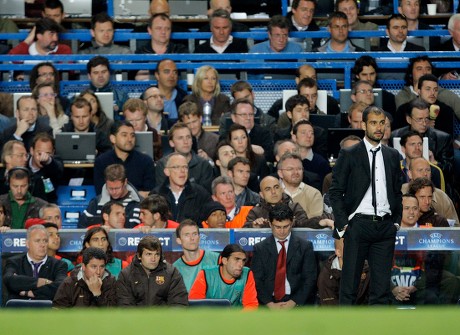
Wembley 2011: The Second Champions League
On May 28, 2011, Barça won its second Champions League title under Guardiola at Wembley, defeating Manchester United 3–1. Goals were scored by Pedro, Messi, and Villa. Many consider this final to be the most accomplished demonstration of tiki-taka. Barça controlled 68% of possession, stringed together countless passes, and tactically outmaneuvered the English side.
This match was part of a season in which Barça also won La Liga, finishing with 96 points, four ahead of José Mourinho’s Real Madrid. The rivalry between the two Spanish coaches, Guardiola and Mourinho, intensified, culminating in heated press conferences in April 2011 ahead of the Champions League Clásico (semifinal, 2-0 aggregate for Barça).
The 2010–2011 season was particularly grueling for Guardiola: the media pressure was immense, as were the tactical challenges, and the Catalan was clearly taking a toll. This mounting stress partly explains his departure a year later, at the end of the 2011–2012 season.
The false 9 and Messi's transformation
One of Guardiola’s major tactical innovations was creating the false nine role for Lionel Messi. Instead of positioning the Argentine as a pure striker, stationed in front of the center backs, Guardiola asked him to drop deep between the lines. This allowed Messi to receive the ball on the move, in less-marked spaces, with more time to make a decision.
This innovation has made Messi ten times more effective. Under Guardiola, the Argentine scored 211 goals in four seasons, including 73 in the 2011–2012 season alone (an all-time single-season record across all competitions). The false 9 position was subsequently adopted across the global football scene, but no player embodies it as perfectly as Messi did under Guardiola. For more on his career, see our article on Messi at Barça.
Beyond Messi, Guardiola has transformed several other positions: the defensive midfielder (Sergio Busquets), who acts as both a playmaker and a ball-winner; the fullback (Alves), who pushes forward like a winger; and the attacking midfielder (Iniesta), who drops deep to create two passing options for the ball-carrier. The entire structure of the game has been reimagined with a rare degree of coherence.
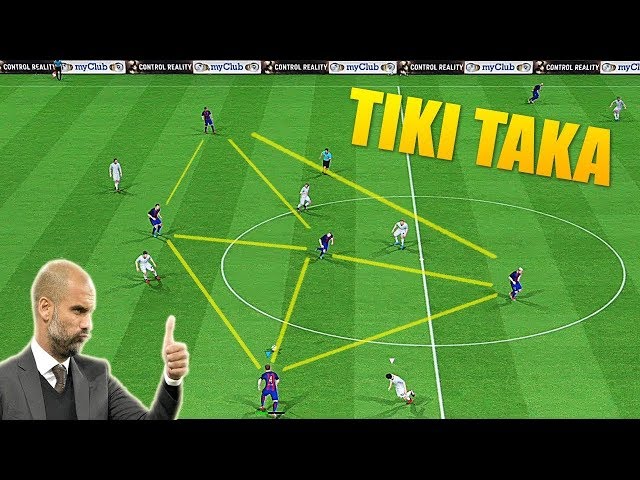
His departure in May 2012 and life after Barça
On April 27, 2012, Guardiola announced he would be leaving at the end of the season. Four years at the helm of the club, 14 trophies won (3 La Liga titles, 2 Copa del Rey titles, 2 Champions League titles, 3 Spanish Super Cups, 2 UEFA Super Cups, 2 Club World Cups)—a record never matched in such a short period. But his exhaustion was real: he publicly spoke of the need to step back.
His successor, Tito Vilanova, who had served as his assistant for those four seasons, took the reins. But illness tragically took his life in 2014. Guardiola, meanwhile, took a sabbatical in New York before signing with Bayern Munich (2013–2016, three Bundesliga titles) and then Manchester City (since 2016, multiple Premier League titles and the 2023 Champions League).
His influence on the global game remains significant. Tiki-taka, though criticized and adapted, still shapes many teams’ playing styles. Under his leadership, Manchester City is one of the most dominant teams of the 21st century. Guardiola, who will be 55 in 2026, remains one of the most influential and successful coaches in recent soccer history.
Key Takeaways
- Pep Guardiola, born on January 18, 1971, in Santpedor, trained at La Masia and played for FC Barcelona for 11 seasons (1990–2001).
- He returned as head coach in June 2008, at the age of 37, after just one season as the reserve team coach.
- His first season ended with a La Liga-Copa del Rey-Champions League treble, the first in the history of Spanish soccer.
- Tiki-taka: constant possession, immediate pressure when the ball is lost, triangular passing, and constant movement.
- The invention of the false 9 transformed Messi: 211 goals in four seasons under Guardiola, including 73 in 2011–2012.
- Total tally: 14 trophies in 4 seasons, including two Champions League titles (2009 in Rome, 2011 at Wembley).
- He left the club in May 2012 and continued his career with Bayern Munich and then Manchester City.
Learn more
Pep Guardiola is inextricably linked to Barça’s golden era. To learn more, we recommend our articles on the historic 2009 treble, on Messi and the false 9, on the Xavi-Iniesta duo at the heart of tiki-taka, and on Cruyff, his mentor.
Frequently Asked Questions
When did Pep Guardiola coach FC Barcelona?
Pep Guardiola managed FC Barcelona from June 2008 to May 2012, a span of four consecutive seasons. Prior to that, he had coached Barça B (the reserve team) during the 2007–2008 season, leading them to promotion to the second division.
How many trophies did Guardiola win at Barça?
Pep Guardiola won 14 trophies in four seasons as manager of FC Barcelona: 3 La Liga titles, 2 Copa del Rey titles, 2 Champions League titles (2009 and 2011), 3 Spanish Super Cups, 2 UEFA Super Cups, and 2 Club World Cups. This is the most impressive record in the club’s history over such a short period.
What is tiki-taka?
Tiki-taka is the style of play associated with Guardiola’s FC Barcelona: constant ball possession (60 to 70% of playing time), immediate pressing upon losing the ball, triangular passing patterns, and constant player movement. The term originated in the Spanish press, but Guardiola himself later distanced himself from it.
What is the false number 9?
The false nine is a tactical innovation by Pep Guardiola designed for Lionel Messi. Instead of positioning the Argentine as a pure striker fixed in front of the defenders, Guardiola asks him to drop back between the lines. This allows Messi to receive the ball in less-marked areas, giving him more time to make a decision.
Why did Guardiola leave Barça in 2012?
Pep Guardiola left his position as Barça’s head coach at the end of the 2011–2012 season, citing the mental and physical toll of an extremely demanding job. He took a sabbatical in New York before signing with Bayern Munich for the 2013–2014 season. His immediate successor at Barcelona was his assistant, Tito Vilanova.
All of Barça's jerseys are waiting for you
The FC Barcelona collection is available in its entirety at Maxi Kits: home, away, third, player editions, fan editions, and retro jerseys that bring back memories of the triumphant seasons of the Guardiola era.