
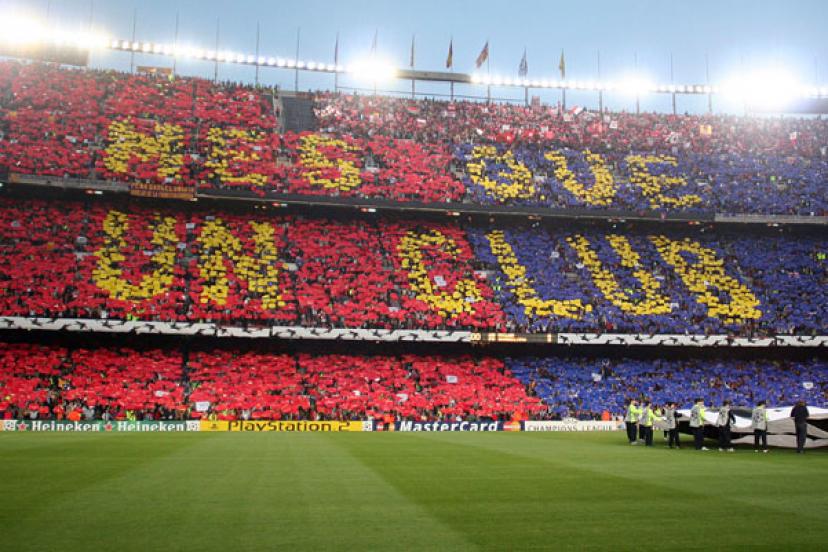
January 17, 1968. Narcís de Carreras became president of FC Barcelona. During his inaugural speech, he uttered a phrase that would permanently change the club’s identity: “El Barça es més que un club,” “Barça is more than a club.” Fifty-eight years later, these six words remain the club’s official motto, embroidered on the seats at Camp Nou and featured throughout all institutional communications.
This phrase encapsulates a long-standing reality: FC Barcelona is not just a sports club; it is also a symbol of Catalan identity, an implicit political actor, and a cultural institution. This article traces the origin of the motto, its historical roots, and what it actually represents today.

1968: Carreras’s seminal speech
On January 17, 1968, Narcís de Carreras took office as president of FC Barcelona following an election in which he faced several candidates. A respected Catalan lawyer and former executive of several local companies, he delivered an inaugural speech that would go down in history. At the heart of his speech was this simple phrase: “Som més que un club,” “We are more than a club.”
The Catalan phrase “Més que un club” was immediately picked up by the media, fans, and internal institutions. It encapsulates a sentiment that many had long shared but had never been articulated so clearly. Within a few weeks, it became an institutional slogan and then a true official motto.
Carreras himself would remain president for only about a year, until 1969. But his contribution to the club’s identity would prove lasting. For the broader context of this pivotal era, see our article on the history of FC Barcelona. The late 1960s marked the beginning of a more assertive expression of the club’s identity.
The Francoist context that makes the sentence necessary
1968. Spain is still under Franco’s rule. The regime, in power since 1939, controls public expression, bans the Catalan language in schools and institutions, and suppresses regional freedoms. In this context, FC Barcelona is one of the very few places where one can speak Catalan aloud, where one can sing in Catalan, where one can express a non-Castilian identity.
Saying “Més que un club” in 1968 was a way of asserting that broader significance. Without explicitly mentioning politics, without directly opposing the regime, but by asserting that Barça is more than just a soccer team. This cautious phrasing allowed the club to maintain that stance without drawing the wrath of the authorities, while sending a clear message to its fans.
Barça’s implicit political role actually dates back well before 1968. As early as the 1920s, the club was seen as one of the bastions of Catalan identity in the face of a centralizing Spanish state. Carreras’s statement captures a long-standing reality, though without naming it too directly.
Before 1968: Sunyol and the Memory of the Martyrs
Barça’s political history predates its motto. In 1936, at the start of the Spanish Civil War, President Josep Sunyol, an elected member of the Generalitat of Catalonia, was arrested and executed by Franco’s troops near Madrid. His body was never found. This episode left a deep mark on the club and made Sunyol a martyr who is regularly honored.
Under Franco’s regime, the club’s headquarters were confiscated, some documents were burned, and several players and officials were forced into exile. Barça had to learn to cope with a regime it did not support, without being able to openly oppose it. This period shaped a collective memory that would make Carreras’s phrase immediately understandable when it first appeared in 1968.
Other Catalan clubs (Espanyol, in particular) have also gone through this period, but none have embodied the symbolic significance of regional attachment as much as Barça. The club’s status as a grassroots organization, democratically run by its members, has contributed to this sense of identification. See our full article on the club’s history for more context.
Cruyff, Jordi, and the Reinforcement of the Symbol
The arrival of Johan Cruyff as a player in 1973 further strengthened the club’s sense of identity. The Dutchman publicly turned down Real Madrid, citing the club’s historical ties to Francoism. When his son was born in 1974, he insisted on naming him Jordi, in reference to the patron saint of Catalonia, despite the ban on Catalan names at the civil registry. For these formative moments, see our profile of Cruyff at Barça.
The 5-0 victory at the Bernabéu in February 1974, in the home of the rival historically associated with the central government, also took on symbolic significance. Sport and identity became intertwined, and the phrase “Més que un club” found in these moments a concrete reality that went far beyond Carreras’s words.
When Franco died in 1975 and Spain began its transition to democracy, Barça’s implicit political dimension could have faded. On the contrary, it grew stronger. Catalonia regained its regional institutions and its official language, and Barça naturally played a part in this institutional revival.
Opening Up to the World, Fondation, and UNICEF
Starting in the 2000s, the club expanded the scope of its motto. The FC Barcelona Foundation, established in 1994, develops educational and sports programs around the world. In September 2006, the club signed a historic agreement with UNICEF: for five seasons, the Blaugrana jersey would feature the UN agency’s logo, with no financial compensation. Barça even pays 1.5 million euros a year to UNICEF.
This agreement marks a turning point. While all other European clubs are selling their jerseys to the highest bidder, Barça has chosen to donate the proceeds to a humanitarian cause. The international press has praised this gesture, which gives concrete expression to the motto “Més que un club” in a social context—and not just within Catalonia.
This policy changed in 2011, when the club signed major sponsorship deals with the Qatar Foundation and then Qatar Airways. UNICEF was no longer the front-of-shirt sponsor but became the back-of-shirt sponsor. The debate over the consistency between the club’s stated motto and its commercial decisions then made its way into the locker room and the Catalan media.
What does "Més" mean to a club today?
In 2026, the motto encompasses several concrete aspects. First, the club’s membership structure: Barça remains one of the few major European clubs to operate on a socios (member-owners) model with a presidential election. Second, its Catalan roots: the club openly supports the promotion of the Catalan language and culture. Third, social commitment through the Foundation.
Fourth, the training of young players through La Masia, which goes beyond the purely athletic aspect to incorporate educational elements. Fifth, the club’s international reach, with certified soccer schools in dozens of countries. For more on youth development, see our article on La Masia.
This multifaceted nature explains the slogan’s enduring appeal. While many marketing slogans lose their impact within a few years, “Més que un club” has remained relevant since 1968 because it lends itself to multiple interpretations, each of which finds concrete expression in the life of the club.
A motto challenged by modernity
This approach is not without its contradictions. The signing of naming rights agreements with Spotify for Camp Nou (Spotify Camp Nou since 2022), successive sponsorship deals with foreign entities, and the extensive commercialization of the jersey are all decisions that raise questions about their consistency with the historic “Més que un club” philosophy. Some fans believe the club has strayed from its core values.
Others point out that Barça, like all modern sports organizations, must balance its books and fund a costly sports program. The club’s financial crisis since 2020—with debt exceeding one billion euros—has forced compromises that would not have been accepted in Carreras’s day. The debate remains open, and the fact that it continues is itself proof that the motto still shapes the club’s institutional thinking.
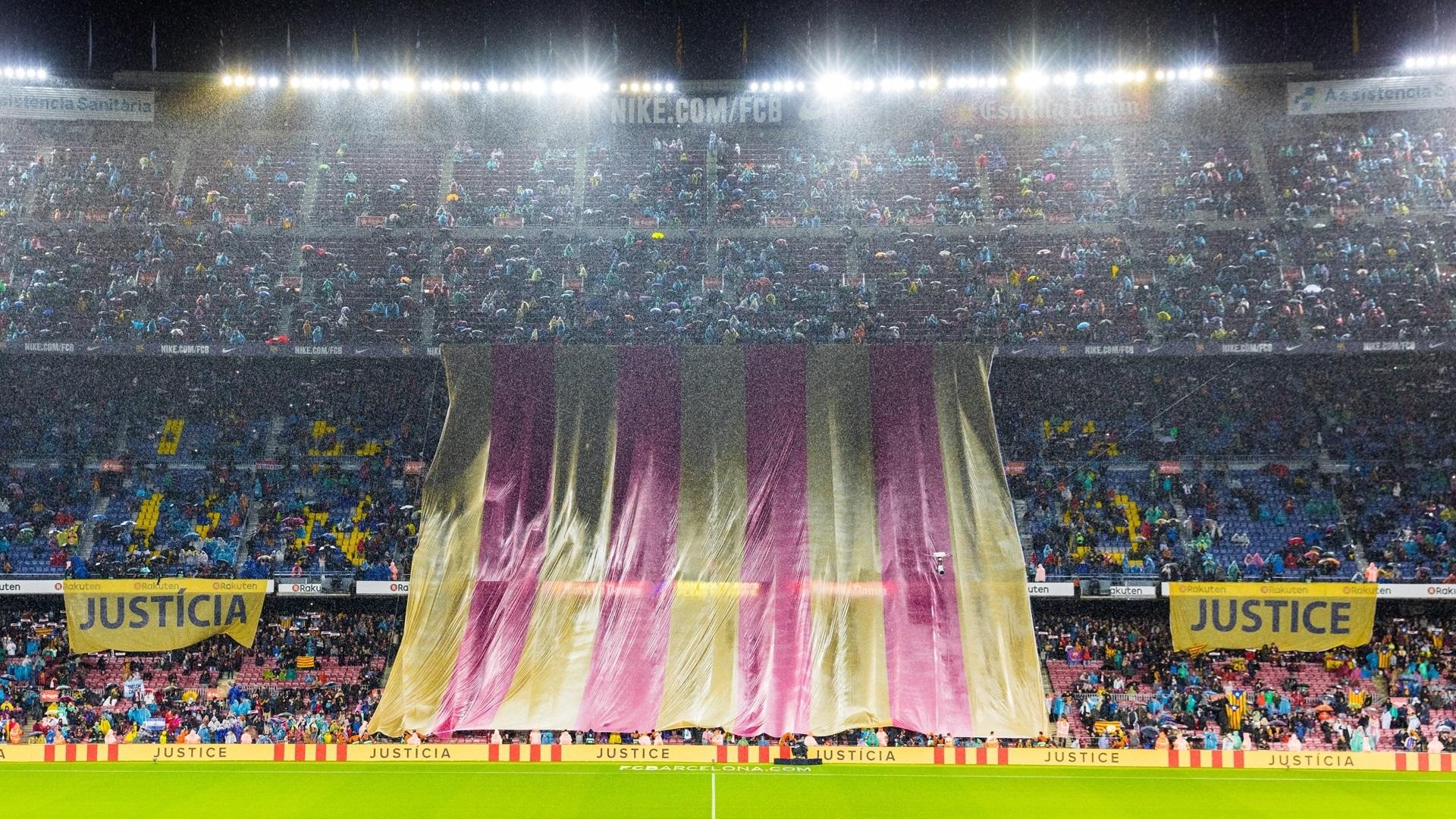
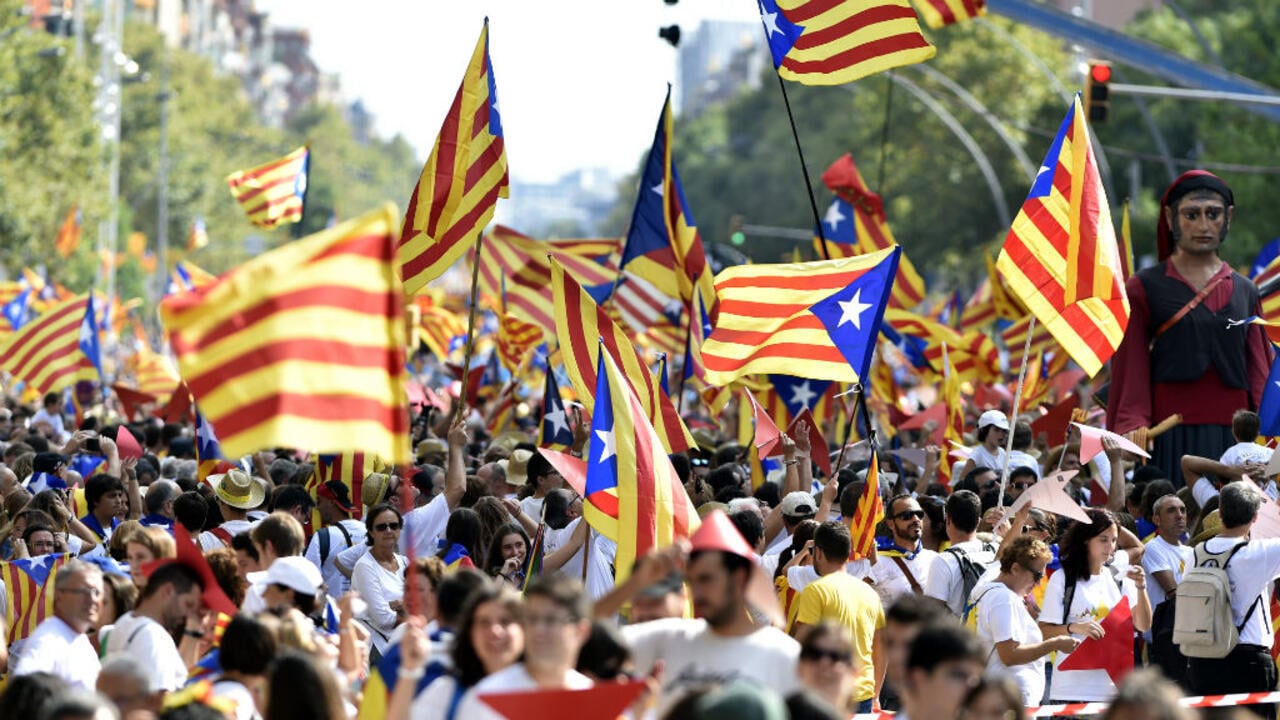
The Catalan debate, which has been particularly heated since the political tensions of 2017 surrounding the independence referendum, regularly brings the issue of identity to the forefront. Whether it likes it or not, Barça is still seen as a key player in this discussion. The motto “Més que un club” thus continues to play its role, sixty years after it was coined.
Key Takeaways
- The motto “Més que un club” was officially adopted on January 17, 1968, during Narcís de Carreras’s inaugural speech.
- During the Franco regime (1939–1975), Barça was one of the few outlets for the expression of Catalan identity.
- The execution of President Josep Sunyol by Franco’s troops in 1936 left a deep mark on the club’s collective memory.
- The arrival of Johan Cruyff in 1973 and the 5-0 victory at the Bernabéu in 1974 further cemented the club’s legendary status.
- The landmark agreement with UNICEF in 2006 (logo on the jersey without any financial compensation) embodies the club’s motto in the social sphere.
- Today, “Més que un club” encompasses five key areas: members, Catalan identity, social initiatives, youth development, and international reach.
- The motto has been called into question by recent business decisions (naming, sponsors), but it remains central to the club’s identity.
Learn more
Barça’s identity is reflected in several stories we’ve covered. We recommend our articles on the complete history of FC Barcelona, the origins of the Blaugrana colors, Cruyff and the consolidation of the club’s identity, and La Masia and the Barcelona style of training.
Frequently Asked Questions
What does "More than just a club" mean?
“Més que un club” means “More than a club” in Catalan. It has been FC Barcelona’s official motto since 1968. It conveys the idea that the club is not limited to its sporting activities: it also embodies a Catalan identity, as well as social and cultural dimensions that go far beyond soccer.
Who came up with the slogan “More than a club”?
The motto was officially adopted by Narcís de Carreras during his inaugural speech as president of FC Barcelona on January 17, 1968. A Catalan lawyer, he uttered the phrase “Som més que un club,” which encapsulated a sentiment long shared by the club’s fans and officials.
Why is Barça more than just a club?
There are several reasons: its status as a member-run association, its deep roots in Catalan identity (language, culture, history), the role it played during the Franco regime as a haven of freedom, its social commitment through the Foundation, and its international influence. These aspects remained implicit for a long time before being formally established in 1968.
What is the connection between Més que un club and UNICEF?
In September 2006, Barça signed a historic agreement with UNICEF: the UN agency’s logo appeared on the Blaugrana jersey at no cost to the club, which even donated 1.5 million euros annually to the organization. This initiative embodies the social dimension of the club’s motto. Since 2011, UNICEF has been the sponsor featured on the back of the jersey.
Is the motto “More than just a club” still relevant today?
Yes, it remains the club’s official motto and is embroidered on the seats at Camp Nou. However, it has been called into question by certain recent business decisions, such as the Spotify Camp Nou naming rights deal and successive sponsorship agreements with Qatar and other entities. The debate over the consistency between the motto and the club’s strategy is itself proof of the motto’s enduring relevance.
Show your support for Barça
The FC Barcelona collection is available in its entirety on Maxi Kits: home, away, and third jerseys, as well as player and fan versions, and retro jerseys that pay homage to the Catalan club’s golden eras.