
September 24, 1957. FC Barcelona inaugurated its new stadium, named Estadi del FC Barcelona, in front of 90,000 spectators. Its initial announced capacity was 106,146 seats, making it the largest stadium in Europe at the time. Nearly 70 years later, after several major renovations and a €1.5 billion modernization project, the venue remains the largest stadium on the continent. It is Camp Nou.
From Cruyff’s 1974 triumph to the 1999 Champions League final, from Ronaldinho’s magical nights to Messi’s spectacular displays, Camp Nou has been the setting for all of Barça’s greatest modern seasons. This article traces 70 years of history of a stadium that goes far beyond the realm of sports to embody Catalonia and its iconic club.
Before Camp Nou: Les Corts
Before Camp Nou, FC Barcelona played at the Estadi de Les Corts, which opened in 1922 in the neighborhood of the same name. Originally seating 30,000, the stadium was expanded several times and reached a capacity of 60,000 spectators in the 1940s. It hosted all of Barça’s major matches during the interwar period and the immediate postwar years, a time dominated in particular by forwards Cesar Rodriguez and Ladislao Kubala.
But Les Corts soon became too small. Attendance skyrocketed in the 1950s, driven by the team’s success on the field and the arrival of international stars. The club needed a larger stadium that could match its European ambitions. In 1953, the decision was made to build a new stadium right next to Les Corts.
The project was entrusted to Catalan architects Francesc Mitjans and Josep Soteras, in collaboration with Lorenzo García-Barbón. The design was inspired in part by Feyenoord’s De Kuip Stadium in Rotterdam. For more on the club’s overall context at that time, see our article on the history of FC Barcelona.
Construction and the dedication in 1957
Construction began in 1954 on a site located about a kilometer from Les Corts. The project was colossal for its time, both technically and financially. The final cost far exceeded the initial budget, which would lead to financial difficulties for the club for several years. But the result lived up to the club’s ambitions.
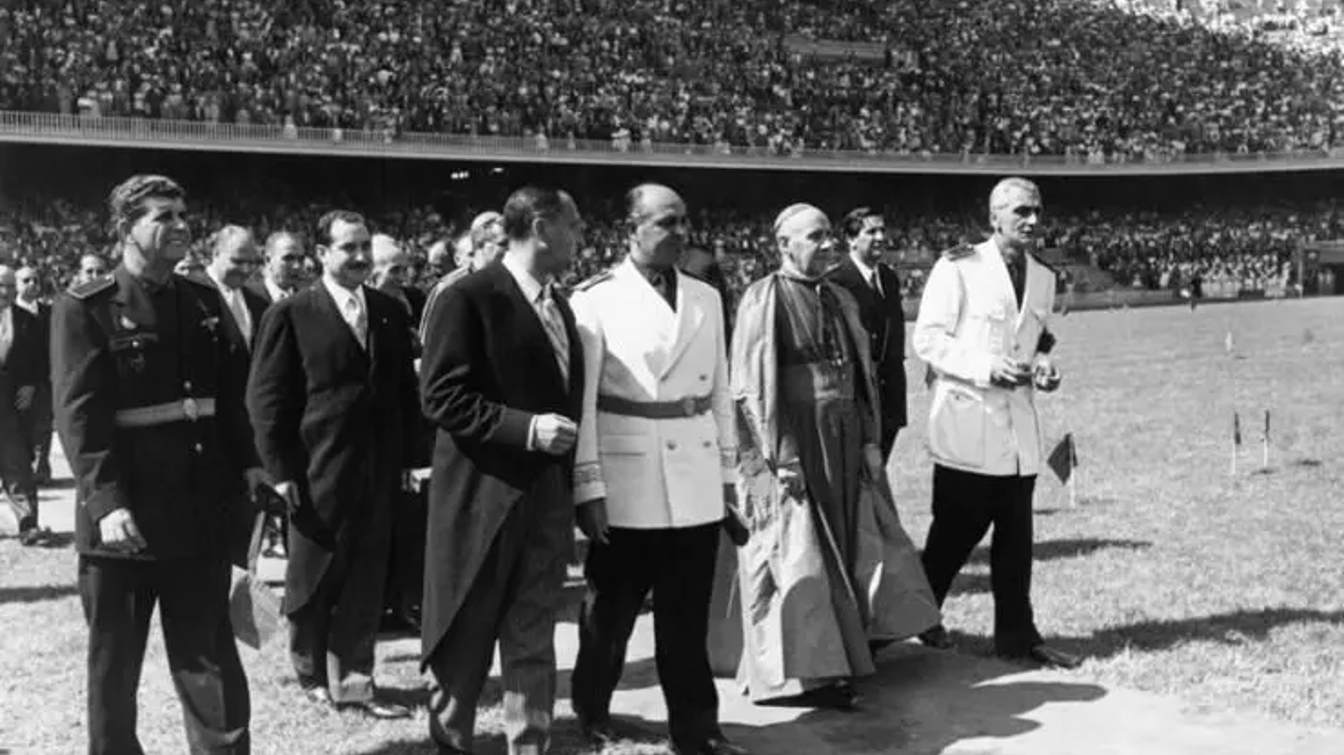
The stadium was inaugurated on September 24, 1957, during a friendly match against Legia Warsaw (4–2). The stadium had an initial capacity of 106,146, far exceeding that of any other European stadium at the time. The roof covered only a limited portion of the stands, but this was expanded during subsequent renovations.
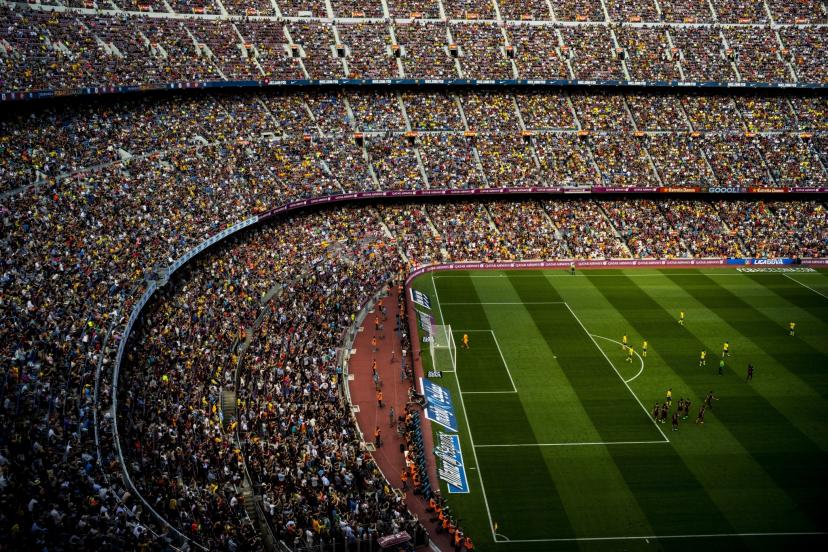
The stadium immediately impresses with its size and bowl-like structure. The stands slope down toward the field at a particularly steep angle, creating a unique acoustic atmosphere. This architectural feature continues to set Camp Nou apart from other major European stadiums.
Why Camp Nou? The origin of the name
When it was first built, the stadium was officially named Estadi del FC Barcelona. But fans immediately began calling it Camp Nou—“new ground” in Catalan—to distinguish it from the old Les Corts stadium. This nickname quickly became part of everyday language and spread far beyond the borders of Catalonia.
It wasn’t until the 2000–2001 season that the club members officially voted to change the name. The stadium is now officially called Camp Nou in all of the club’s communications. The nickname thus became the official name after more than forty years of popular use.
This story is telling of the club’s culture: the official name eventually came to reflect how the fans referred to it, rather than the other way around. It’s one of Barça’s hallmarks, where the sense of community often takes precedence over top-down decisions. To explore this aspect further, see our analysis of the motto “Més que un club.”
The 1982 World Cup and the expansion to 121,000
Spain hosted the 1982 FIFA World Cup. Camp Nou was one of the selected stadiums, and its capacity was expanded to 121,401 seats for the occasion. A third tier was built above the two existing levels, significantly increasing the total capacity. The stadium hosted the opening ceremony and the World Cup’s opening match between Argentina and Belgium.
This 1982 expansion marked the peak of Camp Nou’s capacity. No European stadium has ever had a larger capacity for official competition. The official attendance record for a Barça match was set on April 16, 1986, with 120,000 spectators at a European Cup quarterfinal against IFK Göteborg.
As safety standards evolved and standing room was phased out in the 1990s, the official capacity was gradually reduced, peaking at around 99,000 seats prior to the current renovation. However, it retained its status as Europe’s largest stadium.
Hosting European finals
Camp Nou has hosted several major European soccer finals. Two European Cup/Champions League finals have been played there: in 1989, when AC Milan defeated Steaua Bucharest 4-0, and in 1999, when Manchester United staged its famous comeback against Bayern Munich (2-1, with two late goals, one of which came in stoppage time).
For Barça itself, the stadium has been the setting for countless memorable European nights. On March 8, 2017, it was here that the comeback against PSG took place—one of the most famous matches in the club’s modern history. For more on this legendary night, see our article dedicated to the comeback.
The stadium also hosted the 1972 European Cup Winners' Cup final (Rangers vs. Dynamo Moscow), Olympic matches in 1992, and numerous international matches. It is one of the few stadiums to have hosted matches in all major continental competitions.
The Espai Barça Project and the 2026 Renovation
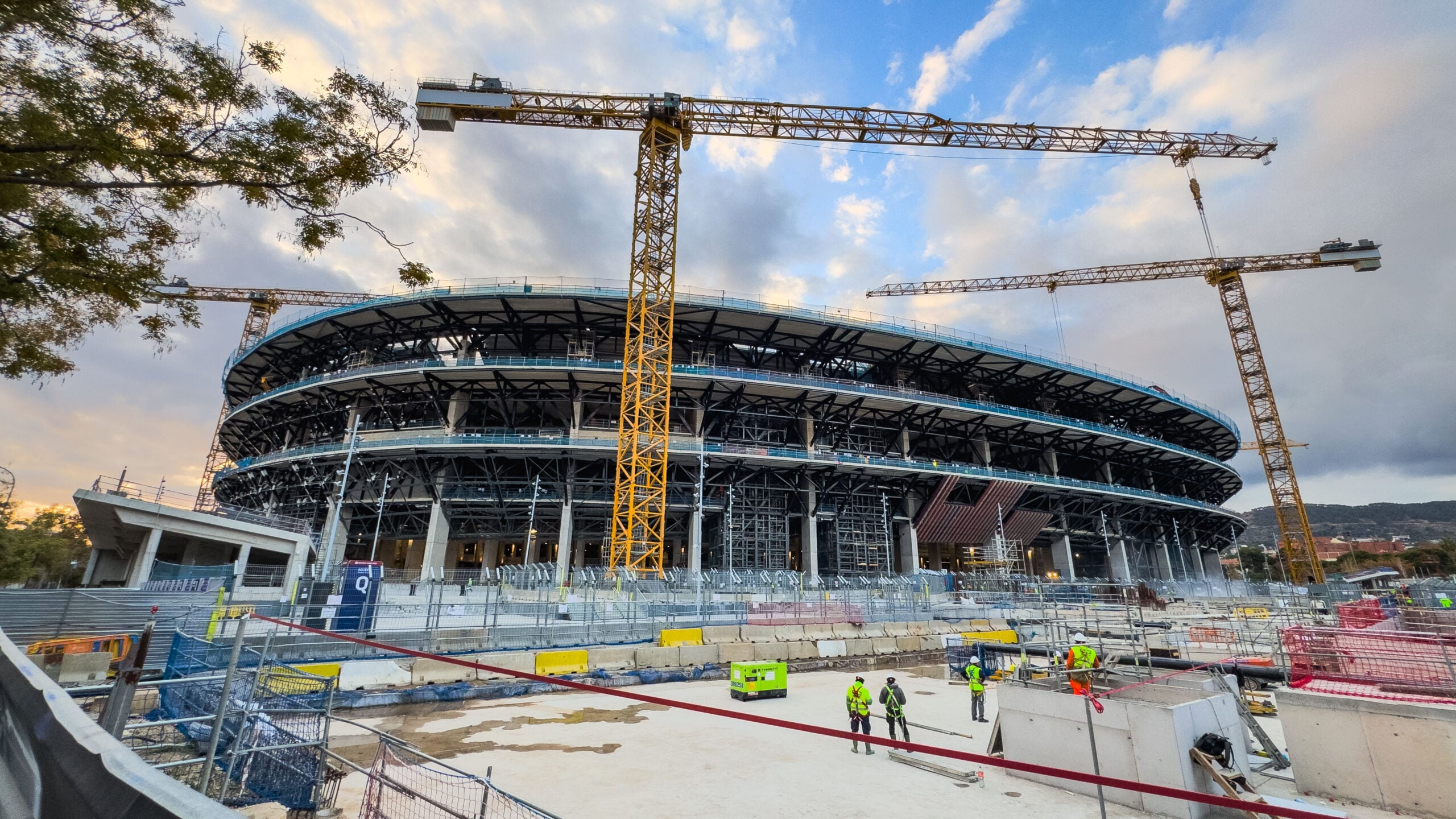
In 2014, the club launched the Espai Barça project, a major renovation program encompassing Camp Nou, the Palau Blaugrana (basketball and handball), and the surrounding area. The stadium is set to undergo a complete modernization: the addition of a roof covering the entire grandstand, an increase in capacity to 105,000 seats, upgrades to meet comfort and accessibility standards, and the modernization of the suites and facilities.
The total cost is estimated at around 1.5 billion euros, financed largely by a bond issue managed by Goldman Sachs. Construction began after the 2022–2023 season. While construction was underway, Barça temporarily moved to the Estadi Olímpic Lluís Companys in Montjuïc, a legacy of the 1992 Olympics.
The club gradually returned to Camp Nou in November 2025, operating at reduced capacity, ahead of the stadium’s full reopening scheduled for June 2026. Fans will then be welcomed back to a modern, 105,000-seat covered stadium, which remains the largest in Europe in terms of official capacity.
Key statistics about the stadium
A few figures illustrate the scale of Camp Nou. Target capacity after renovation: approximately 105,000 seats. Covered area of the stadium: over 55,000 square meters. Height of the new structure: approximately 50 meters. Number of concession stands: over 70. Number of suites: several hundred, depending on the configuration.
The all-time official attendance record: 120,000 spectators on April 16, 1986. The total cost of the renovation: approximately 1.5 billion euros. Duration of the work: just over three years between 2023 and 2026. Total number of matches played since 1957: several thousand, including the majority of Barça’s La Liga, Copa del Rey, and European Cup matches.
Beyond the statistics, Camp Nou remains, above all, a place of collective memory. Generation after generation, Catalan fans have experienced their club’s triumphs and disappointments there. To place the stadium within the broader history of Barça, see our article on 125 years of FC Barcelona.
Key Takeaways
- Camp Nou was inaugurated on September 24, 1957, with a match against Legia Warsaw, and had an initial capacity of 106,146.
- Architects Francesc Mitjans and Josep Soteras drew inspiration from Feyenoord’s De Kuip Stadium for the bowl-shaped structure.
- For the 1982 World Cup, the stadium was expanded to 121,401 seats, its maximum capacity.
- The official attendance record for a Barça match is 120,000 spectators, set on April 16, 1986, against IFK Göteborg.
- The official name became Camp Nou only starting with the 2000–2001 season, following a vote by the members.
- Two Champions League finals have been played at Camp Nou: in 1989 (Milan vs. Steaua) and in 1999 (Manchester United vs. Bayern).
- The Espai Barça project, estimated to cost approximately 1.5 billion euros, is scheduled for completion in June 2026 and will feature 105,000 covered seats.
Learn more
Camp Nou is inextricably linked to the entire modern history of Barça. To learn more, we recommend our articles on FC Barcelona’s 125th anniversary, the historic treble of 2009, the comeback against PSG in 2017, and the Catalan ethos of “Més que un club.”
Frequently Asked Questions
What is the capacity of Camp Nou?
When it opened in 1957, Camp Nou had a capacity of 106,146. It was expanded to 121,401 seats for the 1982 World Cup, then gradually reduced to around 99,000 seats prior to the current renovation. The Espai Barça project aims for a capacity of 105,000 covered seats by June 2026.
When was Camp Nou opened?
Camp Nou was inaugurated on September 24, 1957, during a friendly match against Legia Warsaw (a 4-2 victory). More than 90,000 spectators attended the event, which underscored the European ambitions of FC Barcelona, then seeking international recognition.
Why is this stadium called Camp Nou?
“Camp Nou” means “new ground” in Catalan, as opposed to the old Les Corts stadium. It was the nickname given by fans when the stadium opened in 1957. The official name became Camp Nou only starting with the 2000–2001 season, following a vote by the club’s members.
Who designed Camp Nou?
The stadium was designed by the Catalan architects Francesc Mitjans and Josep Soteras, in collaboration with Lorenzo García-Barbón. Construction began in 1954 and took about three years to complete. The main architectural inspiration came from Feyenoord’s De Kuip stadium in Rotterdam.
Is Camp Nou still the largest stadium in Europe?
Yes, Camp Nou remains Europe’s largest stadium in terms of official capacity, with a target of 105,000 covered seats following the renovation scheduled for June 2026. It thus ranks ahead of Wembley Stadium in London, Luzhniki Stadium in Moscow, and Signal Iduna Park in Dortmund.
Ready to don the colors of FC Barcelona?
All FC Barcelona jerseys are available in our store: home, away, third, player edition, fan edition, and retro jerseys that pay homage to the great seasons at Camp Nou.